
Main Courses
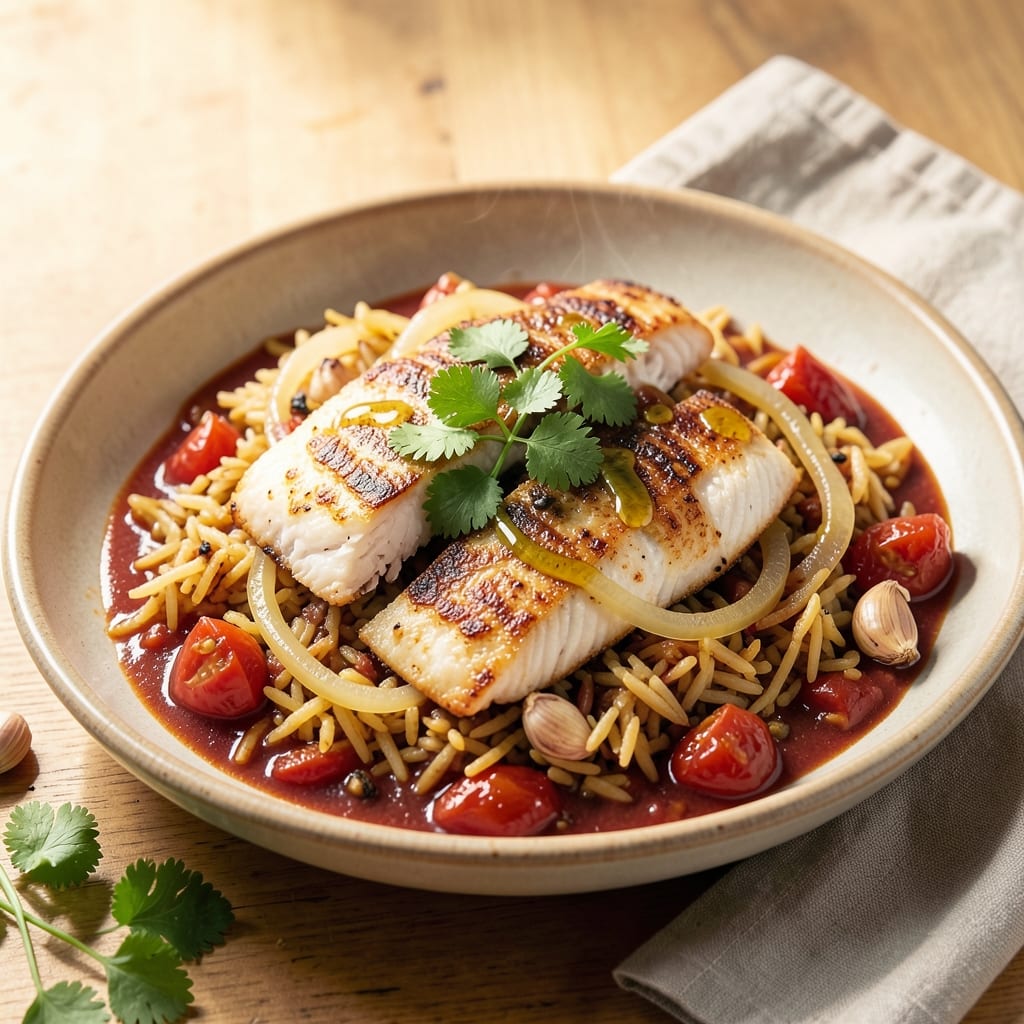
This African fish and rice recipe delivers bold, aromatic flavors in a single pot—where fragrant jasmine rice simmers alongside tender fish, tomatoes, and peppers until everything melts into a cohesive, restaurant-worthy dish. 🌟 The secret lies in layering spices like thyme, garlic, and ginger early, allowing their flavors to develop deeply before the fish is added. What sets this apart is the balance: tangy tomatoes, heat from Scotch bonnet peppers, and the earthy depth of smoked paprika create a sauce that clings to every grain of rice and flake of fish.
The one-pot method isn’t just convenient—it’s traditional. Many West African dishes, like Senegal’s thieboudienne or Nigeria’s jollof rice, rely on this technique to infuse every bite with the same rich, cohesive flavor. Here, long-grain rice cooks in the same pot as the fish, absorbing the aromatic broth until it’s tender but still holds its shape. The fish—often firm white varieties like snapper or cod—stays moist and flaky, never dry, thanks to a gentle simmer rather than boiling.
By the time you serve this dish, your kitchen will smell like a bustling African market, and every spoonful will deliver that perfect harmony of textures: tender fish, fluffy rice, and a sauce that’s both vibrant and complex. The dish pairs beautifully with a simple side salad or steamed greens, but it’s so satisfying on its own that it often becomes the star of the meal. This is comfort food at its finest—warm, inviting, and packed with character.
Perfect for weeknight dinners or special occasions, this recipe scales effortlessly for a crowd. The one-pot approach means minimal cleanup, while the bold flavors ensure it’s a hit with both African food lovers and newcomers alike. Let’s bring the flavors of West Africa to your table—one delicious pot at a time.
Ingredients for african fish and rice
Jasmine rice, tender fish, and aromatic spices create a vibrant West African one-pot masterpiece.
| Ingredient | Amount | Notes |
|---|---|---|
| Jasmine Rice 🍚 | 1 ½ cups | Uncooked, long-grain preferred |
| White Fish Fillets 🐟 | 1 ½ lb | Snapper or cod, skinless |
| Roma Tomatoes 🍅 | 2 cups | Chopped, vine-ripened preferred |
| Scotch Bonnet Peppers 🌶️ | 2 whole | Seeds removed, finely chopped |
| Yellow Onion 🧅 | 1 whole | Diced, medium size |
| Garlic Cloves 🧄 | 6 cloves | Minced, fresh preferred |
| Fresh Ginger 🌿 | ½ cup | Grated, peeled |
| Smoked Paprika 🌶️ | 1 tbsp | Sweet or hot variety |
| Ground Cumin 🌿 | 1 tbsp | Toasted for depth |
| Fresh Thyme 🍃 | ¼ cup | Leaves only, chopped |
| Vegetable Oil 🫒 | 2 tbsp | High smoke point |
| Fish Stock 💧 | 2 cups | Homemade or quality store-bought |
| Sea Salt 🧂 | 1 ½ tsp | Diamond Crystal preferred |
| Black Pepper 🌶️ | ½ tsp | Freshly ground |
| Lemon Juice 🍋 | 1 tbsp | Freshly squeezed |
The jasmine rice is non-negotiable—its floral aroma becomes the dish's signature. Lundberg or Tilda brands deliver consistent quality, but any long-grain rice works in a pinch. For the fish, snapper or cod are ideal—they stay firm yet flaky during the long simmer. If you can't find Scotch bonnets, jalapeños with seeds removed provide a milder but still vibrant heat. The ginger and garlic should be freshly grated and minced, respectively—pre-minced garlic loses flavor quickly. Toast your cumin seeds in a dry pan for 30 seconds before grinding to deepen their aroma.
No Scotch bonnet peppers? Habaneros or serranos work, but reduce the amount by half to control heat. Fresh thyme unavailable? Dried thyme at one-third the quantity suffices, though it lacks the bright herbal note. For the fish stock, homemade is best, but Pacific Foods or Knorr brands are reliable substitutes. The vegetable oil should have a high smoke point—avocado or grapeseed oil are excellent choices. If using canned tomatoes, opt for San Marzano for superior flavor, but rinse well to remove excess acidity. The lemon juice brightens the dish at the end—never skip this step.
Store any leftovers in an airtight container with a thin layer of oil on top to preserve freshness. This dish reheats beautifully, though the rice may dry out slightly—add a splash of fish stock when reheating. Keeps for 3-4 days in the fridge or 3 months frozen. For freezing, portion into individual containers to make reheating effortless. The flavors actually deepen overnight, making this an ideal make-ahead meal for dinner parties.
Why You'll Love This Recipe
- One-Pot Magic: I swear by this trick—just toss everything in one pot, and the jasmine rice soaks up that tangy tomato-pepper sauce like a dream. No fancy layers, no stressing over separate pans.
- Heat That Stays: That Scotch bonnet doesn’t just add color—it brings a slow-building warmth that lingers. The fish stays tender while the sauce gets this deep, smoky-sweet finish you’ll reach for again.
- Lunchbox Hero: Between us, this is my go-to for meal prep. The rice holds up for days, the fish flakes perfectly cold, and the peppers keep it exciting. Pack it for work or school—no sad desk lunches here.
- Budget Win: White fish is cheap, onions and tomatoes are pantry staples, and a single bonnet stretches the flavor. Honestly, I make this twice a month just to prove how much flavor you can get for pennies.
Step-by-step instructions for African fish and rice
This vibrant one-pot dish delivers bold West African flavors in a single, aromatic package.
🍳 Step 1: Build the Flavor Base
Heat the 2 tablespoons vegetable oil in a heavy-bottomed pot over medium-high heat. Add the diced yellow onion and cook for 3-4 minutes until softened and translucent. Here's the thing—don't rush this step. You want the onions to caramelize slightly, forming the sweet foundation for your sauce.
Add the 6 cloves minced garlic and 0.5 cup grated fresh ginger, cooking for 1 minute until fragrant. Immediately stir in the 1 tablespoon smoked paprika and 1 tablespoon ground cumin, letting the spices bloom for 30 seconds—this releases their essential oils and maximizes flavor. The aroma should fill your kitchen instantly.
🍳 Step 2: Develop the Tomato-Pepper Sauce
Add the 2 cups chopped Roma tomatoes and 2 whole finely chopped Scotch Bonnet peppers (seeds removed). Stir well and reduce heat to medium-low. Let the mixture simmer uncovered for 15-20 minutes until it thickens and the tomatoes break down completely. You're looking for a rich, jammy consistency that coats the back of a spoon.
I press the tomatoes through a sieve at this point—this ensures a silky texture without chunks. If you prefer texture, simply mash the tomatoes with a potato masher instead. The key is achieving that perfect balance between sweet tomatoes and fiery peppers that defines West African cuisine.
👨🍳 Step 3: Layer the Aromatics and Rice
Stir in the 0.25 cup chopped fresh thyme, 1.5 teaspoons sea salt, and 0.5 teaspoon black pepper. Add the 1.5 cups jasmine rice, spreading it evenly through the sauce to coat each grain. The rice should absorb the flavors immediately—this is when the magic happens.
Pour in the 2 cups fish stock and bring to a gentle boil. Here's where precision matters: reduce heat to low and cover the pot with a tight-fitting lid. The rice needs to cook undisturbed for 15 minutes to absorb the liquid properly. Don't peek or stir—this maintains the even texture we're after.
🔥 Step 4: Cook the Fish to Perfection
After 15 minutes, gently fluff the rice with a fork, then arrange the 1.5 lb white fish fillets on top. The fish should be skin-side down if using snapper, or simply placed evenly across the rice. Return the lid and cook for another 10-12 minutes until the rice is tender but still has a slight bite (al dente).
Here's the critical checkpoint: the fish should flake easily when tested with a fork, and the internal temperature should reach 145°F. The rice should be tender but not mushy—jasmine rice has a natural stickiness that works perfectly with this method. If the rice finishes before the fish, tent it with foil and continue cooking the fish separately.
🥘 Step 5: Finish with Bright Acid and Rest
Remove the pot from heat and stir in the 1 tablespoon fresh lemon juice. This bright acid cuts through the richness of the fish and tomatoes, balancing the dish perfectly. Let the entire one-pot rest covered for 5 minutes—this allows the flavors to meld and the rice to finish steaming in its own juices.
Serve immediately with the fish fanned over the rice, allowing each bite to deliver layers of smoky paprika, sweet tomatoes, fiery peppers, and delicate fish. The one-pot design ensures every spoonful contains the perfect harmony of all components—just as it should be in authentic West African cooking.
Pro Tips For Making African Fish And Rice
- Sear the Fish First: Don’t toss the fish straight into the sauce—give those fillets a quick sear in hot oil (2 minutes per side) before adding anything else. This locks in moisture and builds flavor, especially with delicate white fish. I used to skip this, and the fish always ended up dry and bland.
- Char the Onions Slow: After slicing the onion, cook it low and slow until it’s deep brown and almost caramelized—about 10 minutes. This sweetens the base of your sauce and cuts through the heat of the Scotch bonnet. High heat here just burns them; patience pays off.
- Deglaze with Tomato Juice: Instead of water or broth, deglaze the pan with the juices from halved Roma tomatoes (squeeze them, don’t chop). The acidity brightens the sauce and balances the richness of the fish. I learned this after a batch tasted flat—now it’s non-negotiable.
- Rinse the Rice Twice: Jasmine rice absorbs water like a sponge—rinse it under cold water until the water runs clear, then rinse again. This removes excess starch and prevents a gummy, gluey texture. Trust me, you’ll notice the difference in every bite.
Wine and beer pairings for this recipe
West African Reds
For this dish, I recommend a medium-bodied red wine with enough acidity to complement the tomato-based sauce and stand up to the Scotch bonnet peppers. A South African Chenin Blanc might surprise you—it’s crisp and slightly fruity, cutting through the richness beautifully. If you prefer red, opt for a Pinot Noir from Chile or New Zealand, which has bright cherry notes that harmonize with the dish’s smoky paprika and thyme. 🍷
Crisp Whites
A Sauvignon Blanc from the Loire Valley in France is my go-to choice—its citrus and herbal notes mirror the fresh ginger and thyme in the dish. The acidity also balances the heat from the Scotch bonnet peppers. If you’re looking for something lighter, a dry Riesling from Germany offers a refreshing contrast with its apple and peach undertones. Both wines refresh the palate between bites.
Beer Pairings
For beer lovers, a West African-style lager like Guinness or Staropramen works wonders. The maltiness complements the smoky paprika and caramelized onions, while the slight bitterness balances the dish’s richness. If you prefer something lighter, a Belgian Witbier like Hoegaarden adds a citrusy brightness that echoes the lemon juice in the recipe. 🍺
Non-Alcoholic Options
Don’t overlook sparkling water with a splash of hibiscus tea—it’s a refreshing, caffeine-free option that enhances the dish’s fruity and herbal notes. For something more substantial, try ginger beer (non-alcoholic) to complement the fresh ginger in the recipe. Both options keep the meal vibrant and refreshing without alcohol.
Local African Brews
If you’re feeling adventurous, try pairing this dish with traditional African beers like Nigerian Guinness Stout or Ethiopian Téj. These beers add a rich, malty depth that complements the dish’s smoky and spicy flavors. For a lighter option, South African Rooibos tea (iced or hot) adds a naturally sweet, earthy note that pairs beautifully with the dish’s complexity.
Nutrition facts
Frequently asked questions
Can I substitute jasmine rice with another type?
Yes, but jasmine rice is ideal for its floral aroma and slightly sticky texture that works perfectly with this dish. For a 1:1 swap, use long-grain white rice or basmati rice. Avoid short-grain rice like sushi rice—it becomes too mushy. If you prefer brown rice, increase cooking time by 20-25 minutes and add an extra ½ cup liquid.
What fish works best for this recipe?
Firm white fish like snapper, cod, or sea bass hold up best during the long simmer. Avoid delicate fish like tilapia or flounder—they can turn rubbery. For extra flavor, try smoked fish or salt cod, but soak it first to remove excess salt. The fish should be 1-inch thick for even cooking.
How do I adjust the heat level?
Scotch bonnet peppers are fiery! For milder heat, reduce the amount by half or swap for jalapeños (seeds removed). If you love spice, keep the peppers whole until the very end, then chop them finely. For a smoky depth without heat, add ½ teaspoon cayenne pepper or 1 teaspoon chipotle powder alongside the smoked paprika.
Can I make this recipe in a slow cooker?
Brown the onions, garlic, and spices first in a skillet, then transfer everything to a 6-quart slow cooker. Cook on LOW for 4-5 hours or HIGH for 2-3 hours. Add the fish during the last 30 minutes of cooking to prevent overcooking. The slow cooker method actually enhances the flavors by allowing them to meld longer.
Why does my rice turn out mushy?
Mushy rice usually means too much liquid or insufficient resting time. The rice should cook undisturbed for 15 minutes after adding the stock. If your pot lacks a tight lid, use aluminum foil to seal it. Also, avoid lifting the lid during cooking—this releases steam and disrupts the cooking process. For extra insurance, use 1.75 cups liquid instead of 2 cups.