
Main Courses
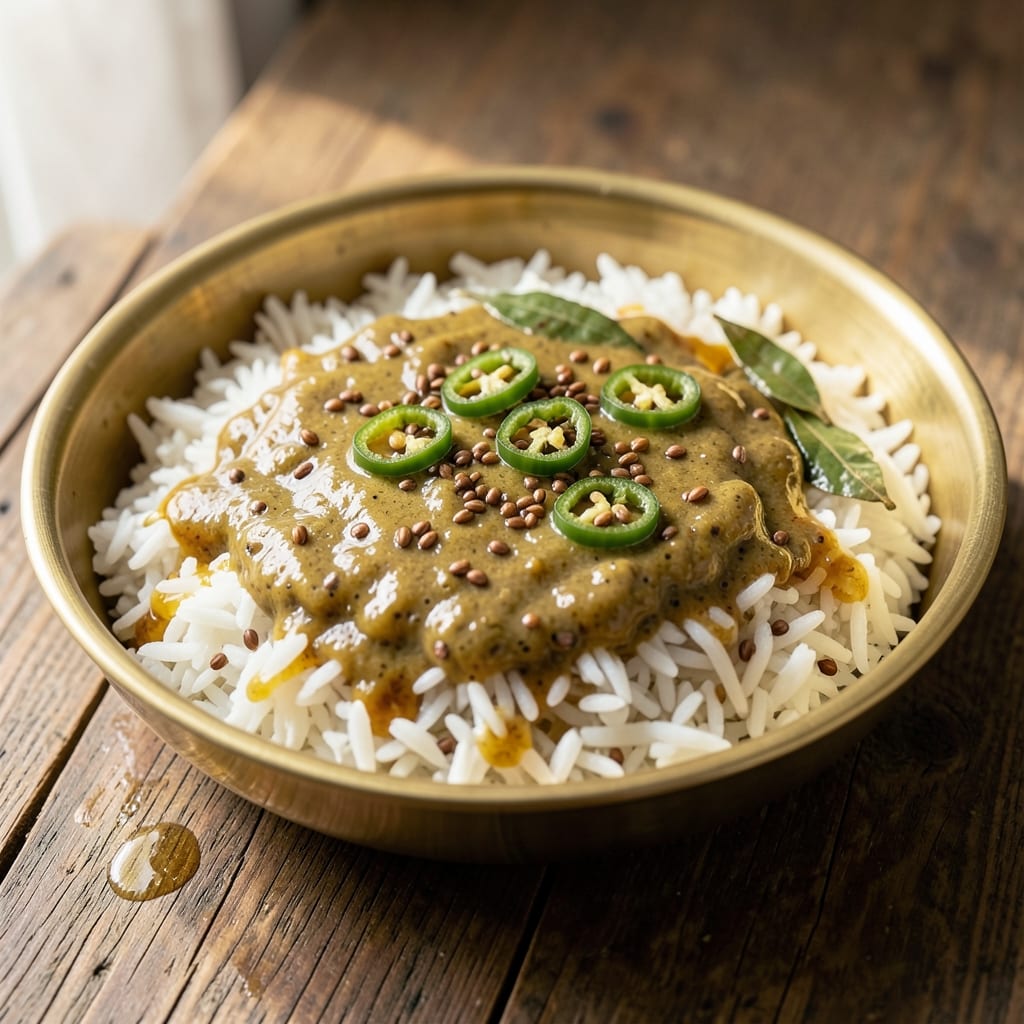
Andhra coconut rice delivers the perfect balance of toasted spices, tangy tamarind, and creamy coconut in every bite. This one-pot dish transforms simple basmati rice into a fragrant, flavorful masterpiece that captures the essence of South Indian cuisine. The secret lies in the layered tempering—first with mustard seeds and curry leaves, then with coconut and tamarind—that builds depth without complexity.
What sets this recipe apart is the authentic Andhra touch: freshly ground coconut chutney infused with green chilies and a hint of asafoetida. The rice cooks in a pressure cooker with minimal water, absorbing the aromatic spices and coconut milk for a tender, fragrant finish. No shortcuts here—just traditional techniques that deliver restaurant-quality results at home.
The result is a dish where each grain of rice carries the essence of the tempering—crispy mustard seeds, fragrant curry leaves, and the bright tang of tamarind. Served with a side of sambar or a dollop of yogurt, it becomes a complete, satisfying meal that feels both comforting and celebratory.
This recipe is designed for home cooks who appreciate authenticity without sacrificing simplicity. The steps are clear, the ingredients accessible, and the outcome undeniably delicious. Ready to bring the flavors of Andhra into your kitchen?
Ingredients for andhra coconut rice
Toasted spices, creamy coconut, and tangy tamarind transform simple rice into a fragrant Andhra masterpiece.
| Ingredient | Amount | Notes |
|---|---|---|
| Long-Grain Basmati Rice 🍚 | 1 cup | Uncooked, rinsed thoroughly |
| Coconut Milk 🥥 | 1 ½ cups | Full-fat, canned preferred |
| Tamarind Paste 🍈 | 2 tbsp | Adjust for tang preference |
| Mustard Seeds 🌱 | 1 tbsp | Whole, for tempering |
| Curry Leaves 🌿 | ¼ cup | Fresh, dried at 1/4 amount |
| Green Chilies 🌶️ | 3 whole | Slit lengthwise, adjust heat |
| Asafoetida Powder 🌿 | ¼ tsp | Essential for authentic flavor |
| Ginger 🧄 | 1 tbsp | Freshly grated, aromatic |
| Garlic Cloves 🧄 | 4 cloves | Minced, for aromatic base |
| Coconut 🥥 | ½ cup | Freshly grated, unsweetened |
| Vegetable Oil 🫒 | 3 tbsp | Or coconut oil for flavor |
| Salt 🧂 | 1 tsp | Diamond Crystal preferred |
| Turmeric Powder 🌿 | ¼ tsp | Freshly ground preferred |
| Cumin Seeds 🌱 | 1 tsp | Toasted for deeper flavor |
| Water 💧 | 2 ½ cups | For pressure cooking rice |
The foundation starts with fresh curry leaves and mustard seeds, which must be toasted until they sizzle—this releases their aromatic oils. For curry leaves, Indian grocery stores carry the freshest varieties, but dried works in a pinch at one-fourth the amount. The tamarind paste is non-negotiable for authentic tang; Trader Joe's carries a reliable brand, or use blocks if you can find them. Asafoetida powder, though subtle, is essential—it's the umami bridge between the coconut and spices. Penzeys sells high-quality versions if your local store doesn't carry it. For the ginger and garlic, always use fresh—pre-minced jars lack the aromatic punch this dish demands.
No fresh curry leaves? Dried at one-fourth the amount works, though the flavor won't be identical. Substituting coconut milk? Full-fat canned only—light versions won't deliver the same creaminess. The tamarind can be replaced with lime juice plus a pinch of sugar, but you'll lose that complex, slightly bitter depth. For heat control, remove green chili seeds before adding. The grated coconut should be freshly processed—pre-shredded versions lose moisture and flavor quickly. If you can't find asafoetida, a pinch of garlic powder can mimic some of its savory notes, though it won't be the same.
Toasted spices lose potency within 2 weeks, so store them in airtight containers away from light. Fresh curry leaves keep for 1 week in the fridge, wrapped in damp paper towels. The tamarind paste can be refrigerated for 3 months, while grated coconut stays fresh for 5 days when sealed. For leftovers, this rice actually improves overnight as flavors meld—reheat gently with a splash of water. Portion into containers for easy lunches, and always serve with a side of warm sambar or yogurt to balance the richness.
Why You'll Love This Recipe
- Here’s what sold me: this rice stays fresh for days in the fridge, making it my go-to for packed lunches or quick dinners when I’m juggling too much. The coconut milk keeps it moist, and the mustard seeds add a little crunch that never gets soggy.
- I’ll be real: coconut milk might seem fancy, but a can goes a long way here, and the rest of the ingredients are pantry staples. It’s the kind of dish that feels special without breaking the bank—perfect for when I want to treat myself without guilt.
Step-by-step instructions for Andhra coconut rice
Here's the authentic method for creating this fragrant, tangy-spiced one-pot dish.
Prepare the Spiced Coconut Base
Heat the 3 tablespoons vegetable oil in a heavy-bottomed pot over medium heat. Add the 1 teaspoon cumin seeds and toast until they release their aroma, about 30 seconds. Immediately add the 1 tablespoon mustard seeds and let them pop—this should take 15-20 seconds. Stir in the 4 cloves garlic cloves and 1 tablespoon ginger, cooking for 1 minute until fragrant but not browned.
Add the 0.25 cup curry leaves and 3 whole green chilies (slit lengthwise), cooking for 30 seconds until the leaves darken slightly. Sprinkle in the 0.25 teaspoon asafoetida powder and 0.25 teaspoon turmeric powder, stirring for 10 seconds to bloom the spices. This aromatic base forms the flavor foundation for the entire dish.
Cook the Rice with Tamarind and Coconut
Add the 1 cup long-grain basmati rice and stir to coat evenly with the spices. Pour in the 1.5 cups coconut milk and 2.5 cups water, then bring to a boil. Once boiling vigorously, reduce heat to medium-low and add the 2 tablespoons tamarind paste, stirring well to dissolve. The tamarind will create that signature tangy brightness characteristic of Andhra cuisine.
Add the 1 teaspoon salt and the 0.5 cup freshly grated coconut, stirring gently to distribute. Cover the pot and simmer for 15 minutes on medium-low heat. The rice should absorb most of the liquid while developing a fragrant, slightly sticky texture. Avoid stirring frequently—this can break the rice grains.
Finish with Perfect Texture and Flavor
After 15 minutes, check the rice consistency. If it's still slightly undercooked, cover and cook for another 5 minutes. The rice should be tender but still have a slight bite, with minimal liquid remaining. If the rice is too dry, add 2 tablespoons water and cook covered for 2 more minutes. Remove from heat and let it sit covered for 5 minutes to steam through.
Fluff the rice gently with a fork, then taste and adjust seasoning. If the tamarind needs more tang, add 1 teaspoon additional tamarind paste. For extra richness, stir in 1 tablespoon coconut milk. The finished rice should have a delicate balance of coconut creaminess, tamarind tang, and toasted spice notes throughout each grain.
Serve with Traditional Accompaniments
Transfer the coconut rice to a serving dish and let it cool slightly. The dish develops even better flavor as it rests. Serve immediately with hot sambar or mint chutney to complement the rich coconut and tangy tamarind flavors. The contrast of warm, spiced rice with cool, tangy accompaniments creates the perfect Andhra dining experience.
For best results, serve within 30 minutes while the rice maintains its ideal texture. The dish reheats beautifully if needed, though the texture may become slightly softer. This one-pot method captures the essence of Andhra home cooking while being simple enough for weeknight preparation.
Pro Tips For Making Andhra Coconut Rice
- TOAST THE RICE FIRST: Dry-toast your basmati rice in a heavy pan for 2-3 minutes before cooking—just until the edges turn translucent. I learned this the hard way: skipping it makes the rice gummy, even with coconut milk’s richness. The slight nuttiness from toasting balances the tamarind’s sharpness. ---
- DILUTE TAMARIND PASTE: Mix your tamarind paste with twice its volume of warm water before adding it to the coconut milk. Pure tamarind paste is thick and can curdle the coconut milk if thrown in undiluted. Trust me, your gravy will stay smooth and glossy. ---
- LOW AND SLOW FOR COCONUT: Simmer the coconut milk on lowest heat after adding tamarind—no splattering, no rushing. I used to crank the heat to speed things up, but it splits the milk and ruins the creamy texture. Patience here makes all the difference for that velvety finish. ---
- CRACK MUSTARD SEEDS: Bloom your mustard seeds in hot oil until they pop audibly, then immediately add curry leaves. If you skip the popping, the mustard burns before releasing its aroma—leaving your rice tasting flat. (Yes, even if you’re impatient like me.)
Creative variations of andhra coconut rice
Spicy Andhra Twist
For a fiery kick, add 1 extra green chili and ½ teaspoon red chili powder to the tempering spices. I like to toast the chili powder with the mustard seeds for 10 seconds before adding everything else—this deepens the heat and smoky flavor. For extra heat lovers, stir in ½ teaspoon garam masala at the end for a warm, spicy finish. 🌶️
Coconut Chutney Fusion
Blend ½ cup coconut chutney (store-bought or homemade) with 1 tbsp yogurt and 1 tsp tamarind paste to create a creamy drizzle. Pour this over the finished rice just before serving—it adds a tangy, cooling contrast that balances the dish beautifully. For homemade chutney, blend ½ cup coconut, 2 tbsp water, ½ tsp cumin seeds, and 1 green chili until smooth.
Vegetarian Protein Boost
Add ½ cup cooked chickpeas or ¼ cup roasted cashews to the rice during the final 5 minutes of cooking. The chickpeas absorb the coconut and tamarind flavors perfectly, while cashews add a rich, buttery texture. For extra protein, top with 2 tbsp crumbled paneer or ¼ cup sprouted moong dal before serving.
Herbed Yogurt Side
Mix ½ cup yogurt with 1 tbsp chopped mint, ½ tsp roasted cumin powder, and ¼ tsp black salt for a refreshing side. This cooling contrast cuts through the richness of the coconut rice while adding a fresh, herby note. Serve in small bowls alongside the main dish for dipping or spooning over the rice.
Pressure Cooker Adaptation
For a quicker version, use a pressure cooker: Add all ingredients (except final tempering) to the cooker, seal, and cook on medium heat for 3 whistles. Once done, let the pressure release naturally for 10 minutes before opening. Stir in the remaining spices and coconut just before serving to keep them crispy. This cuts cooking time to 20 minutes while maintaining authenticity. 🔥
Sweet-Tangy Balance
Add 1 tsp jaggery syrup (or honey) to the tamarind paste for a sweet-tangy twist. This balances the heat and adds depth, making the dish more approachable for those who prefer less spice. I like to simmer the tamarind with 2 tbsp water and ½ tsp jaggery for 2 minutes before adding it to the rice. The result is a harmonious blend of sweet, sour, and spicy flavors.
Nutrition facts
Frequently asked questions
Why does Andhra coconut rice taste different from regular coconut rice?
The key difference lies in the tamarind paste and asafoetida—these create the signature tangy depth. Andhra-style also uses a two-stage tempering (first with mustard seeds, then coconut) that builds flavor layer by layer. The rice cooks with coconut milk instead of water, absorbing those creamy notes into each grain.
Can I make this recipe without a pressure cooker?
Yes! Use a heavy-bottomed pot and simmer the rice with coconut milk for 20-25 minutes on low heat after boiling. Keep the lid slightly ajar to let steam escape. The texture will be slightly less sticky, but the flavors remain authentic. For extra tenderness, add 1 extra tablespoon coconut milk during cooking.
What's the best way to store leftovers?
Transfer to an airtight container and refrigerate for up to 3 days. Reheat gently with 1 tablespoon water per cup of rice in a covered pot over low heat. For longer storage, freeze portions for up to 2 months. The coconut and tamarind flavors actually deepen overnight, making leftovers taste even better!
How can I adjust the heat level?
For milder heat, remove green chili seeds before adding. For extra spice, add ½ teaspoon red chili powder with the mustard seeds. Heat lovers can also stir in ½ teaspoon garam masala at the end. Remember: the tamarind's tang can make spice feel more intense—balance with extra coconut milk if needed.
What's the secret to perfectly fluffy rice?
Use freshly rinsed basmati rice and avoid over-stirring while cooking. The key is cooking with coconut milk instead of water, which adds natural creaminess. Let the rice sit covered for 5 minutes after cooking to steam through, then fluff gently with a fork. Never rinse after cooking—this washes away the absorbed flavors.