
Salads
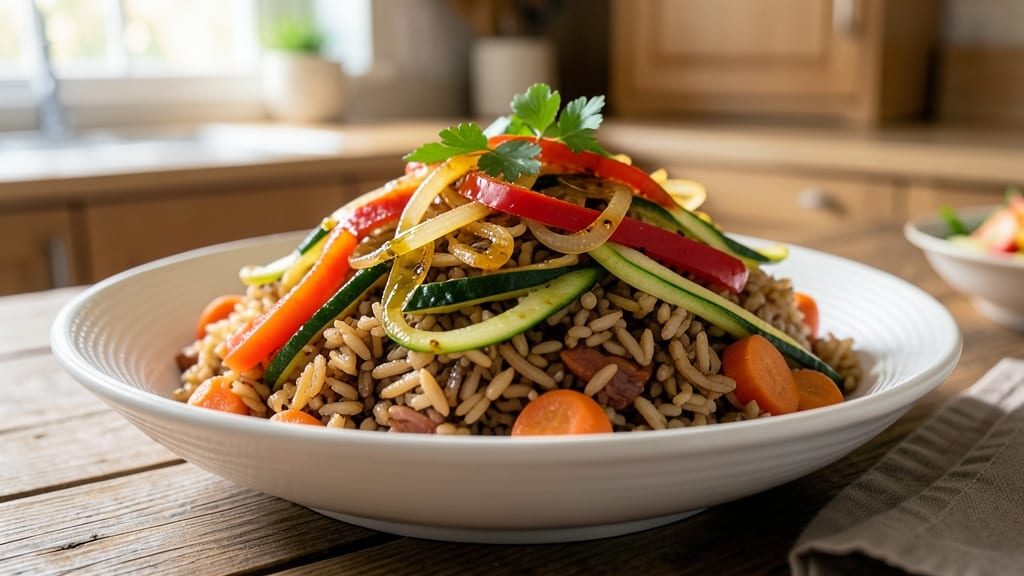
This one-pot brown rice mixed vegetables recipe delivers a balanced, nutrient-packed meal in just 25 minutes—perfect for busy weeknights or meal prep. The secret lies in cooking everything together: fragrant brown rice simmers alongside crisp-tender vegetables, absorbing their natural flavors while staying perfectly fluffy.
No chopping ahead or multiple pans required—just one simple pot that transforms simple ingredients into a satisfying, protein-friendly dish.
The beauty of this recipe is its versatility—easily adapt it for vegetarian or vegan diets by adding tofu, chickpeas, or black beans. Season with soy sauce, garlic, and ginger for an Asian-inspired twist, or keep it mild with olive oil, lemon, and fresh herbs.
Every bite is packed with fiber, vitamins, and plant-based protein, making it a go-to for health-conscious eaters who still crave restaurant-quality flavor.
Ingredients for brown rice mixed vegetables
Simple, nutrient-rich ingredients transform into a restaurant-quality one-pot meal in minutes.
| Ingredient | Amount | Notes |
|---|---|---|
| Long-Grain Brown Rice 🌾 | 1 cup | Uncooked, rinsed thoroughly |
| Vegetable Broth 💧 | 2 cups | Low-sodium preferred |
| Carrots 🥕 | 1 lb | Baby or regular, sliced into rounds |
| Yellow Onions 🧅 | 1 whole | Medium, diced into small pieces |
| Bell Peppers 🍅 | 2 whole | Assorted colors, sliced into strips |
| Zucchini 🍆 | 1 lb | Medium, sliced into half-moons |
| Garlic Cloves 🧄 | 4 cloves | Minced finely for depth of flavor |
| Fresh Ginger 🌿 | 1 tbsp | Grated, fresh preferred |
| Extra-Virgin Olive Oil 🫒 | 2 tbsp | For sautéing vegetables |
| Soy Sauce 🍶 | 2 tbsp | Low-sodium preferred |
| Lemon Juice 🍋 | 1 tbsp | Freshly squeezed |
| Fresh Parsley 🌿 | ¼ cup | Chopped, for garnish |
| Salt 🧂 | 1 tsp | Diamond Crystal preferred |
| Black Pepper 🌶️ | ½ tsp | Freshly ground |
The brown rice is the foundation—Bob's Red Mill or Lundberg brands yield the best texture. For the vegetables, farmers markets offer the freshest carrots, bell peppers, and zucchini, but grocery store selections work fine if firm and vibrant. The garlic and ginger should smell pungent and fresh—no musty odors. If you're short on time, pre-chopped frozen vegetables (like bell peppers and zucchini) work perfectly, though fresh is ideal for that crisp-tender texture. The soy sauce adds depth, so Kikkoman or San-J are reliable choices for consistent flavor.
No fresh ginger? Ground ginger at half the amount works in a pinch, though fresh is preferred. Swap bell peppers for mushrooms or snap peas if needed—just adjust cooking time slightly. The lemon juice can be omitted if you prefer a neutral flavor, but it brightens everything up. For a protein boost, add 1 cup of cooked chickpeas or tofu at the end. The parsley is purely for garnish, but if you're out, cilantro or basil works equally well. Always rinse the brown rice before cooking to remove excess starch and prevent gumminess.
This dish reheats beautifully—store leftovers in an airtight container for up to 5 days in the fridge. For longer storage, portion into individual containers and freeze for 3 months. The flavors actually improve after the first day as everything melds together. Double the batch and freeze half for a quick meal later in the week. If you're meal prepping, let the dish cool completely before refrigerating to maintain texture. The one-pot method makes cleanup effortless—just a single pan to wash!
Why You'll Love This Recipe
- I’ll be real: this recipe won’t break the bank. Brown rice, carrots, onions, and bell peppers are all cheap and last forever. Plus, the vegetable broth adds depth without costing a fortune. It’s the kind of dish that lets you stretch your grocery budget while still feeling like you’re eating something special.
- One-Pot Magic: I swear by this recipe because it lives entirely in one pot—no extra bowls, no messy transfers. Just chop the veggies (onion, carrots, bell peppers) into bite-sized chunks, toss them in with the rice and broth, and let it simmer. That’s it. My counter stays cleaner than my kitchen ever does on a weeknight.
- Nutty-Sweet Crunch: Between us, the brown rice here isn’t just a side—it’s the star. The long-grain variety stays chewy and slightly toasty at the edges, while the carrots caramelize just enough to add a natural sweetness. The onions? They soften into this buttery, almost jammy texture that makes every bite feel like a hug.
- Lunchbox Hero: Honestly, this is my go-to for meal prep because it reheats like a dream. Pack it in containers for work or school lunches, and it’ll still taste fresh hours later. The veggies hold their shape, the rice stays fluffy, and no one will guess it’s been sitting in a fridge. (Yes, even my picky teenager approves.)
Step-by-step instructions for brown rice and mixed vegetables
This one-pot method delivers perfectly cooked brown rice with vibrant vegetables in under 30 minutes.
Sauté Aromatics and Vegetables
Heat the 2 tablespoons extra-virgin olive oil in a large pot or deep skillet over medium-high heat. Add the 1 whole yellow onion and 1 lb carrots sliced into rounds, cooking for 4-5 minutes until the onions become translucent and the carrots begin to soften at the edges.
Add the 2 whole bell peppers sliced into strips and 1 lb zucchini cut into half-moons. Stir occasionally for 5 minutes until all vegetables begin to soften slightly but still retain their shape. This step develops the base flavor while preventing the vegetables from turning mushy during the longer cooking process.
Add Seasonings and Rice
Reduce heat to medium and stir in the 4 cloves garlic cloves (minced), 1 tablespoon fresh ginger (grated), 1 teaspoon salt, and 0.5 teaspoon black pepper. Cook for 1 minute until fragrant - you should smell the garlic and ginger immediately.
Add the 1 cup long-grain brown rice, stirring to coat all ingredients evenly. The rice should absorb the aromatics completely, creating a flavorful foundation for the dish. Cook for an additional 2 minutes while stirring occasionally to prevent sticking.
Pour in Broth and Simmer
Pour in the 2 cups vegetable broth and bring the mixture to a gentle boil. Once boiling, reduce heat to low, cover the pot, and let it simmer for 20 minutes. This low-and-slow approach allows the brown rice to fully absorb the liquid while maintaining its texture and flavor.
After 10 minutes, check the rice - if it's absorbing the liquid too quickly, add 2-3 tablespoons of water. The ideal cooking point is when the rice is tender but still has a slight bite, with all vegetables cooked through but still vibrant in color.
Finish with Soy Sauce and Lemon
Remove the pot from heat and stir in the 2 tablespoons soy sauce and 1 tablespoon lemon juice. The soy sauce adds umami depth while the lemon brightens the entire dish. Taste and adjust seasoning if needed - you may need a touch more salt depending on your broth.
Let the mixture sit covered for 5 minutes to allow the flavors to meld together. The rice should be perfectly cooked with all vegetables tender yet retaining their natural texture. The lemon juice will create a subtle tang that cuts through the richness of the brown rice.
Garnish and Serve
Transfer the mixture to serving bowls and garnish with 0.25 cup chopped fresh parsley. The parsley adds a fresh finish and vibrant color. Serve immediately while hot, as the flavors continue to develop even after cooking.
This one-pot meal delivers balanced nutrition with complex flavors. The brown rice provides sustained energy while the colorful vegetables contribute vitamins and fiber. Each bite offers a harmonious blend of textures - tender rice, crisp-tender vegetables, and aromatic seasonings.
Pro Tips For Making Brown Rice Mixed Vegetables
- TOAST THE RICE FIRST: I learned this the hard way—skipping the quick dry toast in the pot means your rice will either stick like glue or turn mushy. Heat your empty pot over medium-high for 2 minutes, then add the unrinsed brown rice and stir for 30 seconds until it smells nutty. This step locks in flavor and prevents clumping later.
- CUT VEGETABLES UNIFORMLY: Bell peppers and carrots should be the same size or they’ll cook at wildly different speeds. Dice the onions into ½-inch chunks, slice carrots into ¼-inch rounds, and cut bell peppers into ½-inch pieces. No one wants a dish where the carrots are still crunchy while the peppers turn to mush.
- USE LOW-AND-SLOW FOR RICE: Brown rice needs patience—don’t rush it. Once you add the broth, reduce heat to the lowest setting that keeps a gentle simmer (usually around 20% on electric burners). If you crank it up, the rice will cook unevenly and release too much starch, turning gummy. Let it bubble away for 40-45 minutes, then cover and rest for 10.
- ADD AROMATICS LATE: Onions and carrots should go in with the rice, but bell peppers? Toss them in only after 20 minutes of cooking. Their high water content means they’ll turn to mush if they sit in the broth too long. Stir them in during the last 15 minutes to keep them crisp-tender. (Yes, even if you’re impatient like me.)
Make-ahead tips for this brown rice mixed vegetables
Prep Ahead Strategy
Chop all vegetables the night before and store them in an airtight container with a paper towel to absorb moisture. I keep the carrots, bell peppers, and zucchini in separate sections to prevent browning.
The brown rice can also be rinsed and stored in a separate container—just add it fresh when cooking to avoid sogginess. This saves 15 minutes of prep time on busy mornings. ✨
Freezer-Friendly Prep
Cook the entire dish ahead and freeze portions in quart-sized freezer bags with 1-inch headspace. I label each bag with the date—these keep for 3 months without losing texture.
To reheat, transfer directly from frozen to a pot with ¼ cup water, simmer covered for 10-12 minutes on medium-low heat. The rice stays fluffy and veggies retain their color. ❄️
Double Batch for Meal Prep
Make twice the recipe and divide into 4 meal prep containers for the week. Store in the fridge for up to 5 days, but I always eat mine within 3 days—the flavors peak after the first day!
Reheat individual portions in the microwave for 2-3 minutes on 50% power, stirring halfway. Add a splash of water if it looks dry. 💡
Vegetable Swaps for Longevity
Use harder vegetables like broccoli or cauliflower if prepping ahead—they hold up better in storage. For softer veggies like zucchini, add them fresh when reheating to maintain crispness. I also swap in frozen peas when thawing—just toss them in the last 2 minutes of reheating.
This keeps the dish vibrant even after days in the fridge. 🥦
Rice Texture Hacks
If your rice turns out gummy after reheating, spread it on a baking sheet and bake at 350°F for 5 minutes to dry it out. For extra fluffiness, add 1 teaspoon of lemon juice when reheating—it brightens the rice and prevents stickiness.
I also keep a small bowl of cold water nearby to rinse the rice if it gets too dry. 🌾
Garnish for Freshness
Save fresh parsley, cilantro, or scallions for garnishing right before serving—this keeps the dish looking fresh even after days in storage. I store these herbs separately in a small container with a damp paper towel in the fridge.
A sprinkle of sesame seeds or chili flakes also adds visual appeal and extra flavor without needing to prep ahead. 🌿
Nutrition facts
Frequently asked questions
Can I substitute white rice for brown rice in this recipe?
While you can use white rice, the cooking time will be shorter (15 minutes instead of 20 minutes) and the texture will be less chewy. Brown rice's nutty flavor and higher fiber content make it ideal for this one-pot dish. If you prefer white rice, reduce the broth to 1.5 cups and cook uncovered for the last 5 minutes to crisp up the grains slightly.
What's the best way to add protein to make this vegetarian-friendly?
For plant-based protein, stir in 1 cup cooked chickpeas or ½ block of firm tofu (cubed and pan-fried) during the last 5 minutes of cooking. For a meat option, add ½ lb shredded chicken or diced turkey at the same time. Always cook proteins separately first to ensure they're fully done before mixing.
Why did my vegetables turn mushy instead of crisp-tender?
Overcooking is the most common cause—soft vegetables mean the dish simmered too long. For crisp-tender results, reduce the simmering time to 15-18 minutes and add harder veggies (like carrots) 5 minutes before the rice is done. Also ensure your pot has a tight-fitting lid to trap steam and cook evenly.
Can I use this recipe for meal prep without losing flavor?
Store in airtight containers for up to 5 days in the fridge. Reheat portions with 2 tablespoons water covered on low heat for 5 minutes to restore moisture. For best results, make the dish fresh and portion immediately—flavors develop more fully when eaten within 2 days.
What are good flavor variations for this recipe?
Try an Italian twist with 1 tsp Italian seasoning and ¼ cup sun-dried tomatoes, or a Thai-inspired version with 1 tbsp fish sauce (or soy sauce for vegan), 1 tsp curry powder, and fresh cilantro. For a Mexican flair, add ½ tsp cumin and 1 tbsp lime juice**. Always adjust spices to taste.