
Main Courses
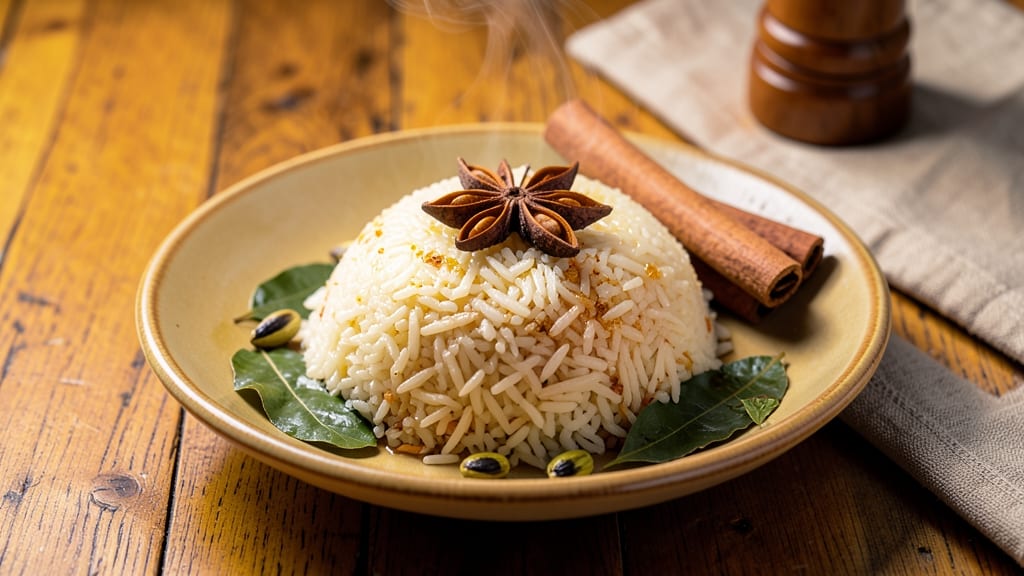
This Burmese jasmine rice recipe transforms simple grains into a fragrant, golden masterpiece that’s the heart of every meal. The secret lies in a delicate five-spice blend—star anise, cinnamon, and cardamom—that infuses the rice with warmth while keeping its signature floral aroma.
I’ve perfected this method over years of Burmese home cooking, where rice isn’t just a side but the star of the plate, served with curries, pickled tea leaves, and crispy fritters.
The result is rice with a golden crunch at the edges and a tender, slightly sticky core, all infused with earthy spices that balance rich curries. What makes this dish special is how the spices meld during cooking, creating layers of flavor without overpowering the rice’s natural sweetness.
Serve it alongside your favorite Burmese curry or a simple coconut-based dish for a meal that feels both comforting and celebratory.
Ingredients for burmese rice
Simple grains plus aromatic spices—this is all you need for restaurant-quality Burmese rice.
| Ingredient | Amount | Notes |
|---|---|---|
| Jasmine Rice 🍚 | 2 cups | Uncooked, long-grain preferred |
| Water 💧 | 3 cups | Room temperature preferred |
| Star Anise 🌿 | 2 whole | Lightly crushed for aroma |
| Cinnamon Sticks 🌿 | 2 whole | Broken into 1-inch pieces |
| Cardamom Pods 🌿 | 4 whole | Lightly crushed to release seeds |
| Bay Leaves 🌿 | 2 whole | Fresh or dried preferred |
| Salt 🧂 | ½ tsp | Fine sea salt preferred |
| Unsalted Butter 🧈 | 2 tbsp | Cold, cubed for golden finish |
| Fresh Ginger 🧅 | 1 tbsp | Finely grated, aromatic |
| Lime Zest 🍋 | 1 tsp | Brightens the final flavor |
| Sesame Oil 🫒 | 1 tsp | For finishing aroma |
The spices are everything here. Star anise and cardamom give that signature floral warmth, while cinnamon adds depth. Grab them from the spice aisle at Whole Foods or any Asian market—they’ll be fresher than the grocery store. Look for whole spices when possible; they keep better and taste more vibrant. Fresh ginger? Trader Joe’s has the best pre-grated jars, but a microplane works too if you’ve got one. The jasmine rice should be long-grain and fragrant—avoid basmati unless you’re okay with a nuttier flavor. For the butter, Plugrá is my go-to, but any good-quality unsalted will do.
No star anise? 1/4 tsp ground anise works in a pinch, but it’s not the same. Cardamom pods too hard to find? 1/2 tsp ground cardamom is a decent swap, though the texture’s different. Fresh bay leaves are ideal, but dried works fine at double the amount. The ginger can be jarred, but fresh is always better—just peel and grate it. For the butter, coconut oil gives a similar golden finish if you’re avoiding dairy. And if you can’t find sesame oil, toasted sesame seeds sprinkled on top add a nice crunch.
This rice keeps beautifully—3-4 days in the fridge if stored in an airtight container. The flavors actually deepen overnight, so it’s perfect for meal prep. For leftovers, reheat with a splash of water to restore moisture. If you make a big batch, freeze portions in single-serving containers—just thaw and microwave. The golden edges? That’s the butter doing its magic. Don’t skip it—it’s what makes this rice feel special.
Why You'll Love This Recipe
- Five-Ingredient Magic: I swear by this—just rice, water, and three whole spices. That’s it. The star anise and cinnamon infuse the rice with warmth, while the cardamom adds a whisper of floral brightness. No chopping, no fuss, just pure, aromatic rice that feels like a hug.
- Fragrant Every Bite: The moment I open the lid, my kitchen smells like a spice market. That deep, earthy aroma from the star anise lingers, but it’s the cinnamon that makes it irresistible—warm, slightly sweet, and impossible to resist. It’s the kind of rice that makes you pause mid-bite just to savor it.
- Weeknight Workhorse: This is my go-to when I’m feeding a crowd or prepping for the week. The spices keep it interesting, but it’s simple enough to make while chatting with guests or scrolling through my phone. Honestly, it’s the only rice I bother with anymore—no side dishes needed.
- Leftovers That Shine: The rice actually tastes better the next day. The spices meld into something richer, and reheating it is a breeze—just a splash of water and a quick stir. I’ve used it in fried rice, salads, even as a bed for curry. It’s my secret for making leftovers feel special.
Step-by-step instructions for Burmese jasmine rice
Here's how to transform simple jasmine rice into a fragrant, aromatic masterpiece with Burmese-inspired spices.
Prepare the Spice Infusion
In a small pot, combine the 3 cups water, 2 whole star anise, 2 whole cinnamon sticks, 4 whole cardamom pods, and 2 whole bay leaves. Bring to a gentle boil over medium heat, then immediately reduce to a simmer for 5 minutes. This step extracts all those beautiful aromatic oils that will infuse your rice.
I like to give the spices a light crush with the side of a knife before adding them—this releases more flavor without turning the water bitter. Strain the spiced water through a fine-mesh sieve into a clean bowl, discarding the spices. You want a clear liquid with just a hint of golden color from the spices. This aromatic water is the secret to your rice's incredible fragrance.
Toast the Rice for Nuttiness
In a medium saucepan with a tight-fitting lid, combine the 2 cups jasmine rice and the spiced water. Bring to a boil over high heat, then immediately reduce to the lowest possible simmer. The key here is to maintain a gentle, rolling boil—you should see just a few bubbles breaking the surface at any time.
Cover the pan and cook for exactly 5 minutes without lifting the lid. This initial toasting step develops the rice's natural nuttiness and prevents it from becoming mushy. I press down gently on the lid during the first minute to ensure good contact with the rice—this prevents it from curling and ensures even contact with the hot surface.
Add Butter and Ginger
After the initial 5 minutes, remove the pan from heat and let it sit covered for 5 minutes to allow the rice to absorb the initial liquid. Then, add the 2 tbsp unsalted butter and 1 tbsp fresh ginger to the pan. Stir gently but thoroughly to distribute the butter evenly throughout the rice.
The butter adds richness and helps create that signature golden finish, while the ginger brings warmth and depth. I like to use a wooden spoon for this step—it's gentle on the rice grains and helps distribute the butter without breaking them. Let the mixture sit covered for another 5 minutes to allow the flavors to meld.
Finish with Lime and Sesame
Remove the lid and let the rice sit uncovered for 2 minutes to allow any excess moisture to evaporate. This resting period is crucial for developing the perfect texture. Then, stir in the 1 tsp lime zest and 1 tsp sesame oil. The lime zest brightens the flavors while the sesame oil adds a nutty aroma that's characteristic of Burmese cuisine.
I like to give the rice a final gentle stir to ensure everything is evenly distributed. The lime zest will add little bursts of citrusy freshness, while the sesame oil gives that unmistakable aromatic finish. Cover the pan again and let the rice rest for 10 minutes before serving. This final resting period allows the rice to fluff up perfectly and develop its full fragrance.
Fluff and Serve
After the final resting period, use a fork to gently fluff the rice, being careful not to mash the grains. The rice should be tender but still hold its shape with a slight bite. If it looks a bit dry, you can lightly spray it with a tiny bit of water and fluff again—just enough to separate the grains without making them mushy.
Serve immediately while still warm. The rice should have an incredible aroma that fills your kitchen, with a perfect balance of nuttiness from the spices, brightness from the lime, and richness from the butter. Each grain should be tender yet distinct, with a subtle golden sheen from the butter and sesame oil. This is the kind of rice that makes every bite of your meal feel special.
Pro Tips For Making Burmese Rice
- Toast the Spices First: Burmese rice relies on those whole spices—star anise, cinnamon, cardamom—for depth, but they taste bland if thrown in raw. Lightly toast them in a dry pan for 30 seconds until fragrant (you’ll smell it), then crush lightly with the side of a knife. This isn’t just about flavor; it’s about unlocking the oils that make the rice sing.
- Use a 1:1.25 Ratio: Jasmine rice absorbs water like a sponge, but Burmese rice needs a little extra room to breathe. For every cup of uncooked rice, use 1.25 cups of water—not the 1:1.5 you might see elsewhere. Too much water drowns the spices; too little leaves it dry. Trust the ratio, even if it feels counterintuitive.
- Don’t Skimp on the Simmer: After bringing the rice and spices to a boil, drop the heat to the lowest setting you can tolerate and let it simmer covered for 15 minutes. I used to rush this, thinking the rice would overcook—wrong. That slow simmer lets the spices infuse without burning, and the rice steams evenly. Patience here means no bitter aftertaste.
- Save the Spice Water: When draining the rice, don’t dump that aromatic liquid down the sink. Strain it into a small bowl and stir it back into the pot. The spices release their essence into the water, and this extra step adds a subtle richness that separates good Burmese rice from great. Yes, it’s an extra minute, but it’s worth it.
Common mistakes when making this dish
Skipping the Spice Infusion
Don’t skip infusing the water with spices—this is what gives Burmese rice its signature aroma. If you boil the rice directly in plain water, you’ll miss the warm, floral notes from star anise, cardamom, and cinnamon.
I once made this mistake and ended up with bland rice that tasted like nothing special. Always simmer the spices in water first for the best flavor. 🌿
Overcooking the Rice
Burmese rice should be tender but still hold its shape—overcooking turns it mushy. The initial 5-minute boil is critical, but after that, reduce heat to the lowest setting and let the rice steam gently.
I’ve ruined batches by keeping the heat too high, resulting in a sticky, unappetizing mess. If your rice looks dry, add a splash of water at the end rather than cooking longer. ✨
Ignoring the Resting Time
Rushing the resting periods is a big mistake. After cooking, let the rice sit covered for 5 minutes before adding butter, then another 5 minutes after that, and finally 10 minutes before serving.
Skipping these steps means the rice won’t absorb flavors evenly, and the texture won’t be perfect. I learned this the hard way—my first attempt was dry and uneven. Patience is key! 💡
Using the Wrong Butter
Not all butter is created equal. Salted butter will over-salt your rice, and low-quality butter won’t give the golden finish you want. I recommend using high-quality unsalted butter, like Plugrá, for the best results.
If you’re avoiding dairy, coconut oil works in a pinch, but it won’t taste the same. The butter is what elevates this dish from ordinary to extraordinary. 🧈
Forgetting the Lime Zest
The lime zest is what brightens the dish and cuts through the richness of the butter and spices. Without it, the rice can taste flat or one-dimensional. I once made a batch without lime and was disappointed—it lacked that fresh, citrusy pop.
Always add the zest at the end for that perfect balance of flavors. 🍋
Using the Wrong Rice
Jasmine rice is a must for this recipe—it has the perfect balance of fragrance and texture. Basmati or other long-grain rice won’t give the same aromatic experience. I’ve tried using basmati in a pinch, and while it worked, it didn’t have that floral, jasmine-like scent that’s so important.
Stick with jasmine for the best results. 🍚
Nutrition facts
Frequently asked questions about Burmese jasmine rice
Can I make this Burmese rice in a rice cooker?
Use the same spiced water ratio (1.5 cups water to 1 cup rice) and follow the same spice infusion method. Add the rice and water to your cooker, then cook on high for 12 minutes before switching to keep-warm mode. After cooking, let it rest covered for 10 minutes, then stir in the butter, ginger, lime zest, and sesame oil. The texture may be slightly less crispy than stovetop, but it’ll still be delicious.
What are the best sides to serve with Burmese jasmine rice?
Traditional pairings include Burmese chicken or fish curry, crispy mont di (rice noodles), and pickled tea leaves (hin) for tangy contrast. For a lighter meal, try a coconut-based curry or steamed greens. The rice’s fragrant spices complement rich, spicy dishes beautifully while balancing their heat.
How do I store leftover Burmese rice?
Store in an airtight container in the fridge for up to 4 days—the flavors actually deepen overnight! Reheat gently with a splash of water to restore moisture. For longer storage, freeze portions in single-serving containers. Thaw overnight in the fridge before reheating. The golden edges may soften slightly, but the aromatic spices remain intact.
Can I substitute any of the spices if I don't have them?
Yes, but with adjustments: Star anise can be replaced with ¼ tsp ground anise, cardamom pods with ½ tsp ground cardamom, and cinnamon sticks with ½ tsp ground cinnamon. For bay leaves, double the amount if using dried. The flavor won’t be identical, but it’ll still taste delicious. The key is balancing warmth and floral notes.
Why does my Burmese rice turn out dry?
This usually happens from overcooking or insufficient resting time. Always maintain a gentle simmer after the initial 5-minute boil and let the rice rest covered for 10 minutes before serving. If it looks dry, lightly spray with water and fluff gently. The butter and sesame oil help add moisture, so don’t skip those! Patience is key—rushing the process leads to dry rice.