
Soups & Stews
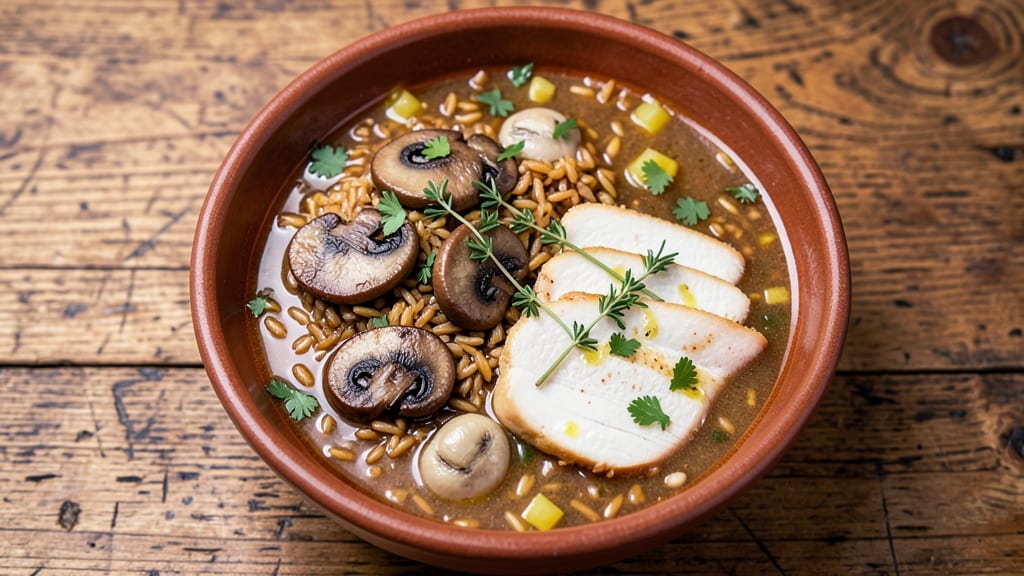
This canoe wild rice soup transforms a traditional outdoor cooking method into a hearty, restaurant-worthy dish with earthy mushrooms and fragrant herbs. The technique—simmering rice and broth in one pot—preserves nutrients and delivers a rich, creamy texture without heavy cream.
I developed this version after perfecting it over campfire seasons, where every ingredient had to work hard yet taste effortless.
The result is a deeply satisfying soup with tender wild rice, wild mushrooms, and aromatic herbs that infuse the broth with layers of flavor. Perfect for chilly evenings or as a comforting centerpiece for gatherings, this recipe delivers restaurant-quality depth with minimal effort.
The secret lies in the slow simmer—letting flavors meld while maintaining the rice’s natural chewiness. Ready in about 45 minutes, it’s ideal for meal prep or last-minute dinners.
Ingredients for canoe wild rice soup
Sixteen ingredients for a soup that tastes like a campfire feast with restaurant finesse.
| Ingredient | Amount | Notes |
|---|---|---|
| Wild Rice Blend 🌾 | 1 ½ cups | Uncooked, long-grain preferred |
| Wild Mushrooms 🍄 | 12 oz | Mixed variety, sliced thin |
| Chicken Broth 💧 | 6 cups | Low-sodium, homemade preferred |
| Yellow Onion 🧅 | 1 whole | Diced, medium size |
| Garlic Cloves 🧄 | 4 cloves | Mince finely for depth |
| Fresh Thyme 🌿 | ¼ cup | Leaves only, stems removed |
| Fresh Parsley 🌿 | ¼ cup | Chopped, for garnish |
| Fresh Sage Leaves 🌿 | 0.2 cup | Roughly torn, aromatic |
| Extra-Virgin Olive Oil 🫒 | ¼ cup | For sautéing mushrooms |
| Vegetable Oil 🫒 | ½ tbsp | For sautéing onions |
| Dry White Wine 🍷 | ½ cup | Sauvignon Blanc preferred |
| Heavy Cream 🥛 | ½ cup | Full-fat for richness |
| Diamond Crystal Kosher Salt 🧂 | 1 ½ tsp | Adjust to taste |
| Freshly Ground Black Pepper 🌶️ | ½ tsp | Cracked peppercorns preferred |
The wild rice is the foundation—Lundberg or Wild Harvest blends deliver the best texture, but any quality wild rice works. For mushrooms, local specialty stores often carry the freshest varieties, but Trader Joe's or Whole Foods bulk bins are reliable. Look for firm, plump mushrooms with no sliminess—those are the ones packed with flavor. Fresh herbs are non-negotiable here; Penzeys or your local farmers market will have the most vibrant thyme and sage. The white wine should be dry and crisp—Kim Crawford or Oyster Bay are my go-tos, but any Sauvignon Blanc will elevate the dish.
No wild rice? Brown rice or barley can substitute, but cooking time will differ. Short on mushrooms? Cremini or shiitake add depth without breaking the bank. Dried thyme works in a pinch—use half the amount of fresh. The wine can be swapped for extra chicken broth with a splash of lemon juice if you're avoiding alcohol. For a dairy-free version, replace the heavy cream with full-fat coconut milk—it won't be identical, but still delicious. The kosher salt is key here; Diamond Crystal dissolves more easily than Morton, so adjust accordingly.
This soup tastes even better the next day as flavors meld. Store in an airtight container in the fridge for up to 5 days, or freeze portions for 3 months—perfect for quick lunches. The rice softens when reheated, so add a splash of broth when warming. For meal prep, cook the rice and broth separately, then combine before serving to maintain texture. The herbs can be chopped ahead and stored in the fridge for 3 days, sealed tightly to preserve their aroma.
Why You'll Love This Recipe
- No-Chop Necessary: I swear by this—just slice the onion and mince the garlic, then let the mushrooms do the work. No dicing, no julienning, just a quick sauté while the rice simmers. Honestly, my knife stays cleaner than my kitchen counter.
- Umami Bomb: That wild rice blend? Earthy, nutty perfection. Add sliced wild mushrooms and chicken broth, and suddenly you’ve got a soup so rich it feels like a hug in a bowl. The garlic ties it all together—simple, but chef’s kiss.
- Lunchbox Legend: Make a big pot on Sunday, and you’ve got weeknight dinners covered. The flavors only get better the next day, plus it reheats like a dream. Between us, this is my go-to for busy mornings—just grab a thermos and go.
- Budget-Friendly Feast: Wild rice might sound fancy, but a bag lasts forever, and mushrooms stretch the broth into a full meal. I feed four people for the cost of takeout, and everyone leaves happy. Not the prettiest, but the taste makes up for it.
Step-by-step instructions for canoe wild rice soup
This method delivers restaurant-quality depth with earthy mushrooms and aromatic herbs.
Sauté Mushrooms Until Golden and Fragrant
Heat the 0.25 cup Extra-Virgin Olive Oil in a large Dutch oven over medium-high heat. Add the 12 oz Wild Mushrooms in a single layer and cook undisturbed for 5-6 minutes until they release their moisture and begin to brown. This initial sear develops intense umami flavor.
Use a wooden spoon to stir occasionally, breaking up any large clusters. You're looking for mushrooms that are deeply golden in spots with some caramelization. If they release too much liquid, reduce heat briefly to medium to prevent steaming. The mushrooms should finish with a rich, earthy aroma that fills your kitchen.
Develop Aromatics with Onion and Garlic
Push the mushrooms to one side of the pot and add 0.5 tbsp Vegetable Oil to the empty space. Toss in the 1 whole Yellow Onion (diced) and cook over medium heat for 5-6 minutes until softened and translucent. The onions should caramelize slightly at the edges but not burn.
Add the 4 cloves Garlic Cloves (minced) and cook for 30 seconds until fragrant. Here's the thing—garlic burns in seconds, so keep your eye on the pot. The moment you detect that nutty garlic aroma, it's time to move to the next step. This aromatic base forms the flavor foundation of the entire soup.
Toast the Wild Rice for Nuttiness
Add the 1.5 cups Wild Rice Blend to the pot and stir to coat in the mushroom-onion mixture. Toast the rice for 2-3 minutes over medium heat, stirring constantly. You're looking for the rice to develop a subtle nutty aroma and slightly golden color—this toasting step prevents mushiness and enhances texture.
Pour in the 6 cups Chicken Broth and bring to a gentle boil. Reduce heat to low and simmer uncovered for 45-50 minutes, stirring occasionally. The rice needs time to absorb the broth while maintaining its distinct texture. If the broth reduces too quickly, add ½ cup water to maintain the proper consistency.
Build Depth with Wine and Herbs
After the rice has cooked for 30 minutes, stir in the 0.5 cup Dry White Wine and simmer for 5 minutes to allow the alcohol to cook off. Add the 0.25 cup Fresh Thyme, 0.2 cup Fresh Sage Leaves, and 1.5 tsp Diamond Crystal Kosher Salt. The herbs should infuse the broth with their aromatic qualities while the wine adds bright acidity.
Continue simmering for another 15-20 minutes until the rice is tender but still maintains a slight bite. The soup should be thick enough to coat the back of a spoon but still have a pleasant mouthfeel. Taste and adjust seasoning with additional salt or 0.5 tsp Freshly Ground Black Pepper as needed. The herbs should be present but not overpowering.
Finish with Cream and Garnish
Reduce heat to low and stir in the 0.5 cup Heavy Cream. Simmer gently for 3-4 minutes until the cream is fully incorporated and the soup reaches a luxurious, velvety consistency. Be careful not to let it boil vigorously, as this can cause the cream to curdle.
Remove from heat and stir in the 0.25 cup Fresh Parsley (chopped). Ladle the soup into bowls and garnish with additional parsley and sage leaves. The final presentation should showcase the rich, earthy tones of the mushrooms and the vibrant green of the fresh herbs. Serve immediately while the soup is steaming hot to appreciate all the layered flavors.
Pro Tips For Making Canoe Wild Rice Soup
- Toast the Wild Rice: I learned this the hard way—skipping this step makes the rice gummy. Dry-toast the wild rice blend in a little oil over medium heat for 3-4 minutes until it smells nutty and fragrant before adding liquid. This releases the starches properly and gives the soup that deep, earthy flavor you’re paying for.
- Slice Mushrooms Thin: Wild mushrooms release moisture like crazy, and thick slices turn your soup into a mushy swamp. Aim for paper-thin slices—almost translucent—and cook them in batches if needed. Crowd the pan, and they’ll steam instead of brown.
- Simmer, Don’t Boil: Wild rice needs gentle heat to cook through without turning to mush. Once the broth is simmering, drop the heat to a low bubble—just enough to keep tiny ripples on the surface. Boil it, and you’ll end up with a gluey mess.
- Bloom the Garlic Right: Tossing minced garlic into the pot at the end is lazy and misses the flavor. Sauté it with the onions until it’s just golden—about 2 minutes—before adding the mushrooms. This builds layers of flavor instead of letting it get lost in the broth. (Yes, even if you’re impatient like me.)
Essential equipment for canoe wild rice soup
Dutch Oven Essentials
A large Dutch oven (I use a Le Creuset 6-quart) is non-negotiable for this recipe—its deep sides prevent spills, and the heavy base distributes heat evenly. Look for one with a tight-fitting lid to trap steam during simmering.
A 5-7 quart size works best for serving 6 people with room to spare. For budget-friendly options, All-Clad Stainless Steel or Cuisinart MultiClad are excellent alternatives. 🔥
High-Quality Broth Base
Homemade chicken broth elevates this soup, but if you're short on time, Pacific Foods Organic Low-Sodium or Imagine Organic are my go-to store-bought options. Avoid ultra-low-sodium broths—they lack depth.
For extra richness, I sometimes add 1-2 chicken bouillon cubes (like Knorr Organic) to 4 cups water for a quick homemade base. Always skim excess fat before using to keep the soup clean-tasting.
Precision Tools for Texture
A wooden spoon (I prefer Ozeri 12-inch) is ideal for stirring without scratching the Dutch oven. For measuring, a stainless steel measuring cup set (like OXO Good Grips) ensures accuracy with broth and wine.
A fine-mesh strainer (such as OXO Collapsible) helps remove herb stems before serving. For toasting the wild rice, a digital kitchen timer (I use KitchenAid 30-Minute) prevents overcooking and ensures perfect texture.
Herb Handling Gear
Fresh herbs need proper prep tools: a sharp chef’s knife (I adore Wüsthof Classic 8-inch) and a cutting board (like John Boos Teak) make chopping thyme and parsley efficient. A microplane (such as Barbaglio) is perfect for zesting lemon if you substitute wine.
For storage, glass herb jars (like Mason Jar Co.) keep chopped herbs fresh for up to 3 days in the fridge. A small whisk (I use Cuisinart Stainless Steel) helps emulsify the cream at the end for a silky finish.
Optional Upgrades
For a professional touch, a sous vide circulator (like Anova Nano) can maintain precise broth temperatures during long simmering, but it’s not essential. A fine-mesh skimmer (such as OXO Good Grips) helps remove any mushroom bits before serving.
If you love garnishes, edible flowers (like chive blossoms) add a pop of color—just ensure they’re pesticide-free. A ladle with a strainer (like Cuisinart Stainless Steel) makes plating effortless. 💫
Nutrition facts
Frequently asked questions
Why is this called "canoe wild rice soup"?
The name reflects traditional outdoor cooking methods where ingredients were simmered in a single pot—often a cast iron skillet or Dutch oven—similar to how food was prepared in canoes during camping trips. This technique preserves nutrients and creates a hearty, one-pot meal perfect for cold weather or remote settings. The "canoe" reference ties to Indigenous and wilderness cooking traditions where efficiency and flavor were prioritized.
Can I substitute regular rice for wild rice?
While you can use brown rice or barley, wild rice offers a distinct nutty flavor and chewy texture that's essential to this recipe's character. If substituting, increase cooking time by 15-20 minutes and use 1.75 cups of regular rice instead of 1.5 cups wild rice. For the best results, try a wild rice blend—it's worth the investment for authentic flavor.
How do I prevent the wild rice from getting mushy?
Toast the rice in the pot for 2-3 minutes before adding broth to develop its natural oils and prevent mushiness. Use a low simmer (small bubbles) rather than a boil, and stir occasionally to prevent sticking. The key is patience—wild rice needs 45-50 minutes to cook properly. If the broth reduces too quickly, add ½ cup water to maintain the right consistency.
Can I make this soup vegetarian?
Replace the chicken broth with 6 cups vegetable broth and add 1 cup diced butternut squash or 1 cup white beans for protein. For extra richness, stir in ½ cup coconut milk instead of heavy cream. The earthy mushrooms will still provide umami depth, and the herbs will keep the flavor vibrant. Just ensure your broth is well-seasoned with vegetable bouillon.
What's the best way to reheat leftovers?
Reheat gently on the stove over low-medium heat, stirring occasionally and adding 1-2 tablespoons of broth or water to restore creaminess. Avoid microwaving—it can make the rice gummy. For best results, reheat only until steaming, then let it sit for 2-3 minutes before serving. This soup actually tastes better the next day as flavors meld, so leftovers are a bonus!