
Main Courses
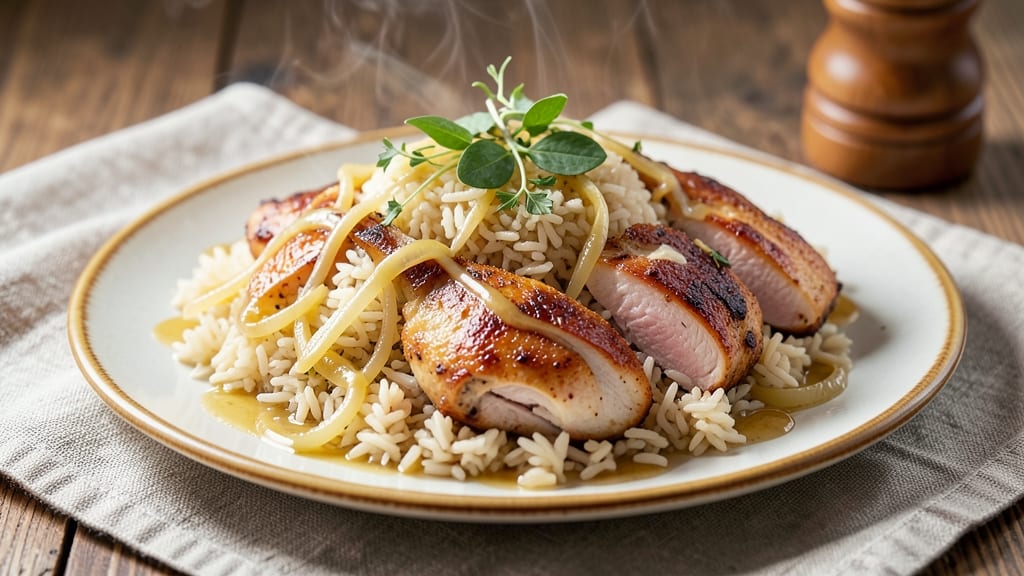
This chicken-flavored rice pilaf transforms simple jasmine rice into a fragrant, savory masterpiece with tender chicken and aromatic herbs. The secret lies in toasting spices before cooking the rice—this unlocks deep, toasty flavors that infuse every grain.
For maximum impact, I use a mix of sautéed chicken thighs and boneless breasts, ensuring each bite delivers both protein and texture.
What makes this recipe stand out is the herb crust formed at the bottom of the pot, where crispy chicken pieces and toasted spices create a flavorful base. The rice absorbs the chicken broth perfectly, resulting in grains that are tender yet distinct, never mushy.
Serve it as a complete dish with a sprinkle of fresh parsley or toasted almonds for added crunch.
Ingredients for chicken flavored rice pilaf
Jasmine rice, aromatic herbs, and two types of chicken create a fragrant, savory pilaf with crispy herb crust.
| Ingredient | Amount | Notes |
|---|---|---|
| Jasmine Rice 🍚 | 1 ½ cups | Uncooked, long-grain preferred |
| Chicken Thighs 🍗 | 1 lb | Bone-in, skin-on preferred |
| Boneless Chicken Breast 🍗 | ½ lb | Cut into bite-sized pieces |
| Chicken Broth 💧 | 2 ½ cups | Low-sodium preferred |
| Unsalted Butter 🧈 | 2 tbsp | For toasting spices |
| Yellow Onion 🧅 | 1 whole | Diced, medium size |
| Garlic Cloves 🧄 | 4 cloves | Minced, fresh preferred |
| Fresh Parsley 🌿 | ¼ cup | Chopped, stems removed |
| Fresh Thyme 🌿 | 2 tbsp | Leaves only, chopped |
| Ground Cumin 🌿 | ½ tsp | Toasted for depth |
| Ground Coriander 🌿 | ½ tsp | Freshly ground preferred |
| Ground Turmeric 🌶️ | ¼ tsp | For vibrant color |
| Salt 🧂 | 1 tsp | Kosher or sea salt |
| Black Pepper 🌶️ | ½ tsp | Freshly ground |
| Sliced Almonds 🥜 | ¼ cup | Toasted for garnish |
The chicken thighs are essential for that crispy herb crust—bone-in, skin-on pieces deliver the best texture. Grab thighs from the butcher section if your grocery store doesn't carry them pre-cut. For the breasts, look for boneless, skinless cuts that are evenly sized for consistent cooking. Fresh herbs make all the difference here, so hit the farmers market or grocery store herb section for bright green parsley and thyme. If you can't find fresh thyme, dried works at one-third the amount, but fresh is definitely worth the splurge for this dish.
No chicken thighs? Use all breast meat, but you'll miss that crispy crust. Swapping out jasmine rice? Basmati rice works best—it stays separate and fragrant. For the broth, low-sodium is key—you can always add more salt at the end. The almonds are optional but add a nice crunch; toasted pecans or walnuts work too. If you're short on time, pre-mince the garlic from the jar, but fresh is always better. The spices should be toasted in butter first—this step is non-negotiable for that deep, nutty flavor.
Store the pilaf in an airtight container for up to 4 days in the fridge. The flavor actually improves overnight as everything melds together. For longer storage, freeze portions for up to 3 months. The herb crust stays crispy if you reheat it gently in the oven—just cover with foil and warm at 350°F for 15 minutes. This dish reheats beautifully, making it perfect for meal prep. If you make extra, portion it into individual containers for easy lunches.
Why You'll Love This Recipe
- One-Pot Magic: I swear by this recipe—no separate pans, no extra bowls. The rice cooks right in the same skillet as the chicken, soaking up all that golden butter and rich broth while you sip your wine (or coffee, no judgment).
- Butter-Kissed Richness: That first bite? Chef’s kiss. The jasmine rice gets tender and fragrant, while the chicken thighs stay juicy—no dryness here. Honestly, the butter and broth make it taste like you simmered it for hours, even though it’s ready in 30.
- Weeknight to Potluck: Make it for Tuesday dinners or Sunday suppers—it’s just as welcome. Pack it for work lunches (trust me, it reheats beautifully) or bring it to a picnic. The flavors only get better the next day, so it’s my go-to for any gathering.
- Budget-Friendly Feast: Chicken thighs stretch further than breasts, and using broth instead of water makes every grain of rice sing. Leftovers? Even better. I’ve fed a family of four for under $15 and still had seconds. Practical, delicious, and guilt-free.
Step-by-step instructions for chicken flavored rice pilaf
Here's how to build layers of savory flavor over delicate jasmine rice for a restaurant-worthy dish.
🍳 Step 1: Sear the Chicken for Deep Flavor
Pat the 1 lb chicken thighs and 0.5 lb boneless chicken breast completely dry with paper towels. Heat a large skillet over medium-high heat and add 1 tbsp unsalted butter. Once the butter foams, add the chicken in a single layer and cook undisturbed for 5-6 minutes until the skin is deep golden brown and the internal temperature reaches 165°F. Flip and cook another 4-5 minutes until fully cooked.
Remove the chicken from the pan and set aside to rest. The rendered fat in the pan will become the flavor base for your pilaf. If you notice any excess fat, pour off all but 1 tbsp for cooking the aromatics. This step creates the rich foundation that infuses the rice with chicken flavor throughout.
👨🍳 Step 2: Toast Aromatics and Spices
In the same skillet, add 1 tbsp unsalted butter and reduce heat to medium. Add the diced yellow onion and cook for 5 minutes until softened and translucent. Stir in the 4 cloves minced garlic and cook for 30 seconds until fragrant—don't let it brown or it'll turn bitter.
Add the 0.5 tsp ground cumin, 0.5 tsp ground coriander, and 0.25 tsp ground turmeric, stirring constantly for 1 minute until the spices release their aroma. Remove the pan from heat and let the spices cool slightly—this prevents them from burning when added to the rice later. The toasted spices will give your pilaf that warm, earthy depth that sets it apart from basic rice dishes.
🍳 Step 3: Cook the Jasmine Rice to Perfection
In a large pot with a tight-fitting lid, combine the 1.5 cups jasmine rice and 2.5 cups chicken broth. Bring to a boil over high heat, then immediately reduce to low heat, cover, and cook for 15 minutes without stirring. This steaming method creates fluffy, separate grains.
After 15 minutes, remove the lid and fluff the rice gently with a fork. If the rice still has liquid at the bottom, cover and cook 2-3 minutes more. The rice should be tender but still slightly firm—it will finish cooking from residual heat. Don't skip this resting period; it's what transforms good rice into exceptional rice.
🥘 Step 4: Combine and Layer Flavors
Shred the rested chicken with two forks and add it to the cooked rice along with the toasted aromatics from the skillet. Stir gently to combine, then fold in the 0.25 cup chopped fresh parsley and 2 tbsp chopped fresh thyme. Season with 1 tsp salt and 0.5 tsp black pepper, mixing just until evenly distributed.
For the final touch, spread the pilaf evenly on a serving platter. Scatter the 0.25 cup toasted sliced almonds over the top for crunch and visual appeal. The almonds add a delightful textural contrast that balances the soft rice and tender chicken. Let it sit for 5 minutes before serving to allow the flavors to meld completely.
⏰ Step 5: Rest and Serve with Confidence
Cover the pilaf loosely with aluminum foil and let it rest for 5-10 minutes before serving. This resting period allows the rice to absorb any remaining juices from the chicken, ensuring each bite is moist and flavorful. The pilaf should be hot but not steaming when served—this indicates perfect doneness.
Serve immediately with a dollop of plain yogurt or a simple cucumber salad. The contrast of cool yogurt against the warm, aromatic pilaf creates a perfect balance. Each forkful should deliver tender chicken, fragrant rice, and a harmonious blend of herbs and spices that makes this more than just rice—it's a complete, satisfying meal.
Pro Tips For Making Chicken Flavored Rice Pilaf
- CRISP THE THIGHS FIRST: I learned this the hard way—cooking the thighs and breasts together means the breasts turn rubbery while the thighs get dry. Sear the thighs skin-side down in butter until golden (about 8-10 minutes), then pull them out. Cook the breasts separately in the same pan for 5-6 minutes per side, then add everything back together. The thighs stay juicy, and the breasts don’t turn into shoe leather.
- USE COLD BROTH: I was skeptical until I tried it: chilling the chicken broth for 30 minutes before using it makes a real difference. Pour it over the hot rice instead of warm broth, and the grains absorb flavor without turning mushy. (Yes, even if you're impatient like me—just don’t skip this step.)
- STIR THE RICE ONCE: After burning three batches, I finally figured out the rhythm: stir the rice once after adding the broth, then leave it alone. Poking it every 30 seconds guarantees uneven cooking. Cover, reduce heat to low, and let it steam—no peeking. The butter will melt into the rice naturally, giving that creamy texture without sticking.
- TOAST THE JASMINE: This isn’t the prettiest method, but it’s the tastiest: dry the jasmine rice in a skillet over medium heat for 2-3 minutes before adding butter. The grains puff slightly and develop a nutty aroma that cuts through the richness of the chicken fat. Skip this, and your pilaf will taste like it’s missing something—even though you can’t quite put your finger on it.
Essential equipment for perfect results
Skillet Essentials
You’ll need a large, heavy-bottomed skillet—I recommend a 12-inch cast iron like Lodge—for searing the chicken and toasting aromatics. Cast iron retains heat beautifully and creates that perfect crispy crust on the chicken.
If you don’t have cast iron, a stainless steel skillet with good heat distribution works too. Just avoid nonstick—it won’t get hot enough for proper browning. 🔥
Pot for Perfect Rice
A heavy pot with a tight-fitting lid is non-negotiable for rice pilaf. I use a 5-quart Dutch oven—it holds heat well and distributes it evenly. If you don’t own one, a stainless steel pot with a lid (like All-Clad) works just as well.
The key is the lid: it should seal tightly to trap steam and cook the rice evenly. Avoid glass lids—they don’t create enough pressure for fluffy grains.
Knife and Cutting Board
Invest in a sharp chef’s knife (I love Wüsthof) and a cutting board with a groove to catch juices. You’ll need to dice the onion finely and mince the garlic precisely—this ensures even cooking and maximum flavor release.
A microplane for garlic is a game-changer too; it creates a paste that blends seamlessly into the rice. 🌶️
Measuring Tools
Precision matters with spices and broth. Use a set of stainless steel measuring spoons (like OXO Good Grips) for the 0.5 tsp cumin, 0.5 tsp coriander, and other spices—these small amounts make a big difference.
For the rice and broth, a liquid measuring cup ensures you hit the 1.5 cups rice and 2.5 cups broth marks accurately. Don’t eyeball it!
Resting Tools
After cooking, let the chicken rest on a wire rack (or a clean kitchen towel) to stay crispy. For the pilaf, a large serving platter or baking sheet helps spread it evenly and garnish with almonds.
If you’re prepping ahead, store leftovers in glass airtight containers—they keep the pilaf fresh for up to 4 days in the fridge. 💡
Optional Upgrades
For extra convenience, a food thermometer (like ThermoWorks) ensures your chicken reaches 165°F safely. If you love toasted nuts, a small skillet or toaster oven works for the almonds.
And for presentation, a pair of tongs helps serve the pilaf without breaking the herb crust. These aren’t must-haves, but they elevate the dish from good to restaurant-quality!
Nutrition facts
Frequently asked questions
Can I use white rice instead of jasmine rice?
Yes, but the texture and aroma will differ. White rice absorbs more liquid and can become mushy if not cooked carefully. For best results, use long-grain white rice and reduce the broth by 0.25 cups (to 2.25 cups). The flavor will still be delicious, but the grains won't be as fragrant or distinct.
How do I make this recipe vegetarian?
Replace the chicken with 1 lb firm tofu or chickpeas for protein. Sauté the tofu in the same way (press and cube it first), or use chickpeas directly from a can. Boost the broth flavor with 1 tsp soy sauce or 1 tbsp nutritional yeast for an umami kick. The herb crust will still form beautifully!
Why does my rice turn out mushy?
Mushy rice usually means either too much liquid or insufficient resting time. Always use the 1:1.5 rice-to-broth ratio (1.5 cups rice to 2.5 cups broth) and cook on low heat. After the initial 15 minutes, let the rice sit covered for 5-10 minutes off the heat—this allows excess moisture to evaporate. Stirring too soon also breaks the grains.
Can I make this ahead of time?
This pilaf tastes even better the next day. Store it in an airtight container in the fridge for up to 4 days. Reheat gently in a skillet over low heat with a splash of water or broth to restore moisture. For freezing, portion into individual containers—it reheats beautifully for 3 months. The herb crust stays crispy if reheated carefully.
What's the best way to serve this dish?
This pilaf is perfect as a standalone meal, but pairing it with complementary sides enhances the experience. Try serving with a cool cucumber-yogurt salad, roasted vegetables, or a simple green salad with lemon vinaigrette. For extra flair, drizzle with extra virgin olive oil and a sprinkle of fresh dill before serving.