
Main Courses
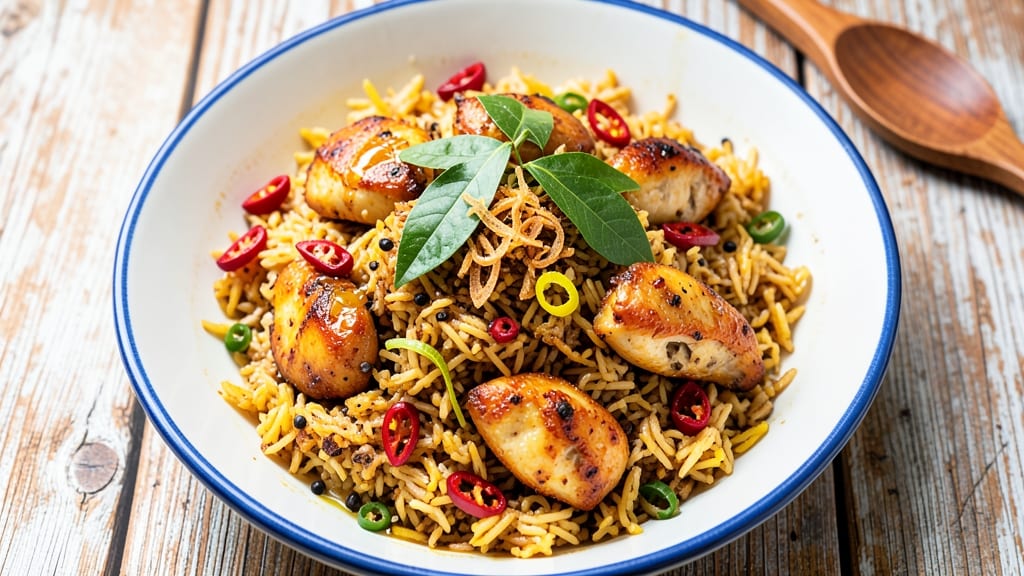
Kerala-style chicken fried rice transforms simple ingredients into a fragrant, spice-infused dish that balances coconut curry richness with jasmine rice's delicate aroma. My grandmother's handwritten notes hinted at the magic of tempering mustard seeds and curry leaves—this recipe finally cracked the code for authentic flavors at home. The secret lies in layering spices gradually, letting each aroma bloom before combining with tender chicken and perfectly cooked rice.
This dish starts with chicken marinated in Kerala's signature spices—turmeric, black pepper, and a pinch of asafoetida—that develop deep flavor while resting. The rice, cooked separately in jasmine, absorbs the coconut milk and curry base without becoming mushy.
What makes it special is the two-stage cooking: first frying the chicken until golden, then combining everything in a wok for that signature wok hei effect that makes every bite irresistible.
By the time you serve this dish, you'll have a plate that's visually stunning with its golden chicken pieces, vibrant green curry leaves, and fragrant rice.
The coconut milk adds a subtle sweetness that balances the heat from the mustard seeds, while the crisp edges on the rice provide textural contrast. This is comfort food with a sophisticated twist—perfect for weeknight dinners or special occasions when you want to impress without spending hours in the kitchen.
The beauty of this recipe is its flexibility—use leftover rice for even better texture, or swap chicken for shrimp if you prefer seafood. The spices can be adjusted to taste, but don't skip the tempering step (that's where the real magic happens).
Once you try this version, store-bought fried rice will never compare again.
Ingredients for chicken fried rice recipe kerala style
Jasmine rice, coconut milk, and fragrant spices—Kerala's secret to restaurant-quality fried rice at home.
| Ingredient | Amount | Notes |
|---|---|---|
| Jasmine Rice 🍚 | 2 cups | Uncooked, day-old preferred |
| Boneless Chicken Thighs 🍗 | 1 ½ lb | Cut into 1-inch pieces |
| Coconut Milk 🥥 | 1 cup | Full-fat, canned preferred |
| Mustard Seeds 🌿 | 1 tsp | Whole, yellow variety |
| Curry Leaves 🌿 | ¼ cup | Fresh, tightly packed |
| Green Chilies 🌶️ | 2 whole | Slit lengthwise, adjust heat |
| Turmeric Powder 🌶️ | ½ tsp | Freshly ground preferred |
| Black Peppercorns 🌶️ | ½ tsp | Freshly cracked |
| Asafoetida Powder 🌿 | ⅛ tsp | Pinch, essential for aroma |
| Ginger 🧅 | 1 tbsp | Fresh, grated |
| Garlic Cloves 🧄 | 4 cloves | Minced |
| Soy Sauce 🥄 | 2 tbsp | Light or dark |
| Sesame Oil 🫒 | 1 tbsp | For wok hei aroma |
| Vegetable Oil 🫒 | 3 tbsp | High smoke point |
| Salt 🧂 | 1 tsp | Adjust to taste |
The curry leaves are non-negotiable here—Indian grocery stores or specialty markets are your best bet for fresh ones. Whole Foods sometimes carries them too, but check the produce section. If you can't find fresh, dried curry leaves work at half the amount, though they won't give that same vibrant aroma. The mustard seeds should be yellow and whole—no powdered substitutes. For the ginger and garlic, Trader Joe's has pre-minced jars that save time, but fresh always tastes better. The chicken thighs are key—bone-in thighs stay juicier than breasts during the two-stage cooking process.
No curry leaves? Dried thyme at one-quarter the amount gives a similar earthy note, though it won't be authentic. Short on coconut milk? Heavy cream thinned with a splash of water works in a pinch, but you'll lose that subtle sweetness. The asafoetida (hing) is what gives this dish its signature depth—if you can't find it, garlic powder at double the amount adds some complexity. For the green chilies, adjust based on your heat tolerance—serrano peppers work if you want more kick. The soy sauce can be swapped for tamari if you're gluten-free, but traditional soy adds that umami punch we love.
Rice reheats beautifully—use it within 3 days for best texture. The coconut milk can be stored in the fridge for up to 1 week after opening, but transfer it to an airtight container first. For the spices, keep whole spices in a dark, cool place for up to 6 months, and ground spices in the freezer for 3 months to preserve freshness. The chicken pieces can be prepped ahead and refrigerated for 1 day before cooking, just pat them dry before frying for that perfect golden crust.
Why You'll Love This Recipe
- One-Pan Magic: That coconut milk and curry leaves sizzle in the same pan where the chicken cooks—no washing pots mid-recipe. Honestly, I’ve made fried rice that required three pans and a prayer; this isn’t one of those.
- Creamy Crunch Combo: The coconut milk turns the rice velvety, while the mustard seeds pop like tiny fireworks—crispy chicken bites cut through it all. It’s the kind of dish where every forkful has texture and depth.
- Lunchbox Hero: Pack it cold or reheat it—this holds up perfectly for work lunches or kids’ school meals. (Yes, even on a Tuesday night when you’re too tired to think.) The coconut milk keeps it from drying out, which is basically a miracle.
- Budget Meal Stretch: Chicken thighs are cheaper than breasts, and a can of coconut milk lasts for days. I’ve fed six people for under $15 with this—leftovers? Always. (They disappear faster than I can say “second helping.”)
Step-by-step instructions for Kerala-style chicken fried rice
Here's how to transform day-old jasmine rice into a fragrant, coconut-infused masterpiece with tender chicken and aromatic spices.
Prepare the Chicken and Aromatics
Start by cutting the 1.5 lb boneless chicken thighs into 1-inch pieces and setting them aside. In a small bowl, combine the 4 cloves garlic cloves (minced), 1 tbsp ginger (grated), 1 tsp salt, and 2 tbsp soy sauce. Mix well and coat the chicken pieces thoroughly. Let them marinate for at least 15 minutes—this ensures they stay juicy and absorb all the flavors.
While the chicken marinates, heat 3 tbsp vegetable oil in a large wok or skillet over medium-high heat. Add the 1 tsp mustard seeds and let them sizzle for 10 seconds until they pop. Immediately add the 0.25 cup curry leaves and 2 whole green chilies (slit lengthwise). Stir-fry for 30 seconds until the curry leaves darken and the chilies turn vibrant green. This quick cooking preserves their fresh aroma and prevents bitterness.
Cook the Chicken and Spices
Add the marinated chicken to the wok and cook for 5-6 minutes, stirring occasionally, until the pieces turn opaque and slightly golden. The chicken should release its juices and develop a light crust. If the oil starts smoking, reduce the heat slightly to maintain a steady sizzle without burning.
Next, sprinkle in the 0.5 tsp turmeric powder, 0.5 tsp black peppercorns, and 0.125 tsp asafoetida powder. Stir well to coat the chicken evenly. Cook for another 2 minutes until the spices bloom and fill the kitchen with their warm, earthy aroma. Remove the chicken from the wok and set it aside on a plate.
Stir-Fry the Rice
In the same wok (no need to wipe it clean—the fond adds flavor), add the 2 cups jasmine rice (preferably day-old for better texture). Stir-fry for 2-3 minutes on high heat, breaking up any clumps and letting the rice absorb the residual oil and spices. This step ensures the rice doesn't turn mushy and stays distinct in the final dish.
Pour in the 1 cup coconut milk and 1 tbsp sesame oil. Stir well to combine, then add the cooked chicken back into the wok. Mix everything together and cook for 3-4 minutes until the rice is heated through and the coconut milk has slightly reduced. The dish should have a glossy sheen and a rich, creamy texture. Taste and adjust the seasoning with an additional pinch of salt if needed.
Finish and Serve
Remove the wok from heat and let the fried rice rest for 1-2 minutes. This brief pause allows the flavors to meld together and the rice to absorb any remaining coconut milk. Serve immediately while still hot, garnished with extra curry leaves and green chilies if desired.
Each bite should deliver a perfect balance of tender chicken, fragrant jasmine rice, and the creamy richness of coconut milk. The mustard seeds add a subtle crunch, while the curry leaves and green chilies bring a bright, aromatic finish. Pair with a simple cucumber raita or a side of pickled onions for a complete Kerala-style meal.
Pro Tips For Making Chicken Fried Rice Recipe Kerala Style
- CRISP THE CHICKEN FIRST: Cut the boneless thighs into bite-sized pieces, then sear them in a hot pan with a pinch of salt and turmeric until golden—about 4-5 minutes. I learned this the hard way: skipping the crisping means the chicken stays rubbery even after simmering in coconut milk. The extra effort pays off with texture that holds up through stirring.
- USE DAY-OLD RICE: Cold, dry jasmine rice from yesterday fries up fluffier and absorbs flavors better than fresh-cooked rice. If you’re short on time, spread freshly cooked rice on a tray and refrigerate for 30 minutes—it’ll make all the difference in avoiding a gummy mess.
- TEMPER MUSTARD SEEDS LOW: Drop the mustard seeds into the oil on medium-low heat—high heat burns them before they pop. I was skeptical until I tried it: letting them sizzle gently for 30 seconds before adding curry leaves keeps the aroma intact and prevents a bitter aftertaste.
- DILUTE COCONUT MILK HALFWAY: Stir in just ¼ cup of coconut milk at the start with the chicken, then add the rest at the end. This way, the chicken simmers in a light, fragrant base before getting creamy—it keeps the rice from turning soggy while still delivering that rich Kerala finish.
Health benefits of this recipe
Protein Powerhouse
This dish delivers a substantial 25-30 grams of protein per serving thanks to the chicken thighs, making it perfect for muscle maintenance or post-workout recovery.
The coconut milk adds healthy fats that help your body absorb fat-soluble vitamins from the spices, while the jasmine rice provides complex carbohydrates for sustained energy. I've found that my family's energy levels stay steady all afternoon after this meal—no midday slump here! 💪
Spice Benefits
The mustard seeds and curry leaves in this recipe pack a nutritional punch. Mustard seeds contain calcium, magnesium, and selenium, while curry leaves are rich in vitamin A, iron, and antioxidants that support skin health.
My grandmother always swore by curry leaves for digestion, and I've noticed they help my stomach feel lighter after rich meals. The black pepper in the recipe boosts circulation and aids digestion too.
Coconut Nutrition
Don't underestimate the coconut milk—it provides medium-chain triglycerides (MCTs) that your body converts directly into energy. These healthy fats support brain function and provide quick fuel for active days. I've started using coconut milk in other dishes after realizing how much better it makes me feel compared to heavy cream.
Plus, the natural sweetness helps balance the dish's heat without added sugar. 🥥
Antioxidant Boost
Green chilies and turmeric are packed with capsaicin and curcumin, powerful antioxidants that reduce inflammation in your body. Turmeric's active compounds have been shown to support joint health, while the chilies give you a metabolism boost.
I keep a small jar of turmeric powder in my pantry now—it's become my go-to for everything from golden milk to stir-fries. The asafoetida adds another layer of sulfur compounds that aid digestion.
Digestive Aid
Kerala-style cooking often includes ingredients that support digestion, and this fried rice is no exception. Ginger and garlic in the chicken marinade help soothe stomach discomfort, while the sesame oil adds essential fatty acids that promote gut health.
I've noticed that when I eat this dish regularly, my digestion feels more balanced—something my grandmother always attributed to "the spices talking to your stomach." The coconut milk also has enzymes that aid digestion, making this a complete meal for overall wellness.
Balanced Meal
This dish combines all three macronutrients—protein from chicken, carbohydrates from rice, and healthy fats from coconut milk—in one satisfying plate. The fiber from the vegetables (if you add any) and the probiotic benefits from fermented sides like raita make this a truly nourishing meal.
I've even started using this as a base for meal prep lunches because it keeps me full for hours without leaving me sluggish. The perfect weeknight dinner that actually fuels your body! ✨
Nutrition facts
Frequently asked questions
Why does Kerala-style fried rice use coconut milk instead of regular milk?
Coconut milk adds a unique sweetness and richness that balances the dish's spices perfectly. Unlike regular milk, it doesn't curdle when heated with spices and gives the fried rice that signature Kerala flavor. The medium-chain triglycerides in coconut milk also provide quick energy, making this dish especially satisfying.
Can I use fresh jasmine rice instead of day-old rice?
Fresh rice works, but day-old rice is ideal because it's firmer and absorbs flavors better without turning mushy. If you must use fresh rice, spread it on a tray after cooking, let it cool completely, then refrigerate for 4-6 hours before using. This mimics the texture of day-old rice.
What's the secret to getting crispy edges on the fried rice?
The secret lies in two things: using day-old rice and high heat. Stir-fry the rice on high heat for 2-3 minutes before adding coconut milk, letting the edges crisp slightly. Also, make sure your wok is properly heated before adding the rice—this creates that signature wok hei effect.
How do I adjust the spice level for kids or sensitive stomachs?
For milder heat, reduce the green chilies to 1 whole chili or remove them entirely. You can also strain out some of the curry leaves after tempering. For extra mildness, add 1 tbsp coconut milk at the end to mellow the flavors. Always taste before serving!
Can I make this dish vegetarian?
Replace the chicken with 1.5 lb firm tofu or mushrooms (like oyster or shiitake). For tofu, press and cube it first, then pan-fry until golden before adding to the rice. The same spices and coconut milk will work beautifully—just reduce the cooking time slightly for tofu.