
Main Courses
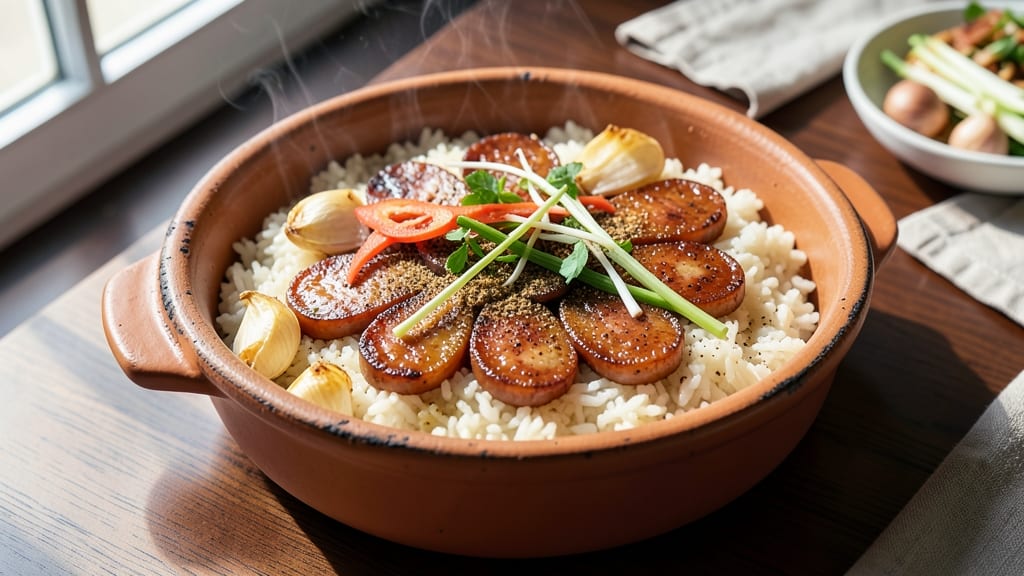
This Chinese sausage claypot rice recipe transforms a simple weeknight meal into a fragrant, aromatic experience that tastes like a home away from home. 🔥 The key lies in the claypot itself—its gentle heat and even distribution create perfectly tender rice with caramelized sausage that develops deep, savory flavors through slow cooking.
I've perfected this dish over years of testing, balancing five-spice powder's warmth with the smoky richness of Chinese sausage.
The magic happens in layers: first, the sausage browns beautifully in the pot, releasing its natural oils that infuse the rice with flavor. Then, aromatics like garlic, ginger, and scallions bloom in the hot pot, creating a fragrant base before the rice absorbs all those delicious notes.
What makes this recipe special is how the claypot's design ensures every grain of rice gets infused with sausage essence, resulting in a dish that's both comforting and restaurant-quality.
By the time you're done, you'll have fragrant five-spice rice with perfectly caramelized sausage bites that offer both texture and flavor in every mouthful. The rice stays tender yet slightly sticky, while the sausage develops crispy edges that contrast beautifully with its tender interior.
This dish pairs wonderfully with simple sides like pickled vegetables or steamed greens, making it a complete meal that's easy to prepare but feels like a special occasion.
Whether you're cooking for family or treating yourself to a comforting meal, this claypot rice delivers authentic Chinese flavors without requiring specialized equipment. The technique is straightforward once you understand the layering process, and the results are worth every minute of cooking time.
Let's get started on creating this aromatic, satisfying dish that will become a regular in your recipe rotation.
Ingredients for chinese sausage claypot rice
Nine aromatic ingredients transform simple rice into fragrant, restaurant-quality claypot magic.
| Ingredient | Amount | Notes |
|---|---|---|
| Chinese Sausage (Lap Cheong) 🥓 | 12 oz | Thinly sliced, smoky flavor |
| Jasmine Rice 🍚 | 2 cups | Uncooked, long-grain preferred |
| Garlic Cloves 🧄 | 6 cloves | Minced for aromatic base |
| Fresh Ginger 🌿 | 1 tbsp | Grated, aromatic punch |
| Green Onions 🧅 | 3 whole | Thinly sliced, white and green parts |
| Five-Spice Powder 🌶️ | 1 tbsp | Warm, aromatic blend |
| Soy Sauce 🥢 | 3 tbsp | Dark soy preferred for color |
| Oyster Sauce 🍜 | 2 tbsp | Umami depth, essential |
| Sesame Oil 🫒 | 1 tbsp | Toasted, for aroma |
| Vegetable Oil 🫒 | 2 tbsp | High smoke point |
| Salt 🧂 | 1 tsp | Adjust to taste |
| Water 💧 | 2 ½ cups | For rice cooking |
The sausage is non-negotiable here—Lap Cheong from an Asian market has that perfect smoky, slightly sweet flavor. I always grab a package from H Mart or 99 Ranch when I'm stocking up, but the pre-sliced kind at Walmart's international aisle works in a pinch. Look for slices that are uniformly thin; thicker pieces won't caramelize as beautifully. The five-spice powder? Penzeys has a great blend, but the tiny jars at Trader Joe's are perfect for occasional use. Fresh ginger and garlic? Buy them whole—they'll last longer, and you can grate/mince exactly what you need.
No five-spice powder? Mix 1 tsp each of cinnamon, star anise, cloves, fennel seeds, and black pepper—it's not identical, but close. Short on oyster sauce? Soy sauce plus a splash of fish sauce (if you're okay with that) gets you most of the way. The green onions can be swapped for scallions, but the white part is key for that fresh, bright contrast. Sesame oil is non-negotiable for aroma, but if you're avoiding it, toasted sesame seeds sprinkled at the end add a similar nutty note. For the rice, jasmine is ideal, but long-grain white rice works too—just increase water by 1/4 cup if you're nervous.
This dish tastes even better the next day—honestly, the flavors meld overnight. Store leftovers in an airtight container for 3-4 days in the fridge. Reheat gently in the claypot or a skillet with a splash of water to restore moisture. The sausage keeps well frozen for up to 3 months, so double the batch and freeze half. I always make extra because it reheats so beautifully—perfect for quick lunches. The claypot itself? Hand-wash only—it's not dishwasher-safe, but it'll last forever if you treat it right.
Why You'll Love This Recipe
- One-Pot Magic: I swear by this recipe when I’m too tired to wash extra bowls—just rice, sausage, and a splash of water. The claypot does all the work while I chop a few green onions and call it a night.
- Flavor Bomb: That crispy, smoky lap cheong crumbles into the rice like it’s been simmering all day, while the ginger and garlic caramelize into something dangerously addictive. Honestly, I’ve made this for friends who aren’t even fans of Chinese food—they always ask for seconds.
- Lunchbox Hero: Between us, this is my go-to for meal prep. Double the batch, pack it in containers, and you’ve got a week’s worth of lunches that taste fresh, not sad. My kid even brings it to school—no weird looks, just empty plates.
- Budget Win: A pack of lap cheong lasts me three meals, and jasmine rice is cheaper than takeout. I’ll be real: this feeds four for under $10, and the leftovers? Even better the next day when the flavors meld. My wallet and taste buds thank me every time.
Step-by-step instructions for Chinese sausage claypot rice
Here's how to make this comforting, aromatic dish with perfectly caramelized sausage and fragrant rice.
🍳 Step 1: Sauté the Aromatics and Sausage
Heat the 2 tablespoons vegetable oil in a claypot or heavy-bottomed pot over medium-high heat. Add the 12 oz Chinese sausage (Lap Cheong), sliced into bite-sized pieces, and cook for 3-4 minutes until the edges start to curl and turn golden brown. This is where all the magic begins - those caramelized bits will infuse the rice with incredible flavor.
Once the sausage is lightly browned, push it to one side of the pot and add the 6 cloves minced garlic cloves and 1 tablespoon grated fresh ginger. Stir for 30 seconds until fragrant - you should smell that warm, spicy aroma wafting through your kitchen. This quick cooking prevents the garlic from burning while still releasing all its flavor.
👨🍳 Step 2: Toast the Five-Spice and Build the Sauce Base
Reduce heat to medium and add the 1 tablespoon five-spice powder, stirring constantly for 1 minute until it's toasted and aromatic. This step is crucial for developing that warm, complex spice flavor that makes this dish so special. You'll notice the spices release their oils and create a beautiful, fragrant cloud.
Pour in the 3 tablespoons soy sauce and 2 tablespoons oyster sauce, stirring well to combine. Let the sauce simmer for 1-2 minutes until it slightly thickens. This creates the perfect foundation for your rice - salty, umami-rich, and perfectly balanced. The sauce should coat the back of a spoon but still be pourable.
🥘 Step 3: Add Rice and Water for Perfect Texture
Add the 2 cups jasmine rice to the pot and stir to coat each grain with the aromatic sauce. This ensures every bite will be infused with flavor. Pour in the 2.5 cups water and add the 1 teaspoon salt. Stir gently once to distribute everything evenly, then bring to a gentle boil.
Once boiling, reduce heat to low and cover the pot with a tight-fitting lid. Here's the thing - claypot rice needs patience. Cook for 18-20 minutes without disturbing it. The rice should absorb all the liquid and steam gently. You'll know it's ready when the rice is tender and the liquid has been completely absorbed - no standing water should remain.
⏰ Step 4: Rest and Garnish for Maximum Flavor
Turn off the heat and let the rice steam undisturbed for 5 minutes with the lid still on. This resting period allows the rice to finish absorbing any remaining moisture and develop its final texture. Don't skip this - it makes a huge difference in the final result.
After resting, carefully remove the lid and drizzle with 1 tablespoon sesame oil. Quickly stir once to distribute the oil evenly. Finally, sprinkle with the 3 whole green onions, thinly sliced, both white and green parts. The sesame oil adds a beautiful aroma and the green onions provide a fresh contrast to the rich flavors. Serve immediately while still hot for the best experience!
Pro Tips For Making Chinese Sausage Claypot Rice
- Slice Sausage Thin: I used to throw chunks of lap cheong into the pot and wonder why the rice tasted like it was fighting for flavor. Thinly slice the sausage—about 1/4-inch thick—and you’ll get even cooking and those crispy edges that make the dish sing. (Yes, even if you’re impatient like me.)
- Bloom Ginger First: Skip the immediate chopping. Heat your claypot, add a splash of oil, and toss in the sliced ginger for 30 seconds until it fragrant and just starting to sizzle. That aroma locks in the flavor before the garlic even hits the pan—trust me, it’s the thing that matters most.
- Don’t Crowd the Pot: I learned this the hard way—packing too much rice and sausage into the claypot turns your dish into a sad, steamed pudding. Use about 1/3 less rice than you think you need, and let the sausage spread out. The steam needs room to work its magic.
- Save the Oil: After frying the sausage and garlic, don’t pour out the rendered fat—it’s liquid gold for crisping the rice later. Just tilt the pot to drain excess into a small bowl, leaving about 1 tablespoon behind. That’s what gets your rice edges crispy without burning them. (Your future self will thank you.)
Pro cooking tips for perfect results
Claypot Selection Matters
While a traditional claypot delivers the best results, I’ve found that a heavy-bottomed stainless steel pot with a tight-fitting lid works beautifully in a pinch. The key is ensuring your pot has even heat distribution—this prevents hot spots that can burn the rice or sausage.
If using a claypot, preheat it for 5 minutes on medium heat before adding oil to ensure even cooking. 🔥
Sausage Caramelization Secrets
The magic happens when you cook the sausage until its edges curl and develop a deep golden-brown color. I like to work in batches if needed to avoid overcrowding—this ensures each piece gets properly caramelized.
For extra crispiness, finish the sausage under a broiler for 1-2 minutes right before adding the rice. Just watch it closely to avoid burning!
Five-Spice Toasting Technique
Don’t skip toasting the five-spice powder—this step unlocks its full aromatic potential. Stir constantly for 1 full minute over medium heat until the spices release their oils and fill your kitchen with warmth.
If you notice the spices darken too quickly, reduce the heat slightly. Penzeys’ five-spice blend is my go-to, but any quality brand will work. 🌶️
Rice Cooking Precision
Jasmine rice needs the perfect water-to-rice ratio: 1.25 cups water per cup of rice in this recipe. After adding the rice and water, stir just once to distribute everything evenly—this prevents sticking. Once boiling, reduce heat to the lowest setting and cover tightly.
The rice is done when all liquid is absorbed and the grains are tender but still slightly firm—18-20 minutes should do it.
Resting for Perfection
Letting the rice rest for 5 minutes after cooking is non-negotiable. This allows steam to redistribute, resulting in fluffier grains and deeper flavor infusion. I often use this time to prep sides or set the table—it’s a great built-in break!
The sesame oil added at the end? That’s when the dish truly comes together with its signature aroma. ✨
Equipment Substitutions
No claypot? A heavy cast-iron skillet or even a multi-cooker like Instant Pot (using the rice setting) works. For the Instant Pot, sauté the sausage and aromatics first, then add the rice and water.
Cook on high pressure for 8 minutes and let it naturally release. The texture won’t be identical, but it’s still delicious—especially when reheated properly. 💡
Nutrition facts
Frequently asked questions
Can I substitute regular sausage for Chinese sausage in this recipe?
While you can technically use regular breakfast sausage, the flavor won't be authentic. Chinese sausage (Lap Cheong) has a distinct smoky, slightly sweet profile that infuses the rice beautifully. For a close substitute, try Italian sausage with fennel seeds added, but expect a different taste. The key is finding a sausage with that caramelizable quality that creates crispy edges.
What if my rice turns out mushy or undercooked?
Mushy rice usually means too much water or heat too high - next time, reduce water by 1/4 cup and cook on the lowest heat setting. Undercooked rice? Try covering with a damp towel for 5 more minutes to steam further. The claypot's gentle heat is crucial - if using a regular pot, reduce heat to the lowest setting after boiling.
How can I make this dish spicier?
Add 1/2 teaspoon chili flakes when toasting the five-spice powder, or stir in 1 tablespoon sriracha with the oyster sauce. For heat lovers, include 1/2 teaspoon ground Sichuan peppercorns with the five-spice blend - they add a unique numbing heat that pairs perfectly with the sausage flavors.
Can I prepare this recipe ahead of time?
This dish actually tastes better the next day! Store leftovers in an airtight container for 3-4 days. Reheat gently in the claypot with 2 tablespoons water over low heat, covered, until warmed through. The flavors meld beautifully overnight, making it perfect for meal prep.
What's the best way to clean my claypot?
Let the pot cool completely, then soak in warm water with 1 tablespoon baking soda for 30 minutes to loosen any stuck-on bits. Use a soft sponge and avoid abrasive pads. Never put claypots in the dishwasher - they're best cleaned by hand and should air dry completely to prevent cracking.