
Main Courses
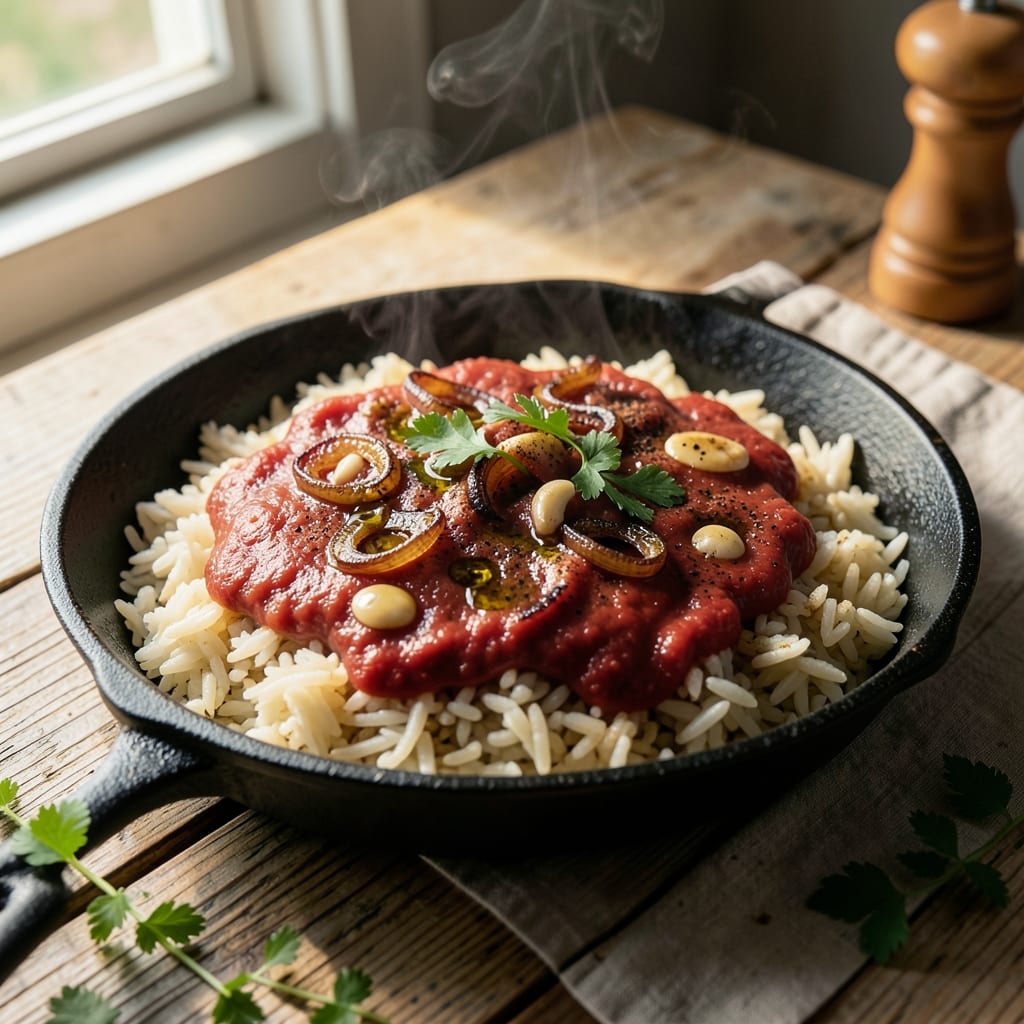
This 1960s Spanish rice recipe transports you to a time when saffron and canned tomatoes transformed simple rice into a flavorful centerpiece. The dish—likely inspired by arroz a la cubana or classic Spanish tomato rice—relies on traditional techniques like sofrito and slow simmering to build deep, aromatic layers. What makes it special is the balance of smoky paprika, bright tomato, and delicate saffron, all cooked in one pot for effortless authenticity.
The recipe reflects mid-century Spanish cooking, where resourcefulness and bold flavors reigned. Canned tomatoes (a staple in 1960s households) provide acidity and depth, while saffron adds that signature golden hue and earthy warmth. The rice develops a satisfying crunch at the edges while staying tender inside—a texture that’s both nostalgic and universally appealing. This method ensures the dish stays true to its roots while being accessible for modern kitchens.
By the end, you’ll have a fragrant, tomato-soaked rice dish with a saffron-infused crunch that pairs perfectly with fried eggs, chorizo, or as a side for paella. The aroma alone will evoke memories of Spanish tabernas, but the simplicity makes it ideal for weeknight dinners. No special equipment is needed—just patience and a few key ingredients to recreate this iconic dish.
Whether you’re serving it as a main or side, this rice delivers the authentic Spanish flavor that defined 1960s home cooking. The one-pot method keeps cleanup minimal, while the bold spices ensure every bite tastes like a taste of history. Ready to bring a piece of Spain to your table?
Ingredients for 1960s spanish rice
The heart of this 1960s Spanish classic lies in its aromatic base and saffron-infused crunch.
| Ingredient | Amount | Notes |
|---|---|---|
| Long-Grain White Rice 🍚 | 1 ½ cups | Uncooked, rinsed thoroughly |
| Canned Diced Tomatoes 🍅 | 14 ½ oz | San Marzano preferred, drained |
| Extra-Virgin Olive Oil 🫒 | ¼ cup | For sofrito base |
| Yellow Onion 🧅 | 1 whole | Diced into small cubes |
| Garlic Cloves 🧄 | 4 cloves | Minced finely |
| Smoked Paprika 🌶️ | 1 tbsp | Spanish pimentón preferred |
| Ground Cumin 🌿 | ½ tsp | Toasted for depth |
| Saffron Threads 🌼 | ¼ tsp | High-quality, soaked in 1 tbsp warm water |
| Chicken Broth 💧 | 1 ½ cups | Low-sodium preferred |
| Bay Leaf 🌿 | 1 whole | Dried, removed before serving |
| Diamond Crystal Kosher Salt 🧂 | 1 ½ tsp | Adjust to taste |
| Black Pepper 🌶️ | ½ tsp | Freshly cracked |
| Fresh Parsley 🌿 | ¼ cup | Chopped, for garnish |
| Lemon Juice 🍋 | 1 tbsp | Freshly squeezed |
Saffron is non-negotiable for authentic flavor—Spanish saffron from La Mancha delivers the deepest aroma. San Marzano canned tomatoes provide the bright acidity that defines mid-century Spanish cooking; skip the generic brands. The smoked paprika should be pimentón de la Vera if you can find it, but regular smoked paprika works in a pinch. For the rice, long-grain white rice (like Calrose) ensures that signature crunch at the edges. The chicken broth should be low-sodium—Swanson or Pacific Foods are reliable choices, or make your own with vegetable stock for a vegetarian twist.
No saffron? Turmeric at one-quarter the amount mimics the color but lacks the floral depth. Substitute dried oregano for the parsley if fresh isn't available, though it won't match the bright finish. The canned tomatoes can be fire-roasted for extra smokiness, or even crushed tomatoes if diced aren't on hand. For a quicker sofrito, pre-minced garlic and onion from the jar save time without sacrificing flavor. The bay leaf is essential—it adds subtle earthiness that complements the saffron, but remove it before serving to avoid bitterness.
This rice improves overnight—reheat gently with a splash of water to restore texture. Store leftovers in an airtight container for 4-5 days in the fridge, or freeze for up to 3 months. For serving, I like to toast the parsley in olive oil before sprinkling—adds a sophisticated touch. The saffron-infused broth can also be used as a base for other dishes, so make extra if you're feeling ambitious. The dish tastes even better the next day as flavors meld.
Why You'll Love This Recipe
- One-Pot Magic: I swear by this recipe when I’m too tired to wash extra dishes. Just sauté onions and garlic in olive oil, add rice and tomatoes, then let it simmer—no measuring cups, no fuss. The rice soaks up all that rich tomato flavor right in the pan, and honestly? I’ve never had a single grain left uneaten.
- Garlic-Kissed Comfort: That moment when you pull the lid off and the kitchen smells like warm garlic and tomatoes? Pure satisfaction. The olive oil caramelizes the onions until they’re sweet, while the garlic infuses the rice with layers of depth—simple ingredients, but the flavor feels like a hug.
- Crowd-Pleaser Side: Between us, this is the dish that makes people ask for seconds at family gatherings. It’s neutral enough to pair with grilled chicken, shredded beef, or even just a simple salad, but bold enough to stand alone. I’ve served it at potlucks, game nights, and lazy Sundays—it never disappoints.
- Budget Meal Stretch: Two cans of tomatoes and a bag of rice feed my family of four for days. The leftovers reheat beautifully, and I’ve even frozen portions for those nights when I’m too wiped to cook. It’s my go-to for stretching groceries without sacrificing taste—proof that good food doesn’t have to break the bank.
Step-by-step instructions for 1960s Spanish rice
Transform simple ingredients into rich, tomato-soaked Spanish rice with saffron-infused crunch.
Sauté the Sofrito Base
Heat the 0.25 cup extra-virgin olive oil in a heavy-bottomed Dutch oven over medium heat. Add the 1 whole diced yellow onion and cook for 5 minutes until softened and translucent. You'll notice the onions begin to caramelize slightly at the edges—that's when they're ready for the next step.
Add the 4 minced garlic cloves and cook for 30 seconds until fragrant. Immediately stir in the 1 tbsp smoked paprika and 0.5 tsp ground cumin, toasting for 1 minute until the spices release their aromatic oils. This step develops the deep, smoky flavor that defines authentic Spanish rice.
Build the Tomato Sauce
Pour in the 14.5 oz canned diced tomatoes (reserve the juices) and stir to combine with the sofrito. Bring to a gentle simmer over medium-low heat and cook for 8-10 minutes until the tomatoes break down and form a thick, glossy sauce. The mixture should reduce by about one-third, intensifying the tomato flavor.
In a small bowl, soak the 0.25 tsp saffron threads in 1 tbsp warm water for 5 minutes to release their vibrant color and floral notes. Stir this saffron infusion into the tomato mixture and simmer for another 2 minutes. The rice will absorb this golden liquid later, giving it that signature saffron hue.
Toast the Rice and Add Broth
Rinse the 1.5 cups long-grain white rice thoroughly under cold water until the water runs clear, then drain well. Add the rice to the Dutch oven and stir to coat evenly with the tomato mixture. Cook for 2 minutes over medium heat, stirring constantly, until the rice grains become translucent at the edges. This "toasting" step prevents mushiness and develops nutty flavors.
Pour in the 1.5 cups chicken broth and add the 1 whole bay leaf, 1.5 tsp kosher salt, and 0.5 tsp black pepper. Stir once more to distribute everything evenly. The liquid should just cover the rice—this ensures perfect absorption without sogginess.
Simmer to Perfect Texture
Bring the mixture to a gentle boil, then immediately reduce heat to low. Cover the Dutch oven with a tight-fitting lid and simmer for 15 minutes without lifting it. This undisturbed cooking allows the rice to steam evenly and develop its characteristic crunchy bottom layer. If you peek too early, steam will escape and the rice may dry out.
After 15 minutes, remove the lid and stir gently once. The rice should be tender but still slightly firm in the center. If there's excess liquid, continue cooking uncovered for 2-3 minutes until absorbed. The top layer should be slightly crispy—this is the hallmark of authentic Spanish rice.
Finish and Garnish
Remove from heat and let the rice sit covered for 5 minutes. Discard the bay leaf, then fluff the rice gently with a fork. Stir in the 0.25 cup chopped fresh parsley and 1 tbsp lemon juice to brighten the flavors. The lemon juice cuts through the richness of the tomato and saffron, adding a refreshing finish.
Serve immediately with the crispy bottom layer intact. This rice pairs perfectly with grilled meats, seafood, or simply on its own as a vibrant side dish. The saffron-infused crunch and deep tomato flavors make it a standout centerpiece for any 1960s-inspired meal.
Pro Tips For Making 1960s Spanish Rice
- TOAST THE ONIONS FIRST: Don’t just chop and toss—sauté those onions in olive oil until they’re golden and slightly caramelized, about 5-6 minutes. I learned this the hard way: raw onions make the rice taste dull, but crispy ones add that deep, sweet base the 1960s recipe actually relies on.
- USE TWO GARLIC CLOVES: One clove is an insult to this dish. Mince two, let them sizzle until fragrant but not browned, then stir them into the rice right after the onions. My grandmother swore by this—it’s the difference between "meh" and "wow" in the flavor layer.
- STIR THE RICE LESS: After the first 5 minutes of cooking, resist the urge to constantly stir. Let the rice sit undisturbed for 2-3 minutes at a time—it builds a better crust at the bottom. I used to move it around like a nervous chef, and the rice always turned out sticky.
- DRAIN AND RINSE THE TOMATOES: Open that can of tomatoes, drain the juices, and rinse the diced pieces under cold water. This cuts the excess acidity that can make the rice taste sharp instead of rich. Sounds weird, but it works—my first batch tasted like a tomato soup disaster until I tried this.
Storing and reheating your 1960s spanish rice
Refrigerator Storage
Let your Spanish rice cool completely before transferring to an airtight container—I prefer glass Pyrex with a tight-sealing lid. Store in the refrigerator at 40°F or below for up to 4-5 days. The flavors actually deepen overnight as the saffron and tomato meld together, making it taste even more authentic the next day. 💫
Freezer Storage
For longer storage, freeze the rice in a single layer in a freezer-safe container, leaving ½-inch headspace for expansion. It keeps for up to 3 months without losing texture. When reheating from frozen, add 2 tablespoons of water per cup of rice to prevent dryness. I like to use quart-sized freezer bags for portion control—just squeeze out excess air before sealing. ❄️
Stovetop Reheating
My preferred method is stovetop reheating because it restores the crispy edges. Add 2 tablespoons of water or chicken broth to the rice in a skillet, cover, and heat over medium-low heat for 5-7 minutes. Stir gently once halfway through to distribute moisture evenly. The rice should be hot and slightly crispy at the edges—just like fresh! 🔥
Microwave Reheating
For quick reheating, cover the rice with a damp paper towel and microwave in 30-second bursts on 70% power. Stir between bursts and add 1-2 tablespoons of water if the rice looks dry. Avoid overcooking, as microwaves can make the rice gummy. This method works best for smaller portions and takes about 1-2 minutes total. ✨
Reviving Texture
If reheated rice loses its crunch, don’t worry—it’s fixable! Spread it on a baking sheet and broil for 2-3 minutes until the edges crisp up again. For extra flavor, drizzle with 1 teaspoon of olive oil and sprinkle with ½ teaspoon smoked paprika before broiling. This trick works wonders for restoring that authentic Spanish texture. 💡
Serving Suggestions
Serve reheated rice straight from the pan with a sprinkle of fresh parsley and a squeeze of lemon juice to brighten the flavors. It pairs beautifully with fried eggs (a classic 1960s Spanish breakfast), chorizo, or grilled chicken thighs. For a modern twist, top with avocado slices or a dollop of sour cream. The saffron-infused crunch makes it a showstopper every time! 🍳
Nutrition facts
Frequently asked questions
What makes this 1960s Spanish rice different from modern paella?
This recipe captures the simplicity and bold flavors of 1960s Spanish home cooking, focusing on tomato, saffron, and smoky paprika rather than the complex layering of paella. While paella often includes seafood and multiple ingredients, this version relies on a one-pot tomato-soaked rice with a crispy bottom layer—perfect for weeknight meals. The use of canned tomatoes (a 1960s staple) and limited ingredients keeps it authentic to the era.
Can I substitute saffron with something else?
For color, use ¼ teaspoon turmeric (but the flavor won't be the same). For depth, try ½ teaspoon paprika plus a pinch of turmeric—though nothing truly replaces saffron's floral aroma. If you're avoiding it due to cost, omit it entirely and focus on enhancing the tomato and smoked paprika flavors to keep the dish rich and aromatic.
Why does my rice turn out mushy?
Mushy rice usually means either too much liquid or lifting the lid too soon. Always use 1.5 cups broth for 1.5 cups rice and simmer undisturbed for 15 minutes after boiling. If your rice is still undercooked, uncover and cook 2-3 more minutes on low heat. For extra insurance, toast the rice in oil for 2 minutes before adding broth.
What's the best way to serve this rice in a 1960s-style meal?
This tomato-soaked rice pairs perfectly with fried eggs (a classic Spanish breakfast), chorizo, or grilled chicken thighs. For a complete 1960s spread, serve with sautéed green beans and a simple garlic aioli. The saffron-infused crunch also makes it a great side for paella or tapas-style plates.
How do I make this vegetarian?
Swap the chicken broth for vegetable broth and add 1 cup chopped bell peppers or diced zucchini to the sofrito. For extra protein, stir in ½ cup cooked chickpeas or crumbled feta at the end. The tomato and saffron flavors still shine while keeping it hearty and satisfying.