
Main Courses
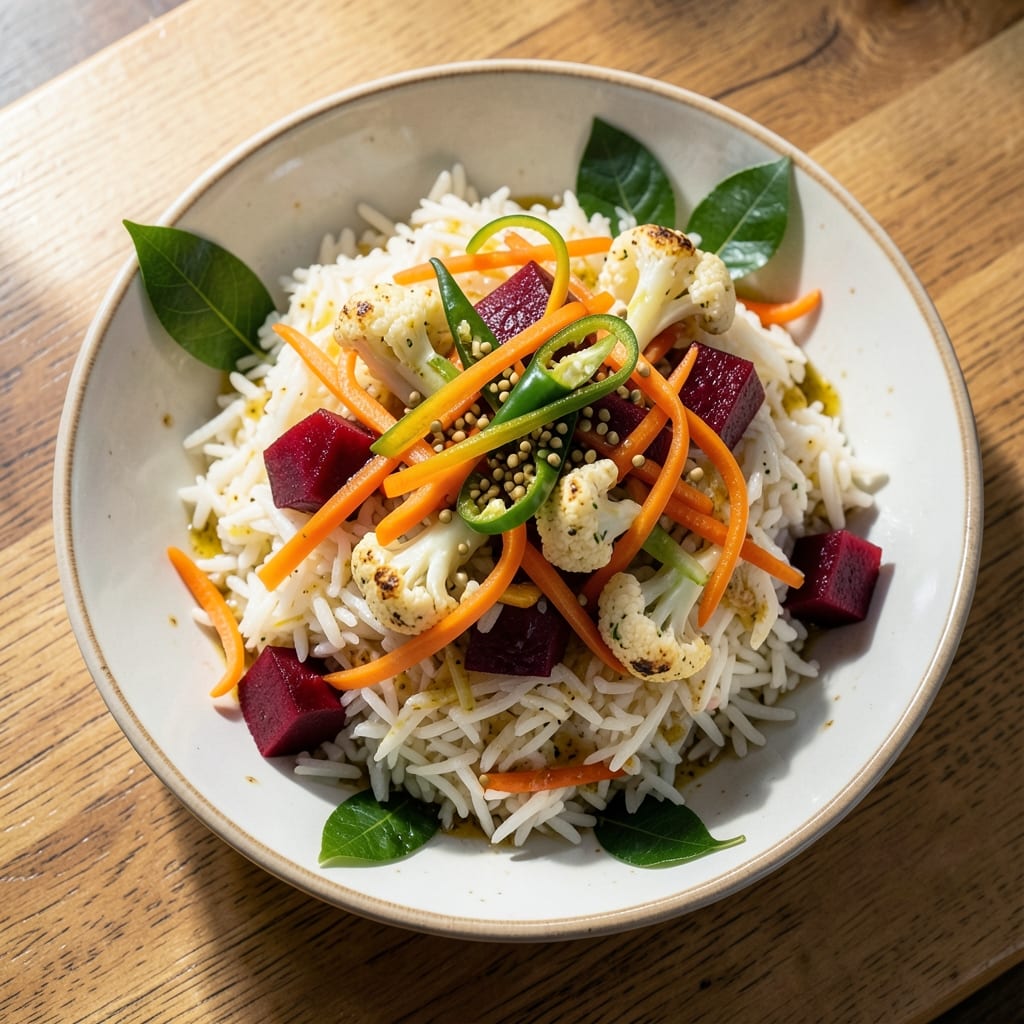
This achari rice recipe transforms simple steamed rice into a vibrant South Indian masterpiece, where tangy pickled vegetables meet perfectly crispy edges. The secret lies in the achari—a fiery blend of mustard seeds, curry leaves, and dried spices—that infuses every grain with bold, aromatic flavors. I developed this version after years of perfecting the balance between the restaurant-style crispiness and the homestyle comfort of steamed rice.
The dish begins with long-grain rice cooked to absolute perfection—light and fluffy, with just enough moisture to soak up the achari's vibrant flavors. The achari itself is where the magic happens: a symphony of tangy carrot, cauliflower, and beetroot pickled in spiced vinegar, then lightly fried until the edges turn golden and crispy. This technique ensures every bite delivers that satisfying crunch while maintaining the dish's signature South Indian soul.
What makes this recipe truly special is its versatility—pair it with spiced toor dal, grilled chicken, or fish for a complete meal, or serve it alongside sambar and raita for an authentic South Indian spread. The crispy edges of the achari contrast beautifully with the soft rice, creating a texture that's impossible to resist. Once you try this version, you'll never go back to store-bought achari again.
For those looking to modernize the classic, a vegan version swaps in coconut oil and skips the ghee, proving that tradition and innovation can coexist. The key to success? Patience in the pickling process and precision in the frying—both ensure that crispy texture you crave. Let's bring this South Indian symphony to your table.
Ingredients for achari rice
Here's what you need to bring South Indian flavors to your rice bowl—crispy, tangy, and full of aroma.
| Ingredient | Amount | Notes |
|---|---|---|
| Long-Grain White Rice 🍚 | 1 ½ cups | Uncooked, rinsed thoroughly |
| Carrots 🥕 | 1 lb | Julienned for pickling |
| Cauliflower 🥬 | 1 small head | Cut into bite-sized florets |
| Beetroot 🍠 | 1 lb | Peeled and cubed |
| Mustard Seeds 🌶️ | 1 tbsp | Whole, yellow variety |
| Curry Leaves 🌿 | ½ cup | Fresh, tightly packed |
| Dried Red Chilies 🔥 | 4 whole | Kashmiri or bird's eye |
| Asafoetida (Hing) 🧂 | ¼ tsp | Pinch for aroma |
| Turmeric Powder 🧅 | ½ tsp | Freshly ground preferred |
| Ginger 🌿 | 1 inch | Fresh, julienned |
| Green Chilies 🌶️ | 2 whole | Slit lengthwise |
| White Vinegar 💧 | ½ cup | For pickling |
| Salt 🧂 | 1 ½ tsp | Fine grain preferred |
| Ghee 🫒 | ¼ cup | For frying achari |
| Coconut Oil 🥥 | ½ cup | Vegan alternative option |
The vegetables are non-negotiable for that perfect crunch. Carrots and beetroot should be fresh—no mealy ones. I grab mine from the Indian grocery aisle at Whole Foods when they're in season, but the regular supermarket works too. For cauliflower, small heads crisp up better than big ones. Mustard seeds and curry leaves? Penzeys Spices has the best quality—no dusty old jars here. The dried chilies need to be plump, not brittle. Trader Joe's carries a great pre-mixed packet if you're short on time.
No mustard seeds? Skip them entirely—the dish still shines. Fresh curry leaves hard to find? Dried works at half the amount, but it won't be the same. Vinegar substitute? Lemon juice works in a pinch, though it's less tangy. For the vegan version, swap ghee for coconut oil—Trader Joe's organic is my go-to. The ginger and green chilies can be adjusted to heat preference—more chilies = more kick. And if you're wondering about the asafoetida? That's the secret umami bomb—never skip it—it's what makes this taste authentically South Indian.
Rice keeps best in an airtight container for 3 days—make extra, it's that good. The pickled vegetables stay crisp for 5 days in the fridge, but the flavor peaks at 24 hours. For frying, medium heat is key—too hot and they burn before crisping. Portion into single servings before freezing—3 months max. Pro tip: Reheat in a dry pan for 30 seconds to restore that crispy magic.
Why You'll Love This Recipe
- I swear by this trick: pre-cut the carrots, cauliflower, and beetroot weeks ahead and store them in the fridge. Toss them straight into the pan with the rice—no knife skills required. The mustard seeds sizzle like popcorn, and suddenly, you’ve got dinner.
- No-Chop Chaos Allowed: I swear by this trick: pre-cut the carrots, cauliflower, and beetroot weeks ahead and store them in the fridge. Toss them straight into the pan with the rice—no knife skills required. The mustard seeds sizzle like popcorn, and suddenly, you’ve got dinner.
- Sweet-Spicy Magic: That first bite? Crunchy beetroot, earthy cauliflower, and carrots kissed by the achari’s tangy heat—it’s like a flavor party in your mouth. Honestly, the mustard seeds alone make it sing, but the veggies? They’re the star guests who steal the show.
- Lunchbox Hero: Pack this cold or at room temp, and it’s a hit—kids, coworkers, me—no one turns it down. The colors make it look fancy, but the taste? Pure comfort. I’ve sent this to school with my kid on "boring lunch days," and it’s always the first to disappear.
Step-by-step instructions for achari rice with crispy edges
Here's how to make this vibrant South Indian dish with perfectly crispy rice and tangy achari.
Prepare the Achari (Pickled Vegetable Mix)
In a large bowl, combine the 1 lb julienned carrots, 1 lb cubed beetroot, and 1 small head cauliflower florets. Add the 0.5 cup white vinegar, 1.5 tsp salt, and 2 whole slit green chilies. Mix gently and let it marinate for at least 30 minutes—this helps soften the vegetables and develop the tangy flavor. The mixture should look vibrant and slightly wilted by the time you're ready to use it.
While the vegetables marinate, heat 0.5 cup coconut oil in a heavy-bottomed pan over medium heat. Add the 1 tbsp mustard seeds and let them splutter for about 30 seconds until they turn golden. Add the 4 whole dried red chilies and 0.5 cup curry leaves, and sauté for 1 minute until fragrant. This step is crucial for building the aromatic base of your achari.
Fry the Achari Spice Mixture
Drain the marinated vegetables and add them to the pan with the oil and spices. Stir well to coat the vegetables evenly. Add the 1 inch julienned ginger, 0.5 tsp turmeric powder, and 0.25 tsp asafoetida (hing). Cook on medium heat for 8-10 minutes, stirring occasionally, until the vegetables are tender but still hold their shape. The mixture should be vibrant and slightly caramelized at the edges.
Remove from heat and let it cool. This fried vegetable mixture is your achari—it should have a rich, tangy, and slightly sweet flavor with a deep red and orange color from the beetroot and carrots. If you prefer a vegan version, skip the ghee in the next step and use the coconut oil-fried achari directly with the rice.
Cook the Perfectly Crispy Rice
Rinse the 1.5 cups long-grain white rice thoroughly under cold water until the water runs clear. Soak the rice in fresh water for 20 minutes, then drain well. In a heavy-bottomed pot, heat 0.25 cup ghee over medium heat until it shimmers but doesn't smoke. Add the drained rice and stir gently to coat each grain evenly with the ghee.
Pour in 3 cups water (for every 1.5 cups of rice) and bring to a boil. Once boiling, reduce the heat to low, cover the pot with a tight-fitting lid, and cook for 12-15 minutes. The key here is to let the rice steam undisturbed—this ensures each grain develops a crispy edge while staying fluffy inside. You'll know it's ready when the rice is tender and the water is absorbed, leaving a slight crust on the bottom of the pot.
Combine Achari and Rice for Maximum Flavor
Once the rice is cooked, gently fluff it with a fork to separate the grains. Add the cooled achari mixture and toss lightly to combine. The rice should absorb the vibrant colors and flavors of the achari, creating a beautiful contrast of red, orange, and white. If the mixture seems too dry, sprinkle a little warm water and mix gently.
Serve the achari rice immediately while it's still warm and crispy. The contrast of the tangy, spicy achari with the fluffy, ghee-coated rice is what makes this dish truly special. Garnish with a few extra curry leaves and green chilies for a pop of color and freshness. This dish pairs perfectly with yogurt or a simple cucumber raita to balance the richness.
Pro Tips For Making Achari Rice
- SOAK VEGETABLES FIRST: I used to toss raw carrots, cauliflower, and beetroot straight into the pot, and they’d stay stubbornly undercooked. Cut them into even ½-inch pieces, soak in cold water for 10 minutes, then drain—this softens them faster and guarantees they absorb the achari flavors evenly. (Yes, even if you’re impatient like me, resist the urge to skip this.)
- SALT THE RICE WATER LATE: My first few batches turned out bland because I salted the rice water too early. Add salt only after the water boils and the rice has soaked for 5 minutes—this prevents the rice from turning mushy while keeping the grains firm. Trust me, the texture difference is night and day.
- CRUSH BEETROOT FINELY: I was skeptical until I tried it: grating beetroot instead of chopping it makes the achari rice vibrant and deeply flavored. Use a box grater for uniform pieces, then mix it into the tempering (mustard seeds, spices) before adding to the rice. It blends better and doesn’t clump.
- TEMPER MUSTARD SEEDS LOW: After burning three batches, I finally figured out: mustard seeds need gentle heat to pop, not a screaming pan. Add them to a dry pot on medium-low, then immediately pour in the oil—this prevents splattering and ensures they bloom without turning bitter. (Your future self will thank you.)
Flavor customization for this achari rice
Spice Level Control
Adjust the heat to your preference by modifying the green chilies and dried red chilies. For mild heat, use 1 green chili and 2 dried chilies, while 3 green chilies and 5 dried chilies deliver serious kick. I often start with 2 green chilies and adjust based on the room's spice tolerance—trust me, you can always add more later! 🌶️
Tangy vs Sweet Balance
Control the tanginess by adjusting the vinegar and sweetness with carrots. For extra tang, add 1 extra tbsp vinegar or swap in lemon juice. To sweeten, increase carrots by ½ lb—their natural sweetness balances the acidity beautifully. I find ½ cup vinegar works perfectly for that classic South Indian tang without overpowering the dish.
Vegetable Variations
Swap in cabbage for cauliflower or radishes for beetroot to change textures. For a colorful twist, add ½ cup bell peppers or ½ cup green beans. Each vegetable brings unique flavors—cabbage adds crunch, while radishes introduce a peppery bite. My go-to is ½ cup green beans for extra freshness and a satisfying crunch.
Protein Pairings
Pair this achari rice with grilled chicken (marinated in yogurt and turmeric) or spiced toor dal for a complete meal. For seafood lovers, steamed prawns or fish curry elevate the dish. I love serving it with yogurt raita to cool the palate—just mix 1 cup yogurt with ½ cup cucumber, 1 tsp roasted cumin powder, and a pinch of salt.
Vegan Adaptations
Skip the ghee and use coconut oil for frying—it adds a subtle coconut aroma that complements the achari. For extra richness, stir in 2 tbsp cashew paste at the end. This vegan version is just as flavorful and satisfying, proving tradition and plant-based cooking can coexist seamlessly. 🥥
Flavor Boosters
Add 1 tsp sugar to the achari while frying to enhance caramelization and balance acidity. For umami depth, sprinkle ½ tsp soy sauce (or 1 tsp tamari) into the pan during frying. These small tweaks elevate the dish without altering its authenticity—just 1 tsp sugar makes all the difference in achieving that perfect sweet-spicy-tangy harmony.
Nutrition facts
Frequently asked questions about achari rice
What makes the achari in this recipe different from store-bought versions?
This homemade achari uses freshly fried vegetables (carrots, cauliflower, and beetroot) tossed with aromatic spices like mustard seeds and curry leaves, creating a vibrant, crispy texture store-bought versions lack. The key difference is the 30-minute marinade in vinegar and the careful frying at medium heat—this ensures perfect tenderness with crispy edges. Plus, you control the spice level exactly to your taste!
Can I make this recipe without ghee?
For a vegan version, simply replace the 0.25 cup ghee with 0.5 cup coconut oil for both cooking the rice and frying the achari. The coconut oil adds a subtle sweetness that complements the tangy flavors beautifully. Just ensure you fry the achari at medium heat to maintain that perfect crispy texture.
How do I prevent the rice from becoming mushy when mixing with achari?
Cook the rice to al dente (just slightly underdone) and let it steam for 5 minutes off the heat before mixing. This ensures the grains stay firm. When combining with achari, toss gently—don't overmix. The secret is using ghee-coated rice, which creates a natural barrier against moisture. Serve immediately for that signature crispy edge!
What's the best way to store leftovers?
Store the cooked achari rice in an airtight container for up to 3 days in the fridge. To restore crispiness, reheat in a dry pan over medium heat for 2-3 minutes, stirring constantly. For longer storage, freeze the achari and rice separately—freeze the achari for 3 months and reheat the rice from frozen (add 1 extra minute to cooking time).
Can I make this recipe with basmati rice instead of long-grain white rice?
Yes, but with adjustments! Basmati rice absorbs flavors differently, so use 1.25 cups instead of 1.5 cups and reduce cooking time by 2 minutes. The key is to rinse it 3 times to remove excess starch, which prevents mushiness. For extra aroma, add 1 bay leaf while cooking. The crispy edges will still form beautifully!