
Main Courses
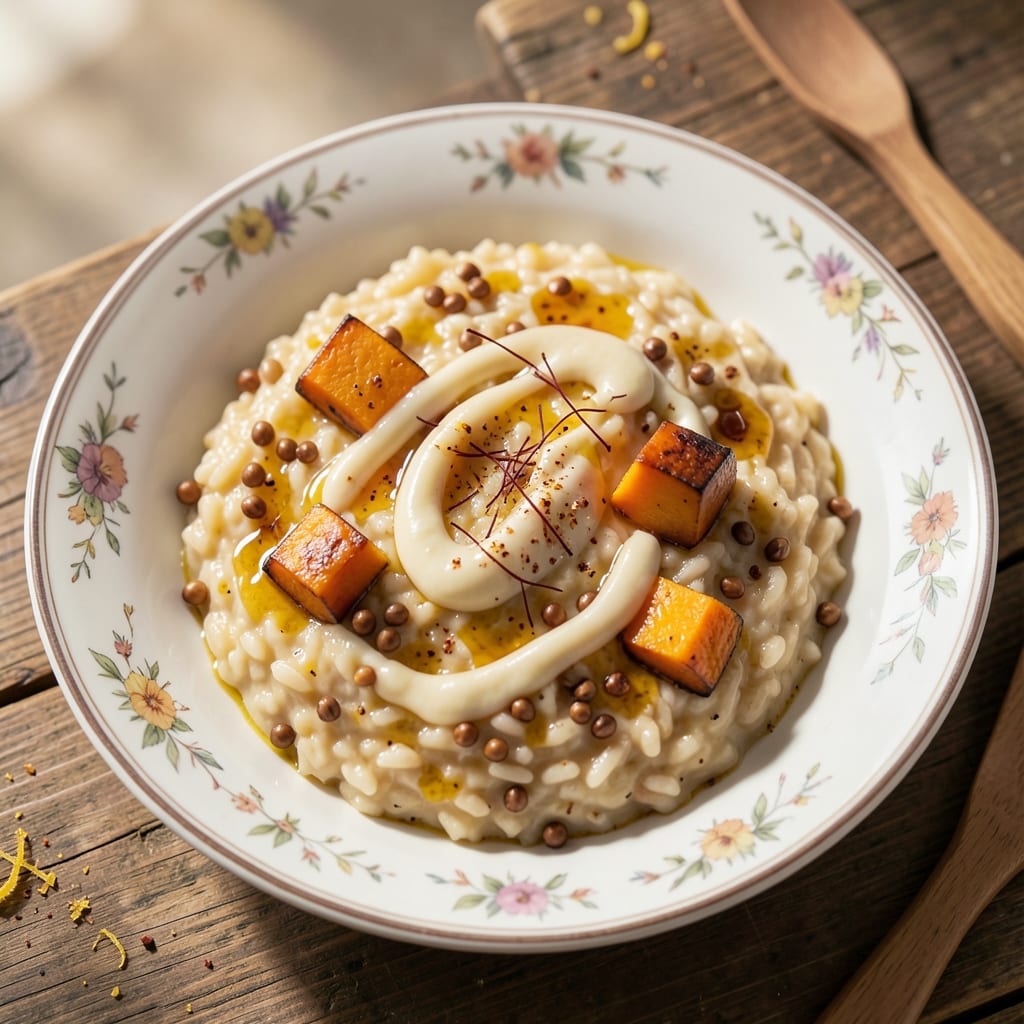
This acquerello rice risotto transforms ordinary risotto into a visually stunning masterpiece with saffron's golden hue and toasted barley's nutty crunch. The technique blends traditional Italian methods—slow stirring, stock reduction—with modern plating for a dish that's as beautiful as it is delicious. What sets this apart is the careful layering of colors and textures, creating a risotto that feels like edible art.
The foundation lies in perfectly cooked Arborio rice, where each grain absorbs the saffron-infused broth while developing its signature creamy texture. Toasted barley adds a contrasting crunch, while roasted squash introduces natural sweetness that balances the dish's richness. The key is patience—stirring consistently, adding liquid gradually, and letting the risotto rest before serving.
By the final plate, you'll have a risotto that's not just creamy but visually dynamic, with golden saffron threads, caramelized barley, and vibrant vegetable accents. The aroma of toasted spices and saffron will fill your kitchen, while the first bite delivers a perfect harmony of textures and flavors. This is risotto that elevates any dinner table.
Whether serving for a special occasion or a weeknight dinner, this recipe delivers restaurant-quality results with minimal effort. The method is straightforward, but the presentation makes it feel like a gourmet creation. Let's create a risotto that's as impressive to look at as it is to eat.
Ingredients for acquerello rice risotto
Fourteen carefully selected ingredients transform ordinary risotto into edible art through saffron's golden magic and barley's nutty crunch.
| Ingredient | Amount | Notes |
|---|---|---|
| Arborio Rice 🍚 | 1 ½ cups | High-quality, unbroken grains preferred |
| Saffron Threads 🌼 | ¼ tsp | High-quality, pure saffron threads |
| Pearl Barley 🌾 | ½ cup | Toasted until nutty aroma develops |
| Butternut Squash 🎃 | 1 ½ cups | Cubed, roasted until caramelized |
| Vegetable Stock 💧 | 4 cups | Homemade or high-quality store-bought |
| Shallots 🧅 | 2 whole | Finely minced for delicate flavor |
| Garlic Cloves 🧄 | 3 cloves | Peeled and minced into fine paste |
| Extra-Virgin Olive Oil 🫒 | ½ cup | High-quality, fruity variety |
| Dry White Wine 🍷 | ½ cup | Medium-bodied, like Pinot Grigio |
| Grated Parmesan Cheese 🧀 | ½ cup | Freshly grated from aged block |
| Fresh Thyme Leaves 🌿 | ¼ cup | Or 1 tbsp dried thyme if unavailable |
| Salt 🧂 | 1 ½ tsp | Diamond Crystal kosher salt preferred |
| Black Peppercorns 🌶️ | ½ tsp | Freshly cracked for optimal flavor |
| Unsalted Butter 🧈 | 4 tbsp | Cold, cubed for finishing |
Saffron is the star here—look for pure threads from reputable suppliers like Bulk Apothecary or Penzeys. The difference between cheap and premium saffron is night and day, so don't skimp. For the barley, toast it in olive oil until deeply golden and nutty—this develops the crunch that contrasts perfectly with the creamy risotto. The Arborio rice should be unbroken grains, as damaged grains release starch too quickly, leading to a mushy texture. Lundberg or Barilla brands are consistently reliable for this dish.
No saffron? Turmeric at half the amount will give you color, though without the floral aroma. Running out of white wine? Dry vermouth or extra vegetable stock works in a pinch. Fresh thyme is ideal, but dried thyme at one-third the quantity suffices. For the squash, any winter variety (butternut, kabocha, or delicata) will work—just ensure it's roasted until caramelized. The vegetable stock should be homemade or high-quality store-bought—avoid bouillon cubes, which often contain MSG and lack depth.
Toasted barley and saffron-infused stock can be prepped ahead—store separately in airtight containers for up to 5 days in the fridge. The risotto itself is best served immediately, but it reheats beautifully with a splash of stock. For optimal presentation, keep the butter cold until the final moment to create those signature golden swirls. Leftovers keep for 3-4 days in the fridge, though the texture will be slightly firmer. Freezing isn't recommended as it disrupts the creamy consistency.
Why You'll Love This Recipe
- One-Pot Magic: I swear by this risotto because it’s actually one-pot—no constant stirring, no second pot for barley. Just toss everything in, let it simmer, and the saffron steeps right into the stock while you do whatever (check emails, fold laundry, pretend to work).
- Golden Threads Glow: That first pinch of saffron turns the rice into liquid sunshine—honestly, it’s the kind of dish that looks fancy just sitting there. The butternut squash adds this sweet, velvety depth that makes it taste like autumn in a bowl, even if you’re eating it in July.
- Leftovers? Laughable: This risotto reheats like a dream—just add a splash of stock and a minute in the microwave. I’ve turned day-old portions into next-day lunches, meal-prep containers, and even a quick pasta sauce by blending it (yes, really). Zero waste, all flavor.
- Budget Luxe Trick: Pearl barley stretches the Arborio rice so you get way more servings for less money. Plus, saffron’s expensive, but a little goes a long way—you’ll feel like you’re eating at a Michelin spot without the sticker shock. (Between us, I’ve used it twice and still have half a vial left.)
Step-by-step instructions for acquerello rice risotto
This saffron-infused risotto delivers luxurious creaminess with a toasted barley crunch—every technique matters.
Toast Barley and Roast Butternut Squash
Preheat your oven to 400°F and line a baking sheet with parchment paper. Spread the 0.5 cup pearl barley on a separate dry skillet over medium heat and toast for 8-10 minutes, stirring constantly, until it develops a deep golden color and nutty aroma. This toasting enhances its texture and flavor profile.
While the barley toasts, toss the 1.5 cups butternut squash with 1 tablespoon extra-virgin olive oil, 0.5 teaspoon salt, and 0.25 teaspoon black peppercorns. Roast on the prepared baking sheet for 25-30 minutes until tender and caramelized, stirring halfway through. The squash should yield slightly when pierced with a fork—this ensures perfect texture when incorporated later.
Sauté Aromatics and Bloom Saffron
In a large, heavy-bottomed pot, heat 0.25 cup extra-virgin olive oil over medium heat until shimmering. Add the 2 whole shallots and 3 cloves garlic cloves (minced into a fine paste) and cook for 5-6 minutes until the shallots are translucent and the garlic is fragrant but not browned. This foundational step builds the risotto's depth of flavor.
In a small bowl, steep the 0.25 teaspoon saffron threads in 2 tablespoons warm vegetable stock for 5 minutes to release their vibrant color and aroma. Add this saffron infusion to the pot along with the 1.5 teaspoon salt and 0.25 cup fresh thyme leaves. Stir to combine, ensuring the saffron distributes evenly throughout the oil.
Toast Arborio Rice and Deglaze
Add the 1.5 cups arborio rice to the pot and toast for 2-3 minutes, stirring constantly, until the grains become translucent at the edges. This critical step prevents gummy rice by developing a light crust on each grain. Pour in the 0.5 cup dry white wine and stir vigorously, allowing the alcohol to evaporate completely before proceeding.
Begin adding the 4 cups vegetable stock 1 ladle at a time, stirring frequently after each addition. The risotto should simmer gently—you'll notice a thin layer of foam on the surface, which indicates proper cooking. Maintain this gentle simmer for 18-20 minutes, until the rice is al dente and has absorbed most of the liquid but still maintains a slight bite.
Incorporate Toasted Barley and Roasted Squash
Once the rice is nearly tender, stir in the toasted 0.5 cup pearl barley and roasted 1.5 cups butternut squash. The barley will add a delightful crunch while the squash contributes natural sweetness and creaminess. Continue cooking for an additional 3-4 minutes, stirring gently to distribute the ingredients evenly without breaking the barley's texture.
Remove the pot from heat and let it rest for 2 minutes. This brief rest allows the residual heat to finish cooking the rice while preventing it from becoming mushy. Stir in the 0.5 cup grated parmesan cheese and the 4 tablespoons cold unsalted butter, cutting each piece into small cubes as you add them. The butter should melt into a glossy, velvety finish.
Adjust Consistency and Serve
Taste the risotto and adjust seasoning with additional salt or black peppercorns if needed. If the texture is too thick, stir in 1-2 tablespoons warm vegetable stock to reach your desired consistency. The risotto should be creamy yet still have a slight resistance when stirred.
Transfer the risotto to serving bowls immediately, garnishing each portion with an additional sprinkle of fresh thyme leaves and a final drizzle of extra-virgin olive oil. Serve while hot, ensuring each bite delivers the perfect balance of saffron-infused creaminess, toasted barley crunch, and caramelized butternut squash.
Pro Tips For Making Acquerello Rice Risotto
- TOAST THE BARLEY: Start your pearl barley in cold stock—it plumps up faster and avoids the mushy texture I used to get when tossing it straight into boiling liquid. If you’re impatient (like me), soak it for 20 minutes first, then drain before adding to the risotto pot.
- STEAM THE SAFFRON: Crush those saffron threads with the flat of your knife before blooming them in warm stock—it releases more color and aroma. I learned this the hard way after making risotto that looked pale and tasted underwhelming.
- STIR IN STAGES: Don’t dump all the stock at once—add it in two batches. The first half cooks the Arborio rice and barley; the second infuses the butternut squash purée later. This keeps the texture balanced and prevents gummy squash clumps.
- SAVE THE STARCH: Skim a ladle of the final cooking liquid before resting the risotto—it’s packed with rice starch, which makes the dish creamier. Stir it back in at the end for that signature velvety finish without extra butter or cream.
Wine and beer pairings for acquerello rice risotto
White Wine Pairings
A crisp, dry Pinot Grigio from Italy is my go-to choice—its bright acidity and citrus notes cut through the risotto's richness while complementing the saffron's floral aroma. Look for a Veneto or Friuli-Venezia Giulia region bottle like Santa Margherita Pinot Grigio for that perfect balance. The wine's light body won't overpower the dish, allowing the saffron and barley to shine. 🍷
For a slightly bolder option, try a dry Vermentino from Sardinia. Its mineral undertones and zesty finish provide an unexpected but delightful contrast to the creamy risotto. I always keep a bottle of Cantina Mesu 'e Mesu Vermentino on hand for special occasions—it's a crowd-pleaser that elevates the meal.
Sparkling Wine Options
If you prefer bubbles, a dry Prosecco from the Veneto region adds a celebratory touch. The effervescence cleanses your palate between bites, making each spoonful of risotto taste even more luxurious. La Giustina Prosecco is my top pick—its crisp acidity and green apple notes harmonize beautifully with the saffron and squash.
For something more luxurious, a dry Franciacorta from Lombardy offers a sophisticated alternative. Its fine, persistent bubbles and citrusy profile make it a perfect match for this artistic risotto. Just be sure to serve it well-chilled at 45-48°F to preserve its delicate flavors.
Beer Pairings
A crisp Italian lager like Peroni or Moretti works surprisingly well—its clean, refreshing profile balances the dish's richness without competing. The subtle malt sweetness complements the caramelized squash beautifully. For a craft option, try a Belgian-style witbier like Hoegaarden—its coriander and citrus notes add an interesting contrast.
Red Wine Considerations
While white wines dominate, a light-bodied Chianti from Tuscany can work if you prefer red. Choose a Sangiovese-based wine with bright acidity and cherry notes, like Castello di Volpaia Chianti Classico. The wine's earthy undertones pair well with the toasted barley, though it's a bolder match than the whites. Serve it slightly chilled at 55-60°F for optimal balance. 🍷
Nutrition facts
Frequently asked questions
Can I substitute Arborio rice with another type?
While Arborio is ideal for its high starch content, you can use Carnaroli or Vialone Nano rice as alternatives—they work beautifully for risotto. Avoid long-grain varieties like basmati or jasmine, as they won't absorb liquid properly and will create a dry texture. For a quick fix, short-grain Japanese rice can work in a pinch, but expect a slightly stickier result.
How do I make this risotto more colorful for plating?
For vibrant presentation, try adding roasted red peppers (for orange accents) or sautéed mushrooms (for earthy tones). You can also mix in purple sweet potatoes or beet purée> for deeper colors. The key is to roast or sauté these ingredients separately before folding them into the risotto at the end to preserve their texture and color.
Why did my risotto turn out gummy?
Gummy risotto usually means the rice absorbed too much liquid or wasn't stirred properly. Always add stock 1 ladle at a time and stir frequently to release starch gradually. If using a heavy-bottomed pot, reduce heat to medium-low once simmering begins. For extra insurance, let the rice rest 3-5 minutes off heat before adding butter and cheese—this helps firm up the texture.
Can I make this risotto ahead of time?
While risotto is best served immediately, you can prep components ahead: Toast the barley and roast the squash, then store separately in airtight containers for 5 days. For the risotto itself, cook it al dente (about 1 minute before fully done), then stir in cold butter and cheese. Reheat gently with a splash of stock, stirring constantly. The texture won't be as creamy, but it's still delicious!
What's the secret to getting that perfect creamy texture?
The magic happens in three steps: toasting the rice (until translucent), stirring constantly (especially in the last 5 minutes), and finishing with cold butter. The butter coats each grain, creating that signature velvety mouthfeel. Also, use hot stock—cold liquid slows down starch release, leading to a grainy texture. Keep your pot at a gentle simmer, never a boil!