
Main Courses
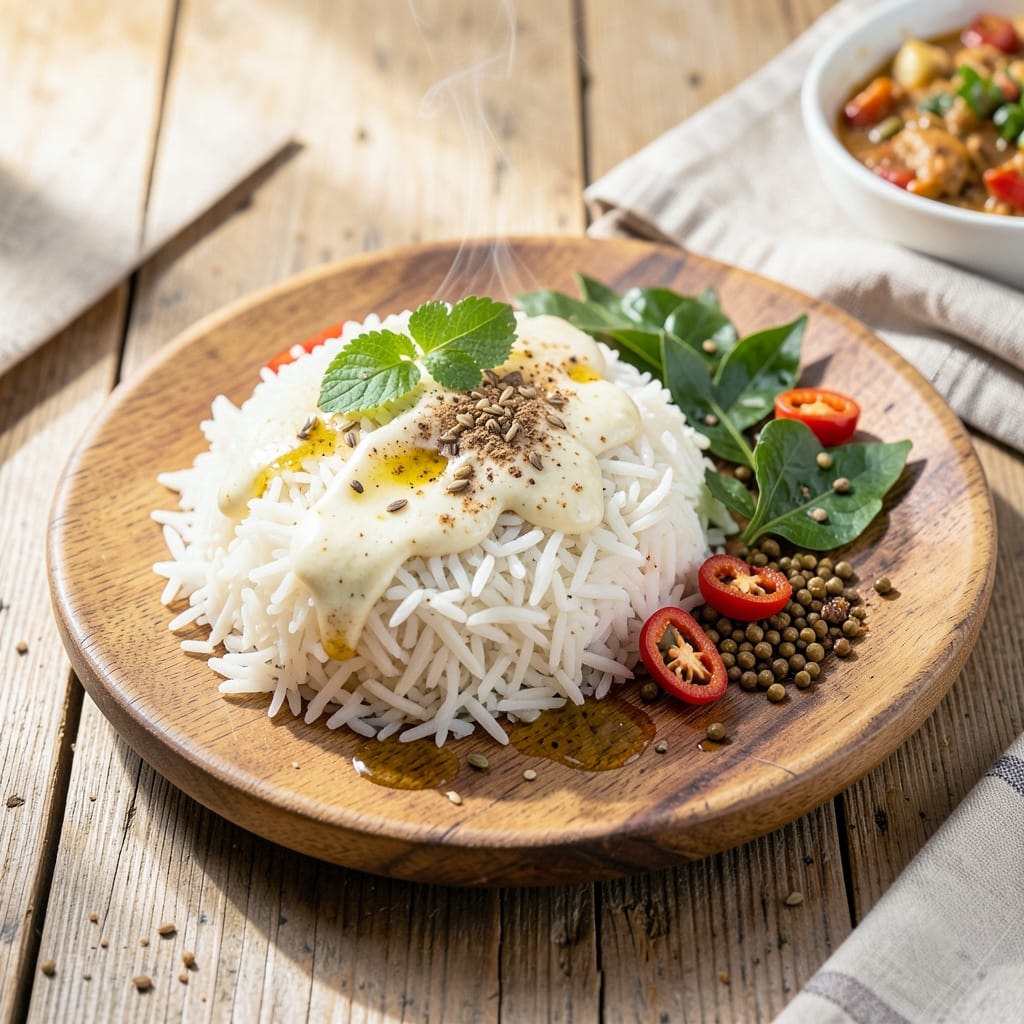
This Andhra curd rice recipe delivers the perfect balance of tangy yogurt and fiery tempered spices that defines South Indian cuisine. 💛 The secret lies in fermenting rice with yogurt overnight—a process that creates a light, fluffy texture while developing complex flavors. This dish isn't just food; it's a celebration of Andhra Pradesh's culinary traditions, where every bite carries warmth and tradition.
What makes this recipe special is the two-stage cooking method: first fermenting the rice-yogurt mixture, then tempering it with mustard seeds, curry leaves, and red chilies. The tempering transforms simple ingredients into a symphony of flavors—crispy mustard seeds, aromatic curry leaves, and the gentle heat of red chilies. This technique is what sets Andhra curd rice apart from other regional variations.
The result is a dish that's both comforting and sophisticated—cool yogurt balanced by the warmth of spices, with each grain of rice absorbing the rich, tangy flavors. The fermentation process not only enhances the taste but also makes digestion easier, a key feature of traditional South Indian meals. Perfect for lunch or dinner, this recipe serves 4 and comes together with just 10 simple ingredients.
Pair it with sambar or a simple cucumber chutney to complete the meal, or enjoy it as a standalone dish that highlights the beauty of simplicity in Andhra cuisine. The best part? The flavors improve overnight, making it even more rewarding the next day. Let's get started on this flavorful journey!
Ingredients for andhra curd rice
Ten simple ingredients transform into Andhra's most beloved dish—cool yogurt meets fiery spices for a symphony of flavors.
| Ingredient | Amount | Notes |
|---|---|---|
| Long-Grain White Rice 🍚 | 1 cup | Uncooked, washed thoroughly |
| Plain Yogurt 🥛 | 1 ½ cups | Whole-milk, unsweetened |
| Mustard Seeds 🌿 | 1 tbsp | Whole, for tempering |
| Curry Leaves 🌿 | ¼ cup | Fresh, packed |
| Red Chilies 🌶️ | 2 whole | Dried, whole for tempering |
| Asafoetida Powder 🌶️ | ¼ tsp | For aroma, optional |
| Cumin Seeds 🌿 | ½ tsp | For extra depth |
| Salt 🧂 | ¾ tsp | Adjust to taste |
| Fresh Coriander Leaves 🌿 | ¼ cup | Chopped, for garnish |
| Ghee 🫒 | 2 tbsp | For tempering |
The yogurt is the heart of this dish, so whole-milk plain yogurt is non-negotiable—it adds richness and tang that low-fat versions can't match. Local Indian grocery stores often carry the best quality, but any unsweetened plain yogurt will work. For the rice, long-grain white rice is traditional, but basmati works too if that's what you've got. The curry leaves? Fresh is a must—dried leaves lose their magic. If you can't find them, skip them entirely rather than using dried. Mustard seeds and red chilies should be whole for that perfect crunch and heat—they're the stars of the tempering.
No curry leaves? Skip them—this dish still shines without them. Running short on ghee? Butter or coconut oil works in a pinch, though ghee gives that authentic flavor. The asafoetida is optional but adds depth—if you're avoiding it, just increase the cumin slightly. For the rice-yogurt mixture, fermenting overnight is key, but if you're short on time, let it sit for at least 4 hours. The longer it ferments, the tangier and more complex the flavors become. If you're worried about the rice getting mushy, rinse it thoroughly before soaking—this removes excess starch.
This dish tastes even better the next day, so make it ahead if possible. Store the fermented rice-yogurt mixture in the fridge for up to 2 days, and the tempered curd rice for 1 day. To reheat, just warm it gently on the stove—no need for high heat. The flavors meld beautifully overnight, so if you can, let it sit in the fridge for a few hours before serving. Garnish with fresh coriander just before eating to keep it vibrant. The tempering loses its crunch when reheated, so it's best served fresh off the stove.
Why You'll Love This Recipe
- No-Fuss Staple: I swear by this for days when I’m too tired to fuss—just rice, yogurt, and a quick tempering of mustard seeds and curry leaves. The rice stays fluffy, the yogurt cools it down, and honestly? That’s all you need for a meal that feels special.
- Tangy Heat Balance: The yogurt gives it this perfect coolness that cuts through the mustard seeds and red chilies—crispy, spicy, and creamy all at once. It’s the kind of dish where every bite feels like a little flavor explosion without being overwhelming.
- Lunchbox Hero: Between us, this is my go-to for packed lunches. The rice holds up for days, the yogurt keeps it fresh, and the spices? They make even a simple meal taste like you put in effort. My kids actually eat their veggies with it—no complaints.
- Pantry Magic: You’re looking at a recipe that costs next to nothing but tastes like a restaurant dish. Mustard seeds, curry leaves, and chilies? Those are the cheap ingredients that pack the biggest punch. Plus, leftovers? They taste just as good reheated as they do fresh.
Step-by-step instructions for Andhra curd rice
Here's how to make this iconic South Indian dish with perfect tangy rice and fragrant tempering.
🍳 Step 1: Cook the Rice to Perfect Al Dente
Rinse the 1 cup long-grain white rice thoroughly under cold water until the water runs clear. This removes excess starch and prevents mushy rice. Soak the rice for 30 minutes, then drain well.
In a pressure cooker, combine the drained rice with 2 cups water (double the rice quantity) and the 0.75 tsp salt. Cook for 2 whistles on medium heat, then let the pressure release naturally. The rice should be firm but tender—you want each grain to hold its shape while still being fluffy. If using a regular pot, simmer covered for 15-18 minutes on low heat.
👨🍳 Step 2: Prepare the Yogurt Base for Tangy Perfection
While the rice cooks, whisk the 1.5 cups plain yogurt in a large bowl until completely smooth. The yogurt should be at room temperature for best texture. Add 1 tbsp chopped fresh coriander leaves (about half of the total) and mix well. Set aside—this will be our tangy foundation.
Here's the thing—using room-temperature yogurt prevents lumps and ensures a silky texture. If your yogurt is cold, let it sit at room temperature for 10 minutes before mixing. The coriander adds freshness that balances the richness of the ghee tempering.
🔥 Step 3: Create the Signature Tempering (Most Important Step!)
In a small heavy-bottomed pan, heat 2 tbsp ghee over medium-low heat. Add the 0.5 tsp cumin seeds and let them sizzle for 30 seconds until they release their aroma. Then add the 2 whole red chilies and 1 tbsp mustard seeds—you'll hear them pop, which signals they're ready.
Immediately add the 0.25 cup curry leaves and the 0.25 tsp asafoetida powder. The curry leaves should sizzle and darken slightly while the asafoetida adds that unmistakable umami depth. Pour this hot tempering over the yogurt mixture and stir gently but thoroughly. The ghee will create a glossy sheen and rich flavor that's essential to authentic Andhra curd rice.
🥘 Step 4: Combine Rice and Yogurt Mixture
Once the rice is perfectly cooked, spread it out on a large tray to cool slightly for 2 minutes. This prevents the rice from turning mushy when mixed with the yogurt. Add the rice to the yogurt mixture and gently fold together using a spatula or clean hands.
I like to work quickly but carefully here—you want to combine them without breaking the rice grains. The ideal texture should be fluffy rice with yogurt evenly distributed throughout. If the mixture seems too thick, you can add 1-2 tablespoons water to loosen it slightly. The final dish should be cool enough to eat but still warm from the freshly cooked rice.
🍽️ Step 5: Garnish and Serve Immediately
Transfer the curd rice to a serving bowl and garnish with the remaining 0.25 cup chopped fresh coriander leaves. The bright green color contrasts beautifully with the creamy rice and adds a fresh finish. Serve immediately while still warm—this dish is best enjoyed fresh from the pot.
For the perfect meal, pair with crispy papadums, a simple cucumber raita, or some spicy pickles. The contrast of temperatures and textures makes this dish truly special. Each bite should deliver that perfect balance of tangy yogurt, aromatic spices, and fluffy rice—it's why this dish is a staple in Andhra Pradesh!
Pro Tips For Making Andhra Curd Rice
- Temper the Yogurt: Whisk the yogurt with a pinch of salt and let it sit for 15 minutes before using—this prevents curdling when the oil hits. I learned this the hard way after my first batch split into a lumpy mess when the mustard seeds splattered. ---
- Toast the Rice Properly: After washing the rice, spread it in a single layer on a dry pan and toast over medium heat for 3–4 minutes until the edges turn translucent. This stops the rice from turning mushy when soaked in yogurt later. ---
- Skip the Overcrowding: When tempering mustard seeds, curry leaves, and chilies, keep the pan uncluttered—add oil first, then seeds, and let them pop fully before tossing in the rest. Overcrowding steams the spices instead of toasting them. ---
- Use Warm Yogurt for Soaking: Heat the yogurt to body temperature (not hot) before mixing it with the rice—this helps the grains absorb the tang without turning gummy. I was skeptical until I tried it; the texture is noticeably lighter.
Wine and beer pairings for this dish
Tangy Yogurt Balance
Andhra curd rice's signature tang makes it a perfect match for crisp, dry white wines like Chenin Blanc from India's Karnataka region. The wine's natural acidity mirrors the yogurt's tang while its subtle floral notes complement the dish's earthy spices. I've found that a chilled glass (around 45-50°F) enhances the contrast between the cool rice and warm spices. 🍷
Spice-Forward Beer
For beer lovers, a Belgian witbier like Hoegaarden works beautifully—its citrusy coriander and clove notes harmonize with the curry leaves and cumin. The effervescence cuts through the dish's richness, cleansing your palate between bites. If you prefer darker options, try an amber ale with 10-12 IBUs to stand up to the mustard seeds and chilies.
Regional Wine Pairing
In Andhra Pradesh, locals often pair this dish with local palm wine or country liquor like saru during festivals. For a modern twist, Gewürztraminer from India's Nashik region offers aromatic complexity that echoes the dish's spiced ghee tempering. The wine's lychee undertones add an unexpected but delightful layer to the meal.
Non-Alcoholic Options
For a refreshing non-alcoholic pairing, try mango lassi—the creamy yogurt base complements the dish's tang while the mango adds sweet contrast. Alternatively, sparkling lime soda with a slice of cucumber provides the same crispness as wine without the alcohol. I've even seen Andhra families serve rose water-infused milk for a fragrant, cooling accompaniment.
Spice Level Considerations
If you've added extra chilies to your tempering, opt for higher-acid wines like Sauvignon Blanc to balance the heat. For beer, a hoppy IPA (15+ IBUs) provides enough bitterness to counteract the spice. I always adjust my drink choice based on how fiery I've made the dish—sometimes it's worth toning down the heat just to enjoy the perfect pairing!
Nutrition facts
Frequently asked questions
Can I make Andhra curd rice without fermenting the rice-yogurt mixture?
Fermentation is what creates that signature tangy flavor, but you can make a quick version! Mix the cooked rice with yogurt and tempering immediately, then let it sit for 1-2 hours at room temperature before serving. The flavors won't be as complex, but it'll still taste delicious. For best results, ferment overnight—it makes all the difference!
What's the secret to getting fluffy rice in this recipe?
Rinse the rice thoroughly to remove excess starch, then cook it until it's al dente (just slightly underdone). Spread the hot rice on a tray for 2 minutes before mixing with yogurt—this prevents mushiness. Also, use the right water ratio: 1 cup rice to 2 cups water for pressure cooking, or 1:1.5 for stovetop.
Can I use Greek yogurt instead of Indian curd?
Yes, but it won't be exactly the same! Greek yogurt is thicker and less tangy. To compensate, mix it with 2 tablespoons water to thin it out, and add 1 extra tablespoon lemon juice for tang. The texture will be slightly different, but it'll still work in a pinch. For authentic flavor, stick with whole-milk Indian curd when possible.
Why does my tempering taste bitter?
Overheating the ghee or burning the mustard seeds causes bitterness. Keep the heat medium-low and add mustard seeds gradually. If it happens, immediately remove from heat and add 1 tsp sugar or a pinch of salt to balance. Also, make sure your ghee is fresh—old ghee can develop off flavors. The mustard seeds should pop but not darken.
How do I store leftovers and reheat them?
Store in an airtight container in the fridge for up to 2 days. To reheat, warm gently on low heat with 1 tablespoon water to prevent drying. For best texture, enjoy fresh, but you can reheat once. The tempering loses some crunch when reheated, so it's best served fresh. If storing for longer, freeze for up to 1 month—thaw overnight in the fridge.