
Main Courses
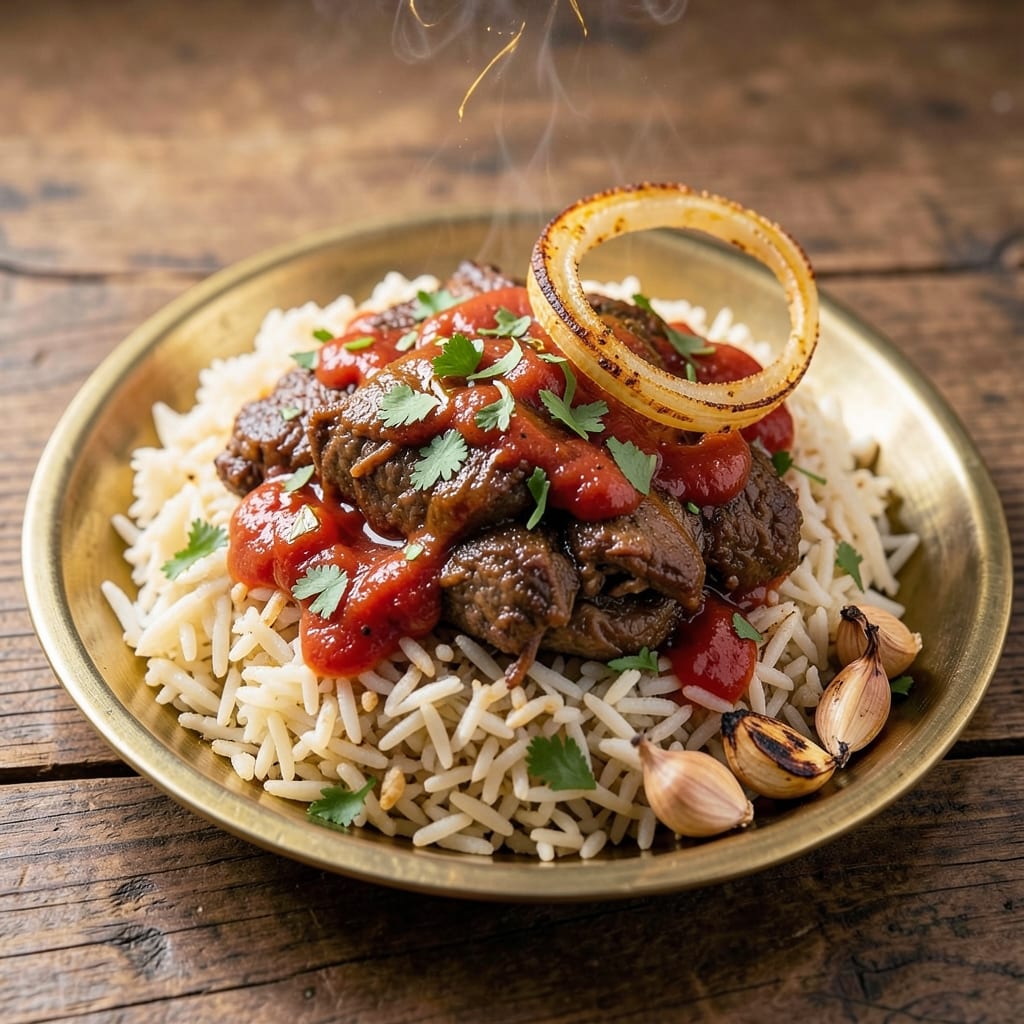
This Arabian kabsa rice recipe transforms your kitchen into a Saudi feast with golden spiced rice and tender lamb, all infused with saffron's signature glow. The dish is a celebration of tradition—where fragrant basmati rice meets slow-cooked meat, spiced with a blend of cumin, cardamom, and cloves that dance on your tongue. I've perfected this version to balance authenticity with approachable techniques, so you can recreate restaurant-quality kabsa at home without the fuss.
The secret lies in the layered flavors: the rice absorbs a rich tomato-based broth infused with warm spices, while the lamb (or chicken) becomes melt-in-your-mouth tender through slow cooking. Traditional touches like toasted nuts and sweet raisins add texture and depth, elevating this dish from ordinary to extraordinary. What makes this recipe special is how the saffron transforms ordinary rice into something vibrant and luxurious—just a pinch creates that signature golden hue.
By the time you serve this kabsa, your table will smell like a bustling Saudi market, with every bite offering a harmonious blend of spice, sweetness, and savory richness. The dish is hearty enough for gatherings but simple enough for weeknight dinners, proving that authentic flavors don't require complicated steps. Whether you're hosting a feast or treating yourself, this recipe delivers a taste of Arabia that's impossible to resist.
The best part? Leftovers reheat beautifully, making it perfect for meal prep. Here's how to create this aromatic masterpiece step by step.
Ingredients for arabian kabsa rice
Golden saffron rice, tender lamb, and warm spices—this dish brings Saudi flavors to your table.
| Ingredient | Amount | Notes |
|---|---|---|
| Basmati Rice 🍚 | 2 cups | Uncooked, long-grain preferred |
| Ground Lamb 🐑 | 2 lb | Boneless, lean preferred |
| Yellow Onions 🧅 | 1 whole | Medium size, finely chopped |
| Garlic Cloves 🧄 | 6 cloves | Fresh, minced finely |
| Canned Diced Tomatoes 🍅 | 1 can | 28 oz, San Marzano if possible |
| Saffron Threads 🌼 | ¼ tsp | High-quality, crushed |
| Ground Cumin 🌿 | 1 tbsp | Toasted for depth |
| Ground Cardamom 🌿 | 1 tsp | Freshly ground preferred |
| Whole Cloves 🌶️ | 4 pieces | Lightly crushed |
| Toasted Almonds 🥜 | ½ cup | Sliced, store-bought or homemade |
| Sweet Raisins 🍇 | ½ cup | Plumped in warm water |
| Chicken or Vegetable Broth 💧 | 4 cups | Low-sodium preferred |
| Extra-Virgin Olive Oil 🫒 | ½ cup | For cooking and finishing |
| Salt 🧂 | 1 ½ tsp | Diamond Crystal preferred |
| Black Pepper 🌶️ | ½ tsp | Freshly cracked |
The lamb is the heart of kabsa, so choose ground lamb with good marbling—it stays juicier. Middle Eastern markets often have the best cuts, but the regular grocery store works too. For the saffron, Penzeys or local specialty shops carry the highest quality threads—never the powdered version. Toast your whole spices (cumin, cardamom, cloves) in a dry pan for 30 seconds before grinding; this releases their oils and deepens the flavor. The onions? Yellow onions have the perfect balance of sweetness and bite for this dish.
No saffron? Turmeric at half the amount gives color, but skip the saffron's floral notes. Fresh cardamom pods are ideal, but ground cardamom works in a pinch. The almonds can be toasted in the same pan as the spices—just toss them in for the last minute. Raisins need soaking; warm water for 15 minutes plumps them perfectly. For the broth, low-sodium is key—you'll be adding plenty of salt later. The tomatoes? San Marzano cans have the best flavor, but any good-quality diced tomatoes work.
Saffron loses potency fast, so store it in an airtight container in the fridge—it keeps for 6-12 months. The cooked rice reheats beautifully; just add a splash of broth to keep it moist. Portion into containers with a layer of broth on top for 3-4 days of fridge storage. Freeze portions for up to 3 months—the flavors actually meld better over time. For extra authenticity, serve with a side of yogurt sauce or flatbread.
Why You'll Love This Recipe
- One-Pot Magic: I swear by this recipe when I’m too tired to wash dishes—just brown the lamb, toss in onions and garlic, add the tomatoes and rice, then let it simmer. The lamb renders its own juices, and by the end, everything’s infused with that deep, savory aroma without a single extra pan.
- Spice Without Stress: Honestly, the flavor balance is what keeps me coming back. The ground lamb caramelizes into tiny, fragrant bits while the tomatoes mellow into a sweet-tart sauce, and that garlic? It’s there—just enough to make your mouth water without overpowering. Plus, the basmati rice soaks up all the goodness like a sponge.
- Weeknight to Weekend: This dish works for everything: a lazy Tuesday night with store-bought naan, a potluck where you want to bring something hearty, or even a Sunday spread with fresh herbs and toasted nuts. I’ve served it to skeptics who now ask for seconds—proof it’s not just my go-to.
- Budget-Friendly Feast: Between us, this recipe stretches a pound of lamb into four generous servings, and the canned tomatoes cut prep time without sacrificing taste. Leftovers? Even better—reheat with a splash of water, and it’s just as rich the second day. My wallet and my freezer thank me.
Step-by-step instructions for Arabian kabsa rice
Here's how to craft this aromatic dish with perfect rice texture and rich lamb flavor.
Prepare the Lamb and Spice Base
Heat the 0.5 cup extra-virgin olive oil in a large, heavy-bottomed pot over medium-high heat. Add the 2 lb ground lamb and cook, breaking it apart with a wooden spoon, until it loses its raw color and begins to brown—about 5-7 minutes. This develops deep, meaty flavors through the Maillard reaction.
Push the lamb to one side of the pot and add the 1 whole yellow onions, chopped finely. Cook for 3-4 minutes until softened and translucent. Stir in the 6 cloves garlic cloves, minced, and cook for just 30 seconds—garlic burns quickly, so watch carefully. Add the 1 tbsp ground cumin, 1 tsp ground cardamom, 4 pieces whole cloves, 1.5 tsp salt, and 0.5 tsp black pepper, stirring to combine and toast the spices for 1 minute until fragrant.
Build the Flavor Layers
Pour in the 1 can canned diced tomatoes (with juices) and stir well to deglaze the pot, scraping up any browned bits from the bottom. Add the 4 cups chicken or vegetable broth and bring to a gentle simmer. Reduce heat to low and let it cook uncovered for 15 minutes, allowing the flavors to meld and the sauce to thicken slightly.
Here's where the magic happens: dissolve the 0.25 tsp saffron threads in 2 tablespoons of warm water (never hot—it destroys the color and flavor), then stir this into the pot. The saffron will infuse the dish with its signature golden hue and delicate floral aroma. Stir in the 0.5 cup sweet raisins and 0.5 cup toasted almonds, letting them soak up the rich flavors for 5 minutes. The raisins should plump slightly and the almonds should become fragrant.
Cook the Perfect Basmati Rice
Rinse the 2 cups basmati rice under cold water until the water runs clear—this removes excess starch and prevents gummy rice. Drain well and add it to the pot with the lamb mixture. Stir gently to distribute the rice evenly through the sauce. Bring the mixture to a gentle boil, then immediately reduce heat to low, cover tightly with a lid, and let it cook for 15 minutes without disturbing it.
After 15 minutes, check the rice—it should be tender but still slightly firm to the bite. If it's not quite done, cover and cook for another 5-10 minutes on low heat. The rice should absorb all the liquid but remain separate grains, not mushy. If you notice any liquid remaining, uncover and cook for an additional 2-3 minutes to evaporate it completely.
Rest and Serve
Once the rice is perfectly cooked, remove the pot from heat and let it rest, covered, for 10 minutes. This resting period allows the steam to redistribute, ensuring each grain is fully infused with flavor and moisture. The dish will continue cooking slightly during this time, so don't rush it.
Gently fluff the kabsa with a fork, being careful not to break the grains. Serve immediately with a dollop of yogurt or a sprinkle of fresh parsley on top. The finished dish should have a vibrant golden color from the saffron, tender lamb threaded throughout, and a balance of sweet raisins, nutty almonds, and aromatic spices in every bite. The rice should be distinct yet cohesive, with a delicate texture that melts in your mouth.
Pro Tips For Making Arabian Kabsa Rice
- CRUSH THE ONIONS: Pulse them in a food processor until they’re a thick paste—not quite a purée, but no chunks either. I used to chop them finely, but this paste caramelizes faster and adds a deeper sweetness that cuts through the lamb’s richness. Trust me, your rice will taste more cohesive.
- SEAR THE LAMB IN BATCHES: Don’t dump all the ground lamb in at once—split it into two portions and brown each separately over medium-high heat. This keeps the meat from steaming instead of searing, which gives the final dish that smoky depth. (Yes, it takes 5 extra minutes, but the flavor difference is noticeable.)
- SALT THE TOMATO JUICE: After breaking down the canned tomatoes, season the juice with at least ½ teaspoon of salt—even if the tomatoes are labeled "no salt added." The juice carries flavor, and skipping this step means your rice will taste flat. (I learned this after making a batch that tasted like it was missing something.)
- COVER THE RICE WITH WATER, NOT SAUCE: After cooking the lamb and spices, drain most of the excess liquid, then add fresh water for the rice—about 1:1.5 rice-to-water ratio. Using the tomato-lamb sauce as the sole liquid makes the rice gummy. (I ruined a pot this way before realizing the sauce needs to be a flavor base, not the main liquid.)
Flavor customization for arabian kabsa rice
Spice Level Control
Adjust the heat to your preference by tweaking the spices. For a mild version, reduce the cardamom to ½ tsp and omit the cloves entirely. If you love heat, add ½ tsp cayenne pepper or 1 tsp chili flakes to the lamb base. I find 1 tsp smoked paprika adds depth without overpowering the dish. 🌶️
Sweet and Savory Balance
Increase sweetness by doubling the raisins to 1 cup or adding ½ cup dried apricots chopped finely. For extra richness, stir in 2 tbsp honey during the final 5 minutes of cooking. If you prefer tangy notes, add 1 tbsp lemon juice at the end. The key is balancing these elements with the lamb's savory depth.
Vegetarian Adaptation
Replace the lamb with 2 cups crumbled firm tofu or 1 lb extra-firm tofu, pressing it first to remove excess water. Sauté the tofu until golden, then proceed with the recipe. For a meatier texture, add 1 cup cooked chickpeas or 1 cup lentils along with the rice. The spices will still shine through beautifully. 🌱
Nutty Variations
Swap toasted almonds for ½ cup pistachios or ½ cup cashews for a different texture. For a crunchier finish, add 2 tbsp chopped toasted pine nuts during the final minute of cooking. I love the contrast of walnuts—their earthy flavor pairs perfectly with the saffron and lamb. Toast them separately and sprinkle on top before serving.
Herb Enhancements
Fresh herbs elevate this dish instantly. Stir in 2 tbsp chopped fresh cilantro or 1 tbsp chopped mint during the final 5 minutes of cooking. For a Mediterranean twist, add 1 tbsp chopped parsley and ½ tsp dried oregano. These herbs brighten the dish without overpowering the warm spices. 🌿
Smoky Depth
Add a smoky dimension by infusing the broth with 1 tsp liquid smoke or by cooking the onions and garlic in a cast-iron skillet until slightly charred. For a more intense flavor, use ½ cup smoked paprika instead of regular paprika in the spice blend. This works especially well with lamb, deepening its natural richness. 🔥
Nutrition facts
Frequently asked questions
What makes Arabian kabsa different from other spiced rice dishes?
The signature elements are the saffron-infused broth, toasted nuts and raisins, and the layered spice blend of cumin, cardamom, and cloves that create its unique aromatic profile. Unlike biryani or pilaf, kabsa uses a tomato-based sauce that gives it a deeper, slightly tangy flavor. The dish also traditionally includes whole spices rather than just ground ones, which adds complexity.
Can I use chicken instead of lamb in this recipe?
While lamb is traditional, chicken works beautifully—just use 2.5 lbs boneless thighs and breasts instead of ground lamb. Cut the chicken into bite-sized pieces and brown them thoroughly before adding the onions and spices. The cooking time will be slightly shorter (10 minutes instead of 15 for the sauce), but the technique remains the same.
Why does my kabsa turn out mushy instead of fluffy? This usually happens from overstirring or too much liquid. First,
How do I store and reheat kabsa properly?
Store leftovers in an airtight container in the fridge for up to 4 days. To reheat, add a splash of broth or water and cover with a damp paper towel, then microwave for 1-2 minutes at 50% power. For best results, reheat in a pot over low heat with the lid on, stirring occasionally. The rice reheats better with moisture—never dry-heat it. For freezing, portion into containers with a layer of broth on top and freeze for up to 3 months.
What can I serve with kabsa for a complete meal?
This dish is hearty enough to stand alone, but traditional pairings include yogurt sauce (mix yogurt with lemon juice, salt, and chopped mint), warm flatbread like khobz or pita, and a simple cucumber salad. For extra flair, add pickled onions or a side of grilled vegetables. The dish also works beautifully with spiced tea or Arabic coffee to complete the cultural experience.