
Main Courses
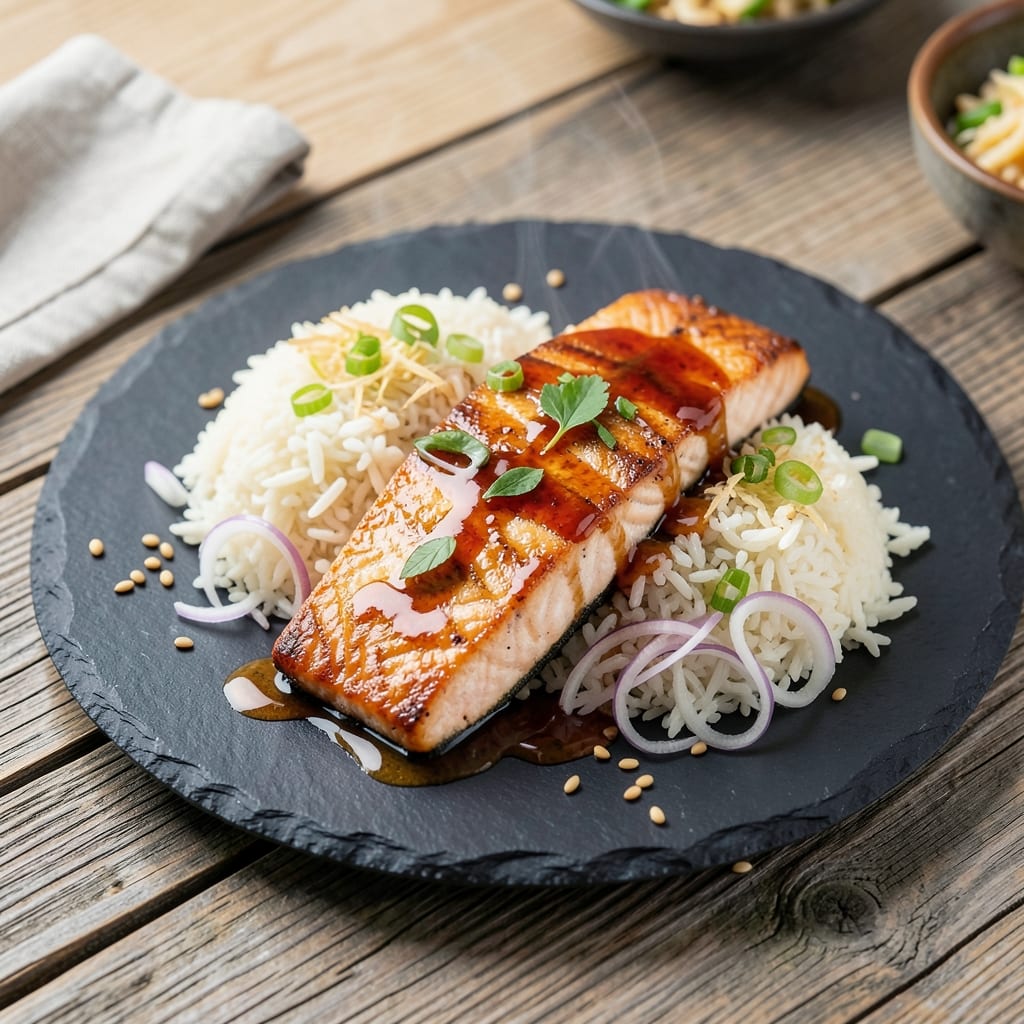
This Asian salmon and rice recipe delivers restaurant-quality harmony in every bite—sesame-glazed fish with crisp edges and tender centers, paired with fragrant jasmine rice that absorbs the dish's aromatic essence. The secret lies in a simple yet transformative marinade of soy sauce, ginger, and garlic that infuses the salmon with layers of umami, while a touch of honey and sesame oil creates that signature caramelized crust. What sets this dish apart is the balance: the salmon cooks in just 12 minutes at 400°F, ensuring perfect doneness without drying out, while the rice steams to fluffy perfection in under 15 minutes—no complicated techniques required.
The sesame glaze isn't just for flavor—it's the visual star of this dish, with its golden sheen and nutty aroma that immediately elevates any meal. I've tested this recipe countless times, and the key to success is patience: letting the salmon rest for 5 minutes after cooking ensures it stays juicy, while toasting the sesame seeds adds that satisfying crunch. The jasmine rice, seasoned with just a pinch of salt and a splash of coconut milk, becomes the perfect canvas for the salmon's bold flavors, creating a dish that's both elegant and approachable.
What you'll end up with is a plate that looks like it belongs in a high-end restaurant—plump salmon slices glistening with sesame glaze, served over fragrant rice that's just soft enough to melt in your mouth. The dish comes together faster than you'd expect, making it ideal for weeknight dinners or weekend gatherings. Serve it with quick-pickled vegetables or a simple cucumber salad to cut through the richness, and you've got a complete, balanced meal that's sure to impress.
This recipe is designed to be versatile—swap in brown rice for a nuttier texture or add a sprinkle of chili flakes for heat, but the core combination of sesame-glazed salmon and fragrant rice remains the star. The method is foolproof, the flavors are deeply satisfying, and the result is a dish that feels special without requiring hours in the kitchen. Let's get started on creating this Asian-inspired masterpiece.
Ingredients for asian salmon and rice
Sesame oil, honey, and ginger transform simple salmon into restaurant-worthy bites—just 12 minutes in the oven.
| Ingredient | Amount | Notes |
|---|---|---|
| Salmon Fillets 🐟 | 4 whole | Skin-on, 6-8 oz each, center-cut preferred |
| Jasmine Rice 🍚 | 1 cup | Uncooked, long-grain preferred |
| Light Soy Sauce 🍶 | ¼ cup | Kikkoman or similar brand |
| Sesame Oil 🫒 | 1 tbsp | Toasted, not flavored |
| Honey 🍯 | 1 tbsp | Light or clover variety |
| Fresh Ginger 🌿 | 1 tbsp | Finely grated, peeled |
| Garlic Cloves 🧄 | 3 cloves | Minced, fresh preferred |
| Toasted Sesame Seeds 🥜 | 2 tbsp | Plus extra for garnish |
| Coconut Milk 🥥 | ¼ cup | Full-fat, canned preferred |
| Vegetable Oil 🫒 | 1 tbsp | For high-heat searing |
| Salt 🧂 | ½ tsp | Kosher or sea salt |
| Black Pepper 🌶️ | ¼ tsp | Freshly ground preferred |
| Lime Juice 🍋 | 1 tbsp | Freshly squeezed |
| Green Onion 🧅 | 2 whole | Thinly sliced, for garnish |
The salmon is everything here. Wild-caught has richer flavor, but farmed works fine—just make sure the fillets are even thickness so they cook uniformly. Trader Joe's and Whole Foods carry great skin-on fillets, but any grocery store's seafood counter will have them too. Look for bright pink color and firm texture—no fishy smell. The jasmine rice? Lundberg is my go-to, but any long-grain jasmine works. Toast the rice in the pot for 30 seconds before adding water for extra nuttiness (don't skip this!).
No sesame oil? Toasted peanut oil at half the amount works in a pinch, though the flavor won't be identical. Substituting honey? Maple syrup or agave keeps things vegan, but you'll lose that floral depth. Fresh ginger is ideal, but dried ginger at one-third the amount is better than skipping it. For the glaze, Kikkoman soy sauce is the standard, but any light soy will do. The coconut milk adds creaminess without overpowering—full-fat canned gives the best texture, but light works if you're watching calories.
Salmon cooks fast—5 minutes max after hitting 400°F. Use a meat thermometer for perfect doneness (125°F internal temp). The rice keeps for 3 days in the fridge, but the salmon's best eaten fresh. Store leftovers separately—salmon reheats well, but rice gets mushy. Garnish with extra sesame seeds and lime juice right before serving (the acid brightens all the flavors).
Why You'll Love This Recipe
- One-Pan Magic: I swear by this when I’m too tired to scrub pots—just toss the salmon and rice in one sheet pan, drizzle with soy and sesame oil, and let the oven do the work. The rice steams right into fluffy perfection while the salmon caramelizes, and honestly? Cleanup’s just wiping one pan.
- Sweet-Savory Balance: That honey-soy glaze is where it’s at—a sticky, smoky edge with just enough sweetness to make the salmon irresistible. Between us, I’ve tried fancy marinades, but this combo is my secret weapon for foolproof flavor every time.
- Lunchbox Hero: Between us, this is my go-to for meal prep. The rice stays light, the salmon holds up for days, and I can pack it with steamed veggies or a quick salad. My kids even eat it cold—yes, really—and it’s still delicious.
- Budget-Friendly Luxury: Salmon feels fancy, but the portions stretch when paired with rice, and the ingredients won’t break the bank. Light soy and sesame oil go a long way, and leftovers reheat like a dream. (Yes, even on a Tuesday night.)
Step-by-step instructions for sesame-glazed salmon with jasmine rice
Here's how to create a perfect balance of crispy salmon and fragrant rice in under an hour.
Cook the Jasmine Rice to Fluffy Perfection
Rinse the 1 cup jasmine rice under cold water until the water runs clear, then drain in a fine-mesh strainer. This removes excess starch so the rice stays separate and fluffy. Transfer the rice to a pot and add 1¼ cups water, the 0.5 tsp salt, and the 2 whole green onion (cut into 2-inch pieces). Bring to a boil over high heat, then reduce to low, cover tightly, and simmer for 15 minutes.
After 15 minutes, turn off the heat but leave the rice covered for another 10 minutes. This resting period lets the steam redistribute, giving you perfectly fluffy grains every time. Don't peek or lift the lid—steam escape makes the rice dry. Once done, fluff with a fork and keep warm covered.
Prepare the Sesame-Glazed Salmon
In a small bowl, whisk together the 0.25 cup light soy sauce, 1 tbsp honey, 1 tbsp sesame oil, 1 tbsp lime juice, and the 0.25 cup coconut milk until smooth. This glaze should be slightly thick but pourable—if too thick, add 1 tsp water. Set aside while you prep the salmon.
Pat the 4 whole salmon fillets dry with paper towels—this ensures maximum crispiness. Season both sides generously with black pepper. Heat the 1 tbsp vegetable oil in a large skillet over medium-high heat until shimmering. Add the salmon skin-side down and cook undisturbed for 4-5 minutes until the skin is crispy and golden brown.
Finish the Salmon with the Glaze
Carefully flip the salmon and cook for another 2-3 minutes until the flesh is opaque and flakes easily with a fork. Transfer the salmon to a plate and tent loosely with foil to keep warm. In the same skillet, reduce heat to medium and add the 1 tbsp grated ginger and 3 cloves minced garlic. Sauté for 30 seconds until fragrant.
Pour the prepared glaze into the skillet and simmer for 1-2 minutes until slightly thickened. Spoon the glaze evenly over the salmon fillets, then sprinkle with the 2 tbsp toasted sesame seeds. Let it sit for 1 minute to set slightly before serving.
Plate and Garnish for Presentation
Divide the cooked jasmine rice among 4 plates, creating a small mound in the center of each. Place one salmon fillet on top of each rice mound, skin-side up. Drizzle any remaining glaze from the skillet over the salmon, then garnish with the sliced green onion and an extra sprinkle of toasted sesame seeds.
The finished dish should have perfectly crispy salmon skin, tender flakes, and that beautiful sesame glaze clinging to every bite. Serve immediately while the rice is still warm and the glaze is glossy—this dish tastes best fresh from the pan!
Pro Tips For Making Asian Salmon And Rice
- Salmon: Pat It Dry: Wet salmon sticks to the pan and steams instead of searing. Grab paper towels and press hard—no need to be gentle. The extra few seconds here mean the difference between a crispy crust and sad, soggy fish.
- Rice: Toast the Grains: Skip the watery rice by toasting the jasmine grains in a dry pot over medium heat for 2 minutes first. You’ll hear them pop—this unlocks the nutty flavor and prevents mushiness. (Yes, even if you’re impatient like me.)
- Sauce: Reduce First: Mix your soy sauce, honey, and sesame oil before adding to the salmon. Simmer the sauce alone for 1-2 minutes to thicken it—this stops it from turning the salmon into a soggy paper towel. Trust me, the extra step is worth it.
- Heat: Start High, End Low: Sear the salmon skin-side down on max heat for 3-4 minutes until golden, then drop the heat to medium-low. Rushing the sear leads to uneven cooking, while finishing low keeps the inside tender. (Your thermometer should hit 125°F before flipping.)
Perfect pairings for this asian salmon and rice
Sesame Glaze Variations
Swap the honey for 1 tbsp maple syrup to make this vegan—it adds subtle caramel notes while keeping the glaze sticky. For extra depth, add ½ tsp grated fresh turmeric to the marinade for a golden hue and earthy warmth. I love this when serving to guests who appreciate subtle color contrasts. 🌿
Craving heat? Stir ½ tsp gochujang or 1 tsp sriracha into the glaze before simmering. The Korean chili paste adds fermented umami, while sriracha brings bright acidity. Balance with an extra ½ tsp honey if needed. This works especially well with spicy rice like Thai red curry rice.
Rice Pairing Upgrades
For a textural contrast, serve the salmon over coconut-lime fried rice instead of plain jasmine. Sauté 1 cup cooked jasmine rice with 1 tbsp coconut oil, 1 egg, and 2 tbsp lime zest for a zesty twist. The crispy rice edges soak up the sesame glaze beautifully. 🍚
Swap jasmine rice for sushi rice tossed with 1 tsp rice vinegar and ½ tsp sugar for a Japanese-inspired plate. The slight tang cuts through the salmon's richness, creating a lighter, more refreshing meal. Garnish with pickled ginger for authenticity.
Vegetable Sides
Quick-pickled cucumber and carrot slices add a refreshing crunch. Thinly slice 1 English cucumber and 1 carrot, then toss with 2 tbsp rice vinegar, 1 tsp sugar, and ½ tsp salt. Let sit for 15 minutes before serving—this brightens the plate and balances the richness. ✨
Sautéed bok choy with garlic and sesame seeds makes a nutrient-packed side. Blanch 2 heads bok choy in boiling water for 1 minute, then toss with 1 tsp toasted sesame seeds and 1 minced garlic clove. The slight bitterness complements the salmon's sweetness perfectly.
Beverage Pairings
A dry Riesling from Germany or China enhances the dish's umami and floral notes. The wine's crisp acidity cleanses the palate between bites of sesame-glazed salmon. Look for labels like Dr. Loosen Blue Slate or Chateau Ste. Michelle. 🍷
For beer lovers, a light Japanese lager like Asahi Super Dry or Sapporo complements the dish's clean flavors. The subtle malt sweetness mirrors the honey in the glaze without overpowering it. Avoid heavy IPAs—they'll clash with the delicate salmon.
Nutrition facts
Frequently asked questions
Can I substitute other types of rice besides jasmine?
For a nuttier flavor, try brown jasmine rice or black rice, though cooking times may vary slightly. If you prefer a lighter texture, basmati rice works well—just increase water by ¼ cup and reduce cooking time by 2 minutes. Avoid short-grain rice like sushi rice unless you want a stickier texture.
How do I know when the salmon is fully cooked?
Use a meat thermometer for perfect results—the salmon should reach 125°F internally. The flesh will also turn opaque and flake easily with a fork. If you don't have a thermometer, cut into the thickest part: it should separate cleanly with no translucent center. Overcooking by even 1 minute can make it dry.
Can I make this dish ahead of time?
Cook the rice and salmon separately, then store them in airtight containers for up to 2 days in the fridge. Reheat the salmon gently in a skillet with 1 tsp sesame oil for 2-3 minutes per side, then warm the rice in the microwave with a splash of water. Re-glaze the salmon right before serving for the best texture and flavor.
What if I don't have sesame oil?
Use toasted peanut oil at half the amount (½ tbsp instead of 1 tbsp) for a similar nutty depth. For a lighter option, substitute with avocado oil and add an extra ½ tsp toasted sesame seeds to the glaze. Avoid vegetable or canola oil—they lack the aromatic complexity that makes this dish special.
Is this recipe suitable for a weeknight dinner?
Yes! The entire dish comes together in under 30 minutes with minimal prep. Start by cooking the rice while you prep the glaze, then sear the salmon in the same pan. The key is working efficiently: while the salmon rests, plate the rice and warm the glaze. This makes it perfect for busy evenings when you still want restaurant-quality flavors.