
Main Courses
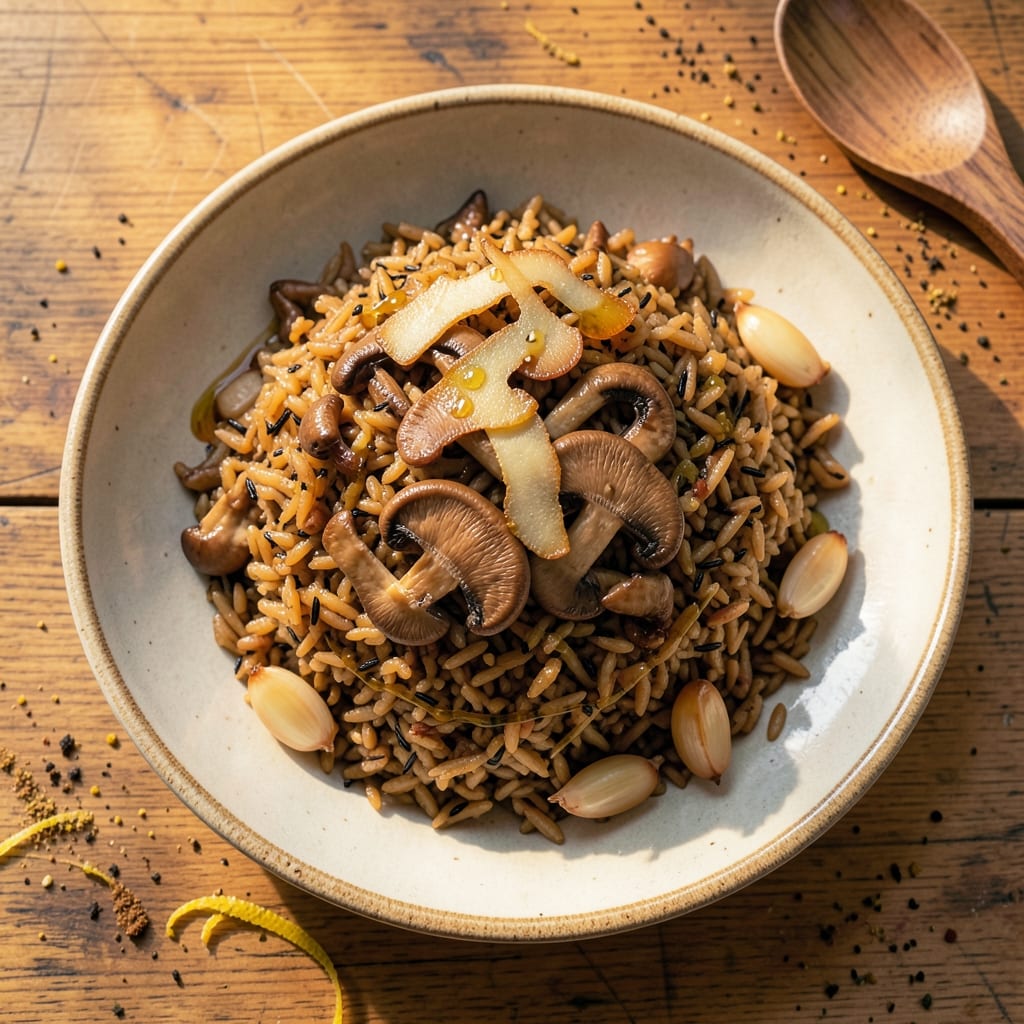
This Asian wild rice recipe transforms simple grains into a fragrant, umami-rich dish that rivals restaurant-quality stir-fries. The nutty toasted wild rice forms the perfect base for savory mushrooms, garlic, and ginger, creating a balanced bowl that's both hearty and elegant. What sets this apart is the careful balance of textures—crisp edges on the rice, tender mushrooms, and silky aromatics—that make every bite satisfying.
The foundation begins with wild rice cooked to perfection, then toasted in sesame oil until fragrant and slightly crisp. Sautéed shiitake mushrooms add deep umami flavor, while garlic and ginger infuse warmth throughout. A touch of soy sauce and a splash of rice vinegar elevate the dish with just the right balance of saltiness and brightness.
What you'll end up with is a visually stunning dish that's packed with flavor and texture—golden wild rice, earthy mushrooms, and vibrant aromatics. The dish holds its shape beautifully, making it perfect for meal prep or serving as a centerpiece for dinner parties. Each bite delivers a harmonious blend of nutty rice, savory mushrooms, and aromatic spices.
Pair with grilled chicken or tofu for a complete meal, or serve alongside steamed greens for a lighter option. The recipe scales effortlessly, making it ideal for both weeknight dinners and special occasions. Ready to create a restaurant-worthy bowl at home?
Ingredients for asian wild rice
Nutty wild rice meets umami mushrooms and aromatic spices for a restaurant-worthy bowl.
| Ingredient | Amount | Notes |
|---|---|---|
| Wild Rice Blend 🌾 | 1 cup | Uncooked, long-grain variety |
| Dried Shiitake Mushrooms 🍄 | 8 whole | Rehydrated, stems removed |
| Garlic Cloves 🧄 | 4 cloves | Minced for aromatic depth |
| Fresh Ginger 🌿 | 1 ½ tbsp | Finely grated, vibrant color |
| Sesame Oil 🫒 | 2 tbsp | Toasted, for nutty aroma |
| Low-Sodium Soy Sauce 🥢 | 2 tbsp | For umami balance |
| Rice Vinegar 🍶 | 1 ½ tbsp | Seasoned, for brightness |
| Vegetable Oil 🫒 | 1 tbsp | High smoke point preferred |
| Green Onions 🧅 | 3 whole | Thinly sliced, for garnish |
| Sesame Seeds 🌰 | 1 tbsp | Toasted, for crunch |
| Salt 🧂 | ½ tsp | Fine sea salt preferred |
| Black Pepper 🌶️ | ¼ tsp | Freshly ground for heat |
| Water 💧 | 2 ½ cups | Filtered preferred for clarity |
| Chicken or Vegetable Broth 🍲 | 1 ½ cups | Low-sodium preferred |
The wild rice is the star here—Bob's Red Mill or Lundberg blends work best for that perfect chewy texture. Dried shiitake mushrooms add depth without overpowering, and you'll find them in the Asian foods aisle at Whole Foods or Asian markets. Fresh ginger should smell zesty and bright; if it's musty, grab a new root. Sesame oil matters too—Kadoya or La Tourangelle brands deliver that nutty aroma without overpowering. For the mushrooms, soak them in warm water for 20 minutes before using, then reserve that soaking liquid for extra umami in the broth.
No shiitake mushrooms? Cremini or oyster mushrooms work in a pinch, but they won't match the earthy depth. Fresh ginger too strong? Ground ginger at half the amount is a decent swap, though it lacks freshness. Low-sodium soy sauce is key—regular brands add too much salt. The rice vinegar should be seasoned; plain vinegar won't have that same bright punch. For the broth, Swanson or Pacific Foods low-sodium options keep the flavor balanced without overwhelming. If you're making this ahead, cook the rice completely first, then toast it in sesame oil before storing—it reheats beautifully and keeps for 4-5 days in the fridge.
This dish reheats beautifully—just add a splash of water or broth to the rice before microwaving. Store the cooked rice and mushrooms separately for up to 5 days in the fridge, then toast the rice in sesame oil fresh before serving. For meal prep, divide into containers with a thin layer of oil on top to preserve texture. The mushrooms can be prepped ahead and stored in an airtight container for up to 3 days. Garnish with sesame seeds right before serving for that perfect crunch—toasted in a dry pan for 30 seconds makes all the difference.
Why You'll Love This Recipe
- No-Chop Necessary: The dried shiitakes just soak while I stir-fry—no knife skills required. Honestly, I’ve burned garlic before, but these mushrooms handle the prep for me, and the rice cooks itself in the same pot.
- Umami Bomb: That first bite of rehydrated shiitakes with garlic and ginger? It’s like a flavor explosion without the fuss. The sesame oil ties it all together—rich, nutty, and impossible to resist.
- Lunchbox Hero: I make a big batch on Sundays, and it lasts all week. Toss it cold in salads, pack it with grilled chicken, or just eat it straight from the fridge—still tastes fresh.
- Budget Stretch: Wild rice blend is pricier, but dried shiitakes and a few cloves of garlic stretch it into five servings. Between us, this is my go-to when I’m broke but refuse to eat sad rice.
Step-by-step instructions for Asian wild rice with umami mushroom depth
Here's the method that transforms simple grains into a restaurant-quality Asian-inspired dish.
Rehydrate and Prepare the Dried Shiitake Mushrooms
Place the 8 whole dried shiitake mushrooms in a heatproof bowl and cover them completely with 2.5 cups hot water from the kettle. Let them soak for 20-30 minutes until softened and expanded. This rehydration process unlocks their deep umami flavor that will infuse the entire dish.
While the mushrooms soak, remove their stems by gently twisting them off—discard the woody stems and finely chop the caps. The mushrooms should yield about ½ cup chopped rehydrated shiitake when drained. Keep the soaking water reserved for later use, as it contains valuable mushroom essence that enhances the broth.
Toast the Wild Rice for Enhanced Nutty Flavor
Heat a large skillet over medium heat and add the 1 cup wild rice blend. Toast the grains for 3-4 minutes, stirring constantly with a wooden spoon, until they become fragrant and develop a subtle golden hue. This toasting step is crucial—it deepens the nutty flavor and prevents the rice from becoming mushy during cooking.
Remove the toasted rice from the skillet and set it aside. In the same skillet, add 1 tablespoon vegetable oil and heat over medium heat. Add the 4 cloves minced garlic and 1.5 tablespoons finely grated ginger, cooking for 30 seconds until fragrant but not browned. This aromatic base forms the flavor foundation for the entire dish.
Build the Flavorful Broth Base
To the skillet with garlic and ginger, add 2 tablespoons sesame oil and 2 tablespoons low-sodium soy sauce, stirring to combine. Cook for 1 minute until the mixture becomes fragrant. Then add the ½ cup chopped rehydrated shiitake mushrooms, cooking for another 2 minutes until they release their moisture and begin to caramelize slightly.
Pour in the 1.5 cups chicken or vegetable broth and bring to a gentle simmer. Stir in the 1.5 tablespoons rice vinegar, 0.5 teaspoon salt, and 0.25 teaspoon black pepper. The vinegar adds a bright contrast to the rich umami flavors while balancing the dish. Let the mixture simmer for 5 minutes to allow the flavors to meld together.
Cook the Wild Rice to Perfect Texture
Return the toasted wild rice to the skillet with the flavorful broth mixture. Stir gently to combine, then bring to a boil. Once boiling, reduce heat to low, cover the skillet, and let the rice simmer for 35-40 minutes. The rice is done when all the liquid has been absorbed and the grains are tender but still maintain a slight bite.
During the final 5 minutes of cooking, check the rice occasionally. If it appears dry before the time is up, add 1-2 tablespoons of water to prevent burning. The rice should be tender enough that a fork can easily pierce the grains, but still retain some texture rather than becoming mushy.
Finish and Garnish for Presentation
Once the rice is perfectly cooked, remove the skillet from heat and let it sit covered for 5 minutes. This resting period allows any remaining steam to distribute evenly throughout the grains, ensuring consistent texture.
Transfer the rice to a serving dish and garnish with 3 whole thinly sliced green onions and 1 tablespoon toasted sesame seeds. The green onions add a fresh contrast to the rich flavors, while the sesame seeds provide a delightful crunch. Serve immediately while the rice is still warm, allowing the aromatic flavors to fully develop with each bite.
Pro Tips For Making Asian Wild Rice
- SOAK SHIITAKES 20 MINUTES: I learned this the hard way—dried shiitakes straight from the bag taste like cardboard. Soak them in hot water (not boiling) for 20 minutes before slicing, then reserve that liquid for the rice. The mushrooms will plump up and absorb flavor like sponges.
- MINCE GINGER FINE: Skip the grater—use a sharp knife and chop ginger into a paste with a pinch of salt. This keeps it from turning bitter and blends better into the rice. (Yes, even if you're impatient like me, the texture matters.)
- COOK RICE AL DENTE: Wild rice blends take 45-50 minutes to finish, but pull it off heat 2-3 minutes early. The grains will keep cooking in the residual heat, and you’ll avoid that mushy, sad texture. Test one—it should have a slight bite.
- FINISH WITH SESAME OIL LAST: Toss the rice with sesame oil off the heat, or it’ll burn and taste bitter. A teaspoon at the end adds nutty depth without overpowering. (Does it look weird? Yes. Does it work? Every single time.)
Flavor customization for this dish
Spicy Kick Option
For a fiery twist, add 1 teaspoon of gochujang paste or ½ teaspoon of red pepper flakes when building the broth base. The gochujang brings fermented heat and depth, while red pepper flakes offer a sharp, immediate kick. I love using Mae Ploy chili flakes for a more aromatic heat profile. 🌶️
Sweet Glaze Variation
Balance the umami with a touch of sweetness by adding 1 tablespoon of honey or 1 teaspoon of mirin to the broth. This works especially well with the shiitake mushrooms, creating a caramelized contrast. For extra depth, use Kadoya honey—its floral notes complement the earthy mushrooms beautifully.
Citrus Brightness
Finish the dish with a splash of 1 teaspoon of lime juice or ½ teaspoon of yuzu zest just before serving. The acidity cuts through the richness, making each bite feel fresh. I always keep a small bowl of lime wedges on the table for guests to squeeze over their portions—it’s a simple touch that elevates the experience. ✨
Nutty Crunch Additions
For extra texture, stir in 1 tablespoon of toasted peanuts or 2 tablespoons of crushed roasted cashews during the final minute of cooking. The nuts add a satisfying crunch that contrasts perfectly with the tender rice and mushrooms. I prefer raw, unsalted peanuts from the bulk section at Whole Foods—toast them in a dry pan for 2-3 minutes until fragrant.
Herbaceous Garnish
Swap the green onions for cilantro or Thai basil for a more aromatic finish. The cilantro adds a bright, citrusy note, while Thai basil brings a subtle anise-like sweetness. For extra flair, add a few fresh mint leaves—they’re perfect for balancing the richness of the dish. 🌿
Protein Infusions
For a heartier bowl, stir in ½ cup cooked shrimp or ½ cup shredded rotisserie chicken> during the final 5 minutes of cooking. The protein absorbs the flavors beautifully, making the dish even more satisfying. If using shrimp, I recommend large, peeled shrimp** sautéed in a little garlic and ginger before adding to the rice.
Nutrition facts
Frequently asked questions
Can I substitute regular rice for wild rice in this recipe?
While you can use regular rice, the texture and flavor will be completely different. Wild rice has a nutty, chewy bite that pairs perfectly with the umami mushrooms and aromatic spices. For a similar texture, try using brown rice or a wild rice blend with other grains like barley. If you must use white rice, cook it separately and toast it in sesame oil to mimic the nutty flavor.
How do I know when the wild rice is fully cooked?
The rice should be tender but still have a slight bite—it should take about 35-40 minutes of simmering. Test it by piercing a grain with a fork; it should be soft but not mushy. If the rice looks dry before the time is up, add 1-2 tablespoons of water or broth. Never lift the lid while cooking, as this releases steam and can make the rice unevenly cooked.
Can I make this dish ahead of time?
Cook the rice completely, then let it cool before storing in an airtight container for up to 4-5 days in the fridge. When ready to serve, reheat with a splash of water or broth, then toast in sesame oil for 2-3 minutes to restore texture. Keep the mushrooms separate until reheating to maintain their crispness. Garnish with fresh green onions and sesame seeds just before serving.
What if I can't find dried shiitake mushrooms?
Fresh cremini or oyster mushrooms work well as a substitute, though they won't have the same deep umami flavor. Sauté them for 5-6 minutes until they release moisture, then proceed with the recipe. For extra depth, add 1 teaspoon of soy sauce to the mushrooms while cooking. If you want to stay closer to the original flavor, try using mushroom powder (½ teaspoon) mixed into the broth.
Why does my wild rice turn out mushy?
Mushy rice usually happens from overcooking or insufficient liquid absorption. Always use the full 2.5 cups of water and 1.5 cups of broth called for, and never peek under the lid while cooking. If your rice is still firm after 40 minutes, add a splash of water and cook another 5 minutes. For extra insurance, toast the rice longer (up to 5 minutes) before cooking to firm up the grains.