
Main Courses
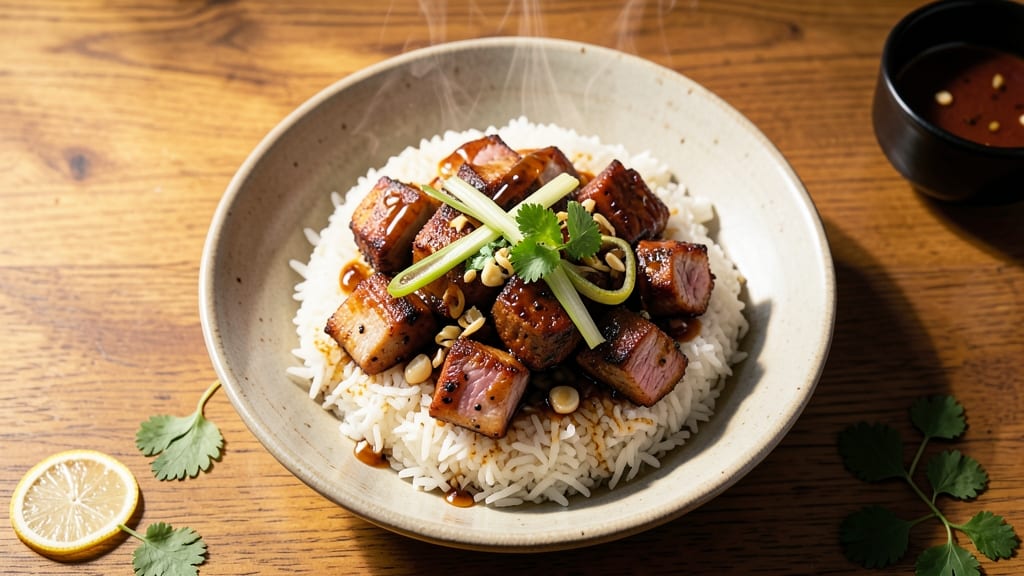
This Cambodian pork and rice recipe delivers the aromatic, balanced flavors of Sach Ko Kork—tender marinated pork served over fragrant jasmine rice, infused with lemongrass, galangal, and a touch of fish sauce.
The secret lies in the marinade, where five-spice blend and citrus create a harmony that transforms simple pork into something deeply flavorful. What makes this dish special is its approachability: no complex techniques, just layers of authentic Cambodian taste that come together effortlessly.
The pork is marinated overnight, allowing the spices to penetrate deeply, then cooked to perfect tenderness—whether grilled for smoky char or braised for rich, caramelized edges. Meanwhile, the jasmine rice steams into light, fluffy grains that soak up the dish's aromatic essence.
This isn't just a meal; it's a celebration of Cambodian home cooking, where every bite balances sweet, sour, and umami notes. The result is a dish that feels both comforting and sophisticated, perfect for weeknight dinners or special gatherings.
What you'll achieve is restaurant-quality Cambodian pork with crispy yet tender meat, served over fragrant rice that's infused with subtle herbal notes. The dish comes together in under an hour (plus marinating time), making it ideal for home cooks who want authentic flavors without fuss.
Garnished with fresh herbs and pickled vegetables, it's a complete, satisfying meal that transports you to the streets of Phnom Penh with every bite.
This recipe serves four, with leftovers reheating beautifully for lunch the next day. The marinade can be doubled for future use, and the rice method ensures perfect texture every time.
Whether you're introducing Cambodian cuisine to your table or recreating a favorite memory, this dish delivers depth and authenticity in every mouthful.
Ingredients for cambodian pork and rice
Authentic Cambodian flavors start with these 15 essential ingredients—where aromatic spices meet tender pork and fragrant rice.
| Ingredient | Amount | Notes |
|---|---|---|
| Pork Shoulder 🥩 | 1 ½ lb | Boneless, cut into 1-inch cubes |
| Jasmine Rice 🍚 | 1 ½ cups | Uncooked, long-grain preferred |
| Five-Spice Blend 🌶️ | 2 tbsp | Homemade or Cambodian blend |
| Fresh Lemongrass 🌿 | 1 whole | Stalks, bruised and cut into 2-inch pieces |
| Galangal 🌿 | 2 tbsp | Fresh, grated or finely minced |
| Fish Sauce 🍶 | 2 tbsp | Red Boat preferred for authenticity |
| Lime Juice 🍋 | ½ cup | Freshly squeezed, seeds removed |
| Brown Sugar 🍚 | ¼ cup | Packed, light or dark |
| Garlic Cloves 🧄 | 6 cloves | Peeled, minced |
| Shallots 🧅 | 4 whole | Peeled, thinly sliced |
| Vegetable Oil 🫒 | ¼ cup | High smoke point for cooking |
| Fresh Cilantro 🌿 | ¼ cup | Chopped, for garnish |
| Mint Leaves 🌿 | ¼ cup | Chopped, for garnish |
| Salt 🧂 | 1 ½ tsp | Diamond Crystal kosher preferred |
| Black Pepper 🌶️ | ½ tsp | Freshly ground |
The five-spice blend is non-negotiable here—Cambodian blends from Asian markets have that perfect balance of cinnamon, clove, and star anise, but a homemade mix (2 parts cinnamon, 1 part clove, 1 part star anise, 1 part fennel, 1 part cardamom) works wonders. Red Boat fish sauce is the gold standard for umami depth, but if you're using a different brand, opt for one with at least 30% salt content. Galangal can be tricky to find; Asian grocery stores usually stock it fresh, but if you can't locate it, ginger in a pinch (though it won't be identical). The pork should be boneless shoulder for that melt-in-your-mouth texture—ask your butcher to cube it if they don't already.
No fresh lemongrass? Substitute with 1 tbsp lemongrass paste (found in Asian aisles) or even lime zest, though the flavor won't be as complex. Running short on shallots? Red onion works at double the amount, but it adds a sharper bite. The marinade can be prepped a day ahead—store it in an airtight container in the fridge, with the pork submerged. For extra richness, add 1 tbsp coconut milk to the marinade. If you're grilling the pork, pat it dry before cooking for that perfect sear—trust me on this.
This dish reheats like a dream—3-4 days in the fridge, 3 months frozen. The rice stays fluffy for days if stored in an airtight container, but for best texture, reheat portions with a splash of water. Garnishes like cilantro and mint keep for 5 days wrapped in damp paper towels, but add them fresh when serving for that bright pop. Double the marinade and freeze it in ice cube trays for future use—game-changer for weeknight dinners
Why You'll Love This Recipe
- I swear by this trick: toss everything—pork, rice, spices—into one pot and let it simmer. No chopping stress, no fancy techniques, just hands-off cooking while you sip your coffee.
- One-Pot Magic: I swear by this trick: toss everything—pork, rice, spices—into one pot and let it simmer. No chopping stress, no fancy techniques, just hands-off cooking while you sip your coffee.
- Five-Spice Secret Weapon: That earthy, slightly sweet five-spice blend? It’s the hero here. Galangal adds a peppery kick, lemongrass brightens it up, and suddenly, your pork has depth you won’t find in basic seasoning.
- Meal Prep MVP: Make a big batch on Sunday—it reheats like a dream. The rice stays fluffy, the pork stays tender, and you’ve got a week’s worth of lunches without sacrificing flavor.
Step-by-step instructions for Cambodian pork and rice
This aromatic dish delivers tender pork infused with five-spice and galangal, served over fragrant jasmine rice.
Marinate the Pork Shoulder
In a large bowl, combine the 1.5 lb pork shoulder cut into 1-inch cubes with the 2 tbsp five-spice blend, 2 tbsp grated galangal, 2 tbsp fish sauce, 0.5 cup lime juice, 0.25 cup brown sugar, 6 minced garlic cloves, 4 thinly sliced shallots, and 0.5 tsp black pepper. Mix thoroughly until the marinade coats every piece of pork.
Transfer the marinated pork to a resealable plastic bag and refrigerate for at least 4 hours (overnight is ideal). This long marinating time ensures deep flavor penetration and tender meat. The pork should absorb the marinade completely, developing a rich aroma that fills your kitchen.
Cook the Jasmine Rice
Rinse the 1.5 cups jasmine rice under cold water until the water runs clear, then drain in a fine-mesh strainer. Transfer the rice to a pot with 3 cups water and the 1.5 tsp salt. Bring to a boil, then reduce heat to low, cover, and simmer for 15 minutes. Remove from heat and let it steam, covered, for another 10 minutes. Fluff with a fork before serving.
This rice should be perfectly tender with a delicate floral aroma. If the rice isn't fully cooked, return it to low heat for an additional 5 minutes covered. The grains should be separate and slightly sticky, forming the ideal base for this dish.
Sear the Marinated Pork
Heat 0.25 cup vegetable oil in a large skillet over medium-high heat until shimmering. Remove the pork from the marinade (reserve the marinade) and sear the pieces for 3-4 minutes per side until deeply browned and cooked through. The pork should reach an internal temperature of 160°F when measured with a meat thermometer.
As the pork sears, you'll notice the aromatics in the marinade caramelizing on the bottom of the pan. This creates a rich, complex flavor foundation. If the pork releases easily from the pan, it's ready to be removed. Transfer the seared pork to a plate and tent with foil to keep warm.
Simmer the Pork in the Marinade
Return the reserved marinade to the skillet and bring to a gentle simmer over medium heat. Let it reduce by half, about 5-7 minutes, until it thickens slightly and coats the back of a spoon. This reduction intensifies the flavors, creating a glossy, aromatic sauce that will cling beautifully to the rice and pork.
Return the seared pork to the skillet and spoon the reduced marinade over the top. Simmer for an additional 2-3 minutes to ensure the pork absorbs the sauce and reaches an internal temperature of 165°F. The pork should be fork-tender, with a crispy exterior and juicy interior.
Assemble and Garnish
Divide the cooked jasmine rice among 4 serving plates. Top each serving with the marinated pork and any accumulated juices from the skillet. Garnish with 0.25 cup chopped fresh cilantro and 0.25 cup chopped mint leaves for a vibrant finish.
Serve immediately while the pork is still warm and the rice is fragrant. The combination of tender pork, aromatic rice, and fresh herbs creates a harmonious balance of flavors and textures. This dish is best enjoyed fresh, as the flavors meld together beautifully when everything is piping hot.
Pro Tips For Making Cambodian Pork And Rice
- CHAR THE GALANGAL: I learned this the hard way—galangal needs a good char to release its flavor. Toss it in a dry pan over medium-high heat for 2-3 minutes until the edges blacken slightly, then pound it while warm. The bitterness mellows, and the aroma becomes actually aromatic.
- SLICE LEMONGRASS THIN: Skip the thick stalks—cut lemongrass into ½-inch slices before pounding. This way, it blends more evenly into the marinade and doesn’t leave stubborn chunks. (Yes, even if you’re impatient like me, trust the process.)
- LOW AND SLOW PORK: Cambodian pork isn’t about searing—it’s about tenderizing. Cook the shoulder at 275°F (135°C) for 3-4 hours until it falls apart with a fork. Rushing this turns it tough; patience here makes all the difference.
- DON’T SKIP THE REST: Let the pork rest under foil for 10 minutes after cooking. This keeps it juicy and makes slicing effortless. I used to cut into it straight away and wondered why it dried out—now I wait, and the meat stays rich.
Pro cooking tips for perfect results
Marinade Mastery
The key to restaurant-quality Cambodian pork lies in the marinade—let it work its magic for at least 4 hours, but overnight is ideal. I always use a resealable plastic bag to ensure the pork absorbs every drop of the aromatic blend.
The five-spice mix (cinnamon, clove, star anise, fennel, cardamom) is non-negotiable—it's what gives this dish its signature depth. Don't skip the galangal; it's the secret ingredient that sets Cambodian flavors apart from Thai or Vietnamese dishes. 🌶️
Pork Cooking Precision
When searing the pork, work in batches if needed to avoid crowding the pan—this ensures a proper Maillard reaction for that deep, caramelized flavor. I use a meat thermometer to check for 160°F internal temperature before removing from the pan.
For extra crispiness, pat the pork dry with paper towels before cooking. If you're grilling instead of pan-searing, aim for medium heat to prevent burning the delicate marinade.
Rice Perfection
Jasmine rice is the star here, and proper rinsing is crucial—this removes excess starch to prevent gummy grains. I always use a 1:2 rice-to-water ratio and let it steam off heat for 10 minutes after boiling. For extra fragrance, add 1 sprig of lemongrass to the cooking water.
The rice should be fluffy yet slightly sticky, forming a perfect base for the pork. Pro tip: Use a fine-mesh strainer to drain the rice thoroughly before cooking.
Sauce Reduction
The reduced marinade sauce is what ties everything together—simmer it until it coats the back of a spoon, about 5-7 minutes. This concentrated flavor is what makes the dish sing. I like to use a nonstick skillet (like Calphalon) to prevent sticking while the sauce reduces.
If the sauce reduces too quickly, add 1-2 tbsp water to maintain the right consistency. The glossy finish is your cue that it's ready to glaze the pork.
Garnish Game-Changer
Fresh herbs elevate this dish from good to spectacular. I always chop cilantro and mint leaves separately and add them just before serving to preserve their bright flavors. For an extra touch, add thinly sliced red onion or pickled vegetables (like daikon and carrot) for crunch and tang.
The contrast of textures and temperatures makes every bite exciting. Serve with a side of steamed bok choy or a simple cucumber salad to round out the meal. ✨
Nutrition facts
Frequently asked questions
Can I use chicken or beef instead of pork?
While pork is traditional, you can adapt this recipe for chicken thighs (marinate for 2 hours) or beef chuck (marinate overnight). For chicken, reduce cooking time to 12-15 minutes total, and for beef, increase to 20-25 minutes until fork-tender. The five-spice blend and galangal work beautifully with both proteins, though pork remains the most authentic choice.
What if I can't find galangal?
No worries! Substitute 1 tbsp grated ginger plus 1 tsp lime zest for the galangal. While not identical, this combo captures the citrusy warmth that galangal provides. For best results, also add ½ tsp cinnamon to the marinade to enhance the Cambodian flavor profile. The dish will still taste delicious, just with a slightly different aromatic depth.
How do I make this dish vegetarian?
Replace the pork with extra-firm tofu (pressed and cubed) or mushrooms (shiitake or oyster). For tofu, marinate in the same sauce for 30 minutes before pan-frying until golden. For mushrooms, sauté them first with garlic and shallots, then proceed with the marinade reduction. Serve over the jasmine rice with extra herbs and pickled vegetables for texture. The dish will have a more earthy flavor but still deliver that signature Cambodian aroma.
Can I prepare this recipe ahead of time?
Marinate the pork 1-2 days ahead and store it in the fridge. Cook the rice fresh or reheat portions with a splash of water. For the pork, sear it just before serving to maintain crispiness, or reheat gently in the oven at 300°F for 10-15 minutes. The flavors actually improve after marinating longer, making this a great make-ahead meal. Just add fresh herbs when serving.
What sides pair well with this dish?
Traditional Cambodian sides include pickled vegetables (chha), steamed bok choy, or a simple cucumber salad with lime and chili. For a complete meal, add green papaya salad (som lor) or stir-fried morning glory. The tangy, crunchy elements balance the rich pork perfectly. If you prefer Western sides, a mixed greens salad** with sesame dressing works well too.