
Main Courses
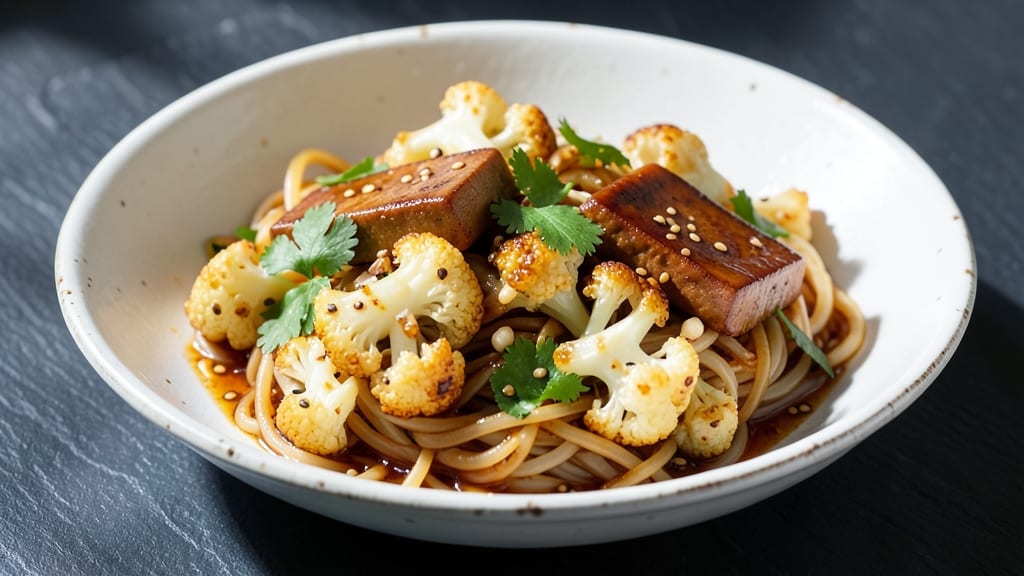
This cauliflower stir-fried rice delivers the perfect texture twist—crispy rice noodle bites mixed with tender cauliflower for a satisfying, protein-rich meal. The secret lies in high-heat stir-frying and a balanced seasoning blend that keeps every bite flavorful without overpowering the natural taste of the vegetables.
I developed this recipe after realizing how quickly store-bought rice noodles turn mushy, and this method guarantees they stay crispy while absorbing the savory sauce.
The result is a dish that's both restaurant-quality and effortlessly adaptable—add scrambled eggs, tofu, or your favorite veggies to customize it. The crispy edges on the noodles contrast beautifully with the soft cauliflower, creating a satisfying texture in every bite.
Ready in under 20 minutes, this recipe proves you don't need meat to make a hearty, flavorful stir-fry that feels like a complete meal.
Ingredients for cauliflower stir fried rice
Crispy noodles, tender cauliflower, and savory tofu—this stir-fry packs restaurant-quality flavor in 20 minutes.
| Ingredient | Amount | Notes |
|---|---|---|
| Rice Noodles 🍜 | 8 oz | Flat, medium-width preferred |
| Fresh Cauliflower 🥬 | 4 cups | Riced or finely chopped |
| Extra-Firm Tofu 🍳 | 1 lb | Pressed and cubed |
| Sesame Oil 🫒 | 1 tbsp | For aroma, not cooking |
| Vegetable Oil 🫒 | 2 tbsp | High smoke point |
| Garlic Cloves 🧄 | 4 cloves | Minced for depth |
| Fresh Ginger 🌿 | 1 tbsp | Grated, fresh preferred |
| Low-Sodium Soy Sauce 🥄 | 3 tbsp | For balanced saltiness |
| Sesame Seeds 🌾 | 1 tbsp | Toasted for crunch |
| Green Onions 🧅 | 3 whole | Sliced, white and green parts |
| Lime Wedges 🍋 | 2 whole | For serving |
| Salt 🧂 | ½ tsp | Adjust to taste |
| Black Pepper 🌶️ | ¼ tsp | Freshly ground |
| Sriracha Sauce 🔥 | 1 tbsp | Optional for heat |
The rice noodles are the star here—flat, medium-width ones from Asian markets stay crispy best, but any rice noodles work in a pinch. Soak them for 10 minutes in hot water, then drain and toss with sesame oil to prevent sticking. Fresh cauliflower should be bright white with no yellowing—the riced texture mimics rice perfectly. For tofu, press it for 20 minutes wrapped in a towel to remove excess water. Trader Joe's has pre-pressed tofu if you're short on time.
No sesame oil? Toasted peanut oil works in a pinch, though the aroma won't be the same. Short on garlic? Garlic powder at half the amount gets you close, but fresh is ideal. The soy sauce can be swapped for coconut aminos if you're avoiding sodium. For extra protein, add scrambled eggs or chickpeas—they hold up well to stir-frying. The green onions? Freeze any extras in a bag for future recipes—they keep for months.
Prep ahead by ricing the cauliflower and pressing the tofu the night before—they'll keep for 2 days in the fridge. The noodles should be cooked fresh, though. Store leftovers in airtight containers for 3 days, or freeze portions for up to 2 months. I always make double batches—this reheats beautifully, and the flavors deepen overnight. Garnish with lime and sesame seeds right before serving for maximum freshness.
Why You'll Love This Recipe
- No-Cook Prep Ahead: I swear by soaking the rice noodles in warm water while I chop the cauliflower—no boiling, no waiting. That crisp-tender tofu (pan-fried until golden) just falls apart perfectly when tossed in later, and the sesame oil hits like a flavor bomb at the end.
- Umami Bomb Combo: The tofu’s savory crunch meets the cauliflower’s natural sweetness, all wrapped in that nutty sesame finish. Honestly, the first time I added a splash of soy sauce and a pinch of chili flakes, I almost burned the pan from leaning in too close.
- Lunchbox Hero: Between us, this is my go-to for packed lunches—stays fresh for days in the fridge, and the noodles don’t get mushy. I’ll double the batch on Sundays and reheat portions all week; my kids (yes, even the picky one) ask for it by name.
- Budget Crunch Winner: Fresh cauliflower and tofu stretch into four servings for under $10, and I’m not joking. The rice noodles are cheap, the oil is minimal, and you’re left with leftovers that taste better cold than most takeout. Not the prettiest, but the taste makes up for it every time.
Step-by-step instructions for crispy rice noodle stir-fry
Here's how to turn simple ingredients into a satisfying, textured stir-fry with that perfect crispy bite.
Prep and Par-Cook the Rice Noodles
Soak the 8 oz rice noodles in hot water for exactly 5 minutes—they'll triple in size. Drain immediately and rinse under cold water to stop the cooking process. This prevents them from turning mushy later. Spread them on a clean kitchen towel and gently press between paper towels to remove excess moisture.
Here's the trick for crispy bits: cut the drained noodles into 2-inch pieces and toss them with 1 tablespoon vegetable oil and ½ teaspoon salt. Spread them on a baking sheet in a single layer. Bake at 375°F for 10-12 minutes, stirring halfway, until they're golden and slightly crispy. These will be your texture anchors in the stir-fry.
Press and Pan-Fry the Tofu
Wrap the 1 lb extra-firm tofu in a clean kitchen towel and press it between two heavy objects for 20 minutes. This removes excess moisture that would otherwise steam the stir-fry. Cut the pressed tofu into ½-inch cubes and pat them completely dry with paper towels.
Heat 1 tablespoon vegetable oil in a large skillet over medium-high heat. Add the tofu cubes in a single layer and let them cook undisturbed for 3-4 minutes until golden brown on the bottom. Flip carefully and cook another 3-4 minutes until crispy on all sides. Transfer to a plate and set aside—these crispy cubes will add protein and texture contrast.
Stir-Fry the Cauliflower and Aromatics
In the same skillet (no need to clean it—the browned bits add flavor), add 2 tablespoons vegetable oil and heat over medium-high heat. Add the 4 cups riced cauliflower and stir-fry for 4-5 minutes until it softens slightly but still maintains some bite.
Push the cauliflower to one side of the pan and add 4 minced garlic cloves and 1 tablespoon grated fresh ginger. Stir for 30 seconds until fragrant—this is where the real flavor develops. Add the 3 tablespoons low-sodium soy sauce and ¼ teaspoon black pepper, stirring to combine. Cook for another 1 minute to let the flavors meld.
Combine Everything for the Final Stir-Fry
Return the crispy tofu and par-cooked rice noodles to the skillet. Add the 1 tablespoon sesame oil and toss everything together over medium-high heat for 2-3 minutes. The residual heat will crisp up the noodles slightly while keeping them tender.
Taste and adjust seasoning—you might need a pinch more salt depending on your soy sauce. Remove from heat and stir in 1 tablespoon toasted sesame seeds and 3 sliced green onions (white and green parts). The sesame seeds add nutty crunch while the green onions bring freshness.
Serve with Lime and Optional Sriracha
Transfer the stir-fry to serving bowls immediately. Serve with the 2 whole lime wedges on the side—squeeze them over individual portions just before eating to brighten the flavors. For heat, offer the 1 tablespoon sriracha sauce for those who want it spicy.
This dish delivers that perfect texture contrast: crispy rice noodle bites, tender cauliflower, and crunchy tofu cubes all coated in savory, umami-rich sauce. The lime adds a tangy finish that cuts through the richness, making every bite balanced and satisfying.
Pro Tips For Making Cauliflower Stir Fried Rice
- CUT CAULIFLOWER SMALLER THAN YOU THINK: I used to leave florets the size of golf balls, thinking they’d hold up better—wrong. Chop them into ½-inch pieces or smaller so they cook through fast and soak up the sauce. Big chunks stay crunchy and bitter while the rest turns mushy.
- PRESS TOFU DRY BEFORE SEARING: Extra-firm tofu still hides moisture. Wrap it in a towel, press it under a heavy pan for 10 minutes, then slice and pat it again with paper towels. This guarantees a crispy crust instead of a sad, greasy mess.
- STIR-FRY NOODLES LAST, NOT FIRST: Toss the rice noodles in at the very end—when the cauliflower and tofu are already cooked and pushed to one side. They’ll absorb oil like sponges and turn into a gluey disaster if you add them too soon.
- USE SESAME OIL SPARINGLY: A few drops at the start adds aroma, but dumping in a tablespoon will make your stir-fry taste like a lamp. Add the rest at the end—just before serving—so the flavor shines without overpowering. (Yes, it’s worth measuring.)
Essential equipment for perfect results
High-Heat Wok
A carbon steel wok with a 14-inch diameter is my go-to for stir-frying—it heats up fast and retains heat evenly, which is key for that perfect sear on the noodles and tofu.
I use my De Buyer wok (it's pricey but lasts forever), but budget-friendly options like Made In woks work great too. If you don’t have a wok, a large, heavy-bottomed skillet (like All-Clad) will do in a pinch.
Just make sure it’s wide enough to stir everything without overcrowding. 🔥
Rice Noodle Prep Tools
For the crispy noodle step, I recommend a baking sheet with edges (to contain any oil splatter) and a wire cooling rack to drain excess water after soaking. A sharp chef’s knife and cutting board are essential for slicing the noodles into even 2-inch pieces—this ensures consistent crispiness.
Pro tip: Use parchment paper under the noodles on the baking sheet for easy cleanup. 💡
Tofu Press Essentials
Pressing tofu properly is half the battle. I use a tofu press (like the Norpro 2-Pack) for convenience, but you can DIY with two heavy books and a clean kitchen towel. A small offset spatula helps flip the tofu cubes without breaking them during pan-frying.
For extra crispiness, I pat the pressed tofu cubes extra dry with paper towels—this prevents steaming and ensures a golden-brown crust. 🍳
Sesame Oil Dispenser
Sesame oil adds incredible aroma, but it’s potent—use a small squeeze bottle (like a glass dropper bottle) to measure out 1 tablespoon precisely. Regular cooking oil (like avocado or vegetable oil) goes in the pan for stir-frying, while sesame oil is for finishing.
I keep both oils in my pantry for quick access. A microplane is perfect for grating fresh ginger, and a garlic press speeds up mincing garlic cloves. ✨
Garnish and Serve
Toasted sesame seeds and sliced green onions are the final touches. I use a small dry skillet to toast the seeds over low heat for 1-2 minutes until fragrant. A sharp knife (like a Japanese santoku) makes quick work of slicing green onions.
Serve in wide, shallow bowls to showcase the dish’s textures—crispy noodles, tender cauliflower, and crunchy tofu all in one bite. 🌿
Nutrition facts
Frequently asked questions
Can I make this recipe without tofu?
Swap the tofu for 1 cup cooked chickpeas (drained and rinsed) or 1 cup scrambled eggs for protein. For a vegan option without tofu, use ½ cup crumbled tempeh or 1 cup extra-firm mushrooms (like shiitake or oyster) sliced thinly and pan-fried until crispy.
Why are my rice noodles turning mushy?
Overcooking is the most common issue—rice noodles cook fast! Soak them for only 5 minutes (not the 10-15 minutes listed on some packages), then drain immediately. The crispy texture comes from the 10-minute bake step, not the soaking. Also, avoid stirring the noodles too much during stir-frying—toss gently to preserve their structure.
How do I make this dish spicier?
Add 1-2 teaspoons of sriracha to the sauce during stir-frying, or serve with extra hot sauce on the side. For built-in heat, stir in ½ teaspoon red pepper flakes with the garlic and ginger. If you love Thai flavors, add 1 tablespoon fish sauce (use coconut aminos for vegan) and 1 teaspoon chili garlic sauce at the end.
Can I use cauliflower rice from a bag?
Yes, but fresh riced cauliflower gives better texture. If using pre-riced, pat it very dry with paper towels to remove excess moisture before stir-frying. For extra crispiness, spread it on a baking sheet and bake at 400°F for 5 minutes before stir-frying. Pre-riced cauliflower won't mimic rice as closely but still works in a pinch.
How long can I store leftovers?
Store leftovers in an airtight container in the fridge for 3-4 days. For freezing, portion into single-serving bags and freeze for up to 2 months. Reheat in a skillet over medium heat with a splash of water to restore crispiness. Microwaving works but may make the noodles soggy.