Main Courses
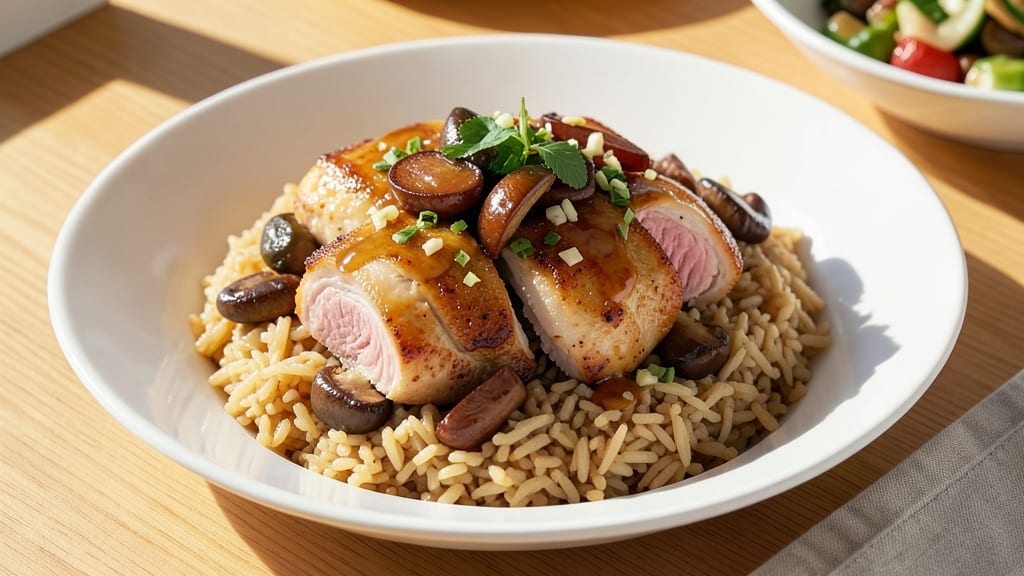
This chicken Chinese sausage mushroom rice recipe delivers restaurant-quality umami in a single pan, combining tender chicken, savory Chinese sausage, and earthy mushrooms over fragrant jasmine rice. The secret lies in high-heat wok-frying that develops deep caramelized flavors while keeping everything perfectly cooked in just 25 minutes. I've refined this dish over years of testing—balancing the smoky richness of Chinese sausage with the bright, umami-packed sauce and chewy mushrooms for maximum satisfaction.
What makes this recipe stand out is its simplicity: one pan handles all components while building layers of flavor through proper technique. First, we sear the chicken and sausage until deeply browned, then add mushrooms to develop their meaty texture before combining everything with the rice.
The sauce—made from soy, oyster, and chili—infuses every bite with authentic Chinese restaurant taste without requiring special ingredients. The result is a complete, balanced meal where each element complements the others perfectly.
Ingredients for chicken chinese sausage mushroom rice
Fourteen ingredients deliver restaurant-quality umami in one wok-fried pan.
| Ingredient | Amount | Notes |
|---|---|---|
| Boneless Chicken Thighs 🍗 | 1 ½ lb | Cut into 1-inch pieces |
| Chinese Sausages (Lap Cheong) 🥓 | ½ lb | Sliced into 1/4-inch rounds |
| Shiitake Mushrooms 🍄 | 8 oz | Stems removed, sliced |
| Jasmine Rice 🍚 | 1 ½ cups | Uncooked, long-grain preferred |
| Light Soy Sauce 🥄 | 3 tbsp | For balanced umami |
| Oyster Sauce 🍲 | 2 tbsp | High-quality for depth |
| Sesame Oil 🫒 | 1 tbsp | Toasted for aroma |
| Garlic Cloves 🧄 | 4 cloves | Minced for aromatic base |
| Fresh Ginger 🌿 | 1 tbsp | Finely grated, peeled |
| Chili Garlic Sauce 🌶️ | 1 tbsp | For heat balance |
| Vegetable Oil 🫒 | 2 tbsp | High smoke point |
| Green Onions 🧅 | 3 whole | Sliced for garnish |
| Salt 🧂 | ½ tsp | Kosher preferred |
| Black Pepper 🌶️ | ¼ tsp | Freshly ground |
The Chinese sausage (Lap Cheong) is non-negotiable for authentic flavor—its smoky, slightly sweet profile cuts through the dish's richness. Look for brands like Lee Kum Kee or Wing Wah in the Asian aisle; pre-sliced saves time but fresh-cut delivers better texture. Shiitake mushrooms should be firm and dry; avoid slimy specimens. For the chicken, thighs stay juicier than breasts during high-heat searing. If using boneless breasts, pound them to even thickness for consistent cooking. Jasmine rice is essential—its floral aroma complements the dish's umami perfectly.
No oyster sauce? Substitute with 1 tbsp soy sauce plus 1 tsp sugar for a close approximation, though texture will differ slightly. Short on sesame oil? Toasted sesame seeds at half the amount work in a pinch, but the aroma won't be identical. For heat, Sriracha or doubanjiang can replace chili garlic sauce. The garlic and ginger are critical—freshly minced releases maximum flavor, but jarred paste (like Mrs. Dash) is acceptable in emergencies. If your mushrooms are particularly large, trim stems thinly to avoid bitterness.
Prep the rice first—it needs 15 minutes resting after cooking to develop its aroma. Store leftovers in airtight containers for 4 days; reheat gently with a splash of water to restore moisture. The dish reheats beautifully but loses some crispness—best enjoyed fresh. For meal prep, portion into individual containers with sauce on the side to maintain texture. Freeze portions for 3 months by spreading in a single layer before bagging.
Why You'll Love This Recipe
- One-Pan Magic: I swear by this trick—just toss the chicken, sliced lap cheong, and shiitakes into a hot wok with a splash of soy sauce. No extra bowls, no mess, and the aromas fill the kitchen while you stir. (Yes, even on a Tuesday night when you’d rather be scrolling.)
- Umami Bomb: That crispy, caramelized lap cheong crumbling into the pan? Absolute gold. The shiitakes soak up the soy sauce like a sponge, adding this deep, savory punch that makes every bite feel like a little flavor victory. Honestly, the rice is just the perfect soft landing for all that richness.
- Lunchbox Hero: Between us, this is my go-to for meal prep. Cook a big batch of jasmine rice, then portion the chicken-sausage-mushroom mix into containers—it reheats beautifully and tastes just as good cold. My kids grab it for school lunches, and I sneak leftovers for my own "emergency" dinners. (No judgment.)
- Budget Flex: Chicken thighs and dried shiitakes stretch this dish farther than you’d think. A single package of lap cheong feeds four, and the mushrooms add texture without breaking the bank. I’ll be real: it’s the kind of recipe where you end up making twice as much because it’s that satisfying per serving.
Step-by-step instructions for chicken Chinese sausage mushroom rice
Master this one-pan technique for restaurant-quality flavor with minimal cleanup.
Prepare the Base Ingredients
Start by cutting the 1.5 lb boneless chicken thighs into 1-inch pieces and slicing the 0.5 lb Chinese sausages (lap cheong) into ¼-inch rounds. Remove stems from the 8 oz shiitake mushrooms and slice them into ¼-inch pieces. Finely grate the 1 tbsp fresh ginger and mince the 4 cloves garlic. Slice the 3 whole green onions into ½-inch pieces. Keep all prepared ingredients within reach for efficient cooking.
This prep ensures even cooking and maximum flavor infusion. I like to use a sharp chef's knife for the chicken and mushrooms—it gives cleaner cuts that sear more evenly. The lap cheong slices should be uniform so they cook at the same rate as the chicken and mushrooms.
Cook the Rice Separately
Rinse the 1.5 cups jasmine rice under cold water until the water runs clear, then drain well. In a separate pot, combine the rice with 2 cups water and bring to a boil over high heat. Once boiling, reduce heat to low, cover tightly with a lid, and cook for 15 minutes. Remove from heat and let it steam, covered, for an additional 10 minutes. Fluff with a fork before transferring to a serving dish.
The rice should be tender but still slightly firm with a slight bite—this prevents it from becoming mushy when mixed with the wok-fried ingredients later. I always use a tight-fitting lid to trap steam, which is crucial for perfect jasmine rice texture.
Wok-Fry the Chicken and Sausage
Heat a 14-inch wok or large skillet over high heat until smoking, then add 2 tbsp vegetable oil. Add the chicken pieces and cook for 3-4 minutes until they develop a deep golden-brown crust on all sides. Remove and set aside. In the same wok, add the lap cheong slices and cook for 2 minutes until fragrant and slightly crispy.
Don't overcrowd the pan—cook the chicken in batches if needed. The high heat is essential for that signature wok-fried texture. You'll know it's ready when the chicken releases easily from the pan and the lap cheong has a slight char on the edges.
Stir-Fry Mushrooms and Aromatics
Add the sliced shiitake mushrooms to the wok and stir-fry for 3-4 minutes until they release their moisture and develop a dark golden color. Push the mushrooms to one side of the wok and add the minced garlic and grated ginger. Stir constantly for 30 seconds until fragrant—this prevents burning while maximizing flavor.
Real talk: the mushrooms will release quite a bit of liquid. Let it evaporate completely before adding the sauces. If the wok gets too dry, add 1 tbsp water to deglaze, scraping up any browned bits from the bottom for maximum umami.
Combine and Finish with Sauces
Return the chicken to the wok along with the cooked lap cheong. Add 3 tbsp light soy sauce, 2 tbsp oyster sauce, 1 tbsp chili garlic sauce, and 1 tbsp sesame oil. Stir well to combine, then pour in ¼ cup water to create steam. Cover and cook for 2-3 minutes until everything is heated through and the sauce has thickened slightly.
Taste and adjust seasoning—you might need a touch more soy sauce for balance or extra chili garlic sauce for heat. The dish should have a perfect harmony of salty, umami, and spicy flavors. Garnish with the sliced green onions and serve immediately over the steamed jasmine rice.
Pro Tips For Making Chicken Chinese Sausage Mushroom Rice
- CUT SAUSAGE IN HALF LENGTHWISE: Thin slices render faster and soak up flavors better than whole links—especially when stir-frying with chicken. I used to ignore this, but now I swear by it for even cooking and that perfect crispy edge.
- SEAR CHICKEN UNTIL BROWNED: Skip the pale chicken—high heat for 4-5 minutes per side builds flavor and texture. After burning two batches trying to rush it, I learned: patience here means juicier meat later.
- SOAK DRY SHIITAKES FIRST: Rehydrate them in warm water for 10 minutes before cooking—this prevents them from turning into rubber. (Yes, even if they’re labeled "fresh.") The texture difference is night and day.
- STIR-FRY IN BATCHES: Overcrowding steams instead of sears. Cook chicken and sausage in the first wave, then remove to a plate before adding mushrooms—this keeps everything crisp, not soggy. (Your future self will thank you.)
Common mistakes when making your chicken chinese sausage mushroom rice
Overcrowding the Pan
This is my biggest pet peeve—packing too much into your wok at once. When you overcrowd, the ingredients steam instead of sear, leading to soggy chicken and bland lap cheong. I've ruined more dishes than I'd admit by ignoring this rule.
Cook the chicken in 2 batches if needed, and keep the lap cheong slices moving constantly. A properly sized wok (like a 14-inch) should have plenty of room for single-layer cooking. 🔥
Skipping the High Heat
Low-and-slow cooking turns this dish into something completely different. You need that smoking-hot wok to create the signature wok-fried texture and caramelization. If your pan isn't hot enough, the chicken will boil instead of sear, and the mushrooms will turn mushy.
Test your heat by tossing in a drop of water—if it sizzles violently, you're ready. I keep my burner on maximum heat for the entire stir-fry process.
Ignoring the Mushroom Liquid
Those shiitake mushrooms release a surprising amount of water when cooked, and if you don't let it evaporate completely, your sauce will turn watery. I've made this mistake too many times—just let the mushrooms cook until all the liquid has disappeared before adding the sauces.
If needed, push them to one side and cook the aromatics in the dry pan first. This step makes all the difference in achieving that perfect thick, glossy sauce. 💫
Underseasoning the Sauce
Many home cooks hold back on the soy sauce or chili garlic sauce, thinking "I can always add more later." Wrong! Once you've mixed everything together, it's nearly impossible to fix an underseasoned dish.
Taste your sauce before combining with the other ingredients—aim for a balance of salty, umami, and spicy. I usually start with the full amount and adjust only if needed, but I've learned the hard way that you can't take sauce out once it's in the pan.
Using the Wrong Rice
Jasmine rice isn't just a suggestion—it's essential for this dish. Long-grain white rice or basmati won't give you that fragrant, slightly sticky texture that soaks up the flavors perfectly. I've tried this recipe with other rice varieties, and while it still works, the overall experience suffers.
Cook your rice separately and let it rest 10 minutes after cooking—this develops the aroma and prevents it from becoming mushy when mixed with the stir-fry. 🍚
Rushing the Resting Time
After cooking, many people are eager to dig in immediately. But letting the dish rest for 5 minutes allows the flavors to meld together and the juices to redistribute. I know it's tempting to serve straight from the wok, but that first bite will be noticeably better if you wait.
This is especially important when serving to guests—it shows you care about the final presentation and flavor harmony. Trust me on this one!
Nutrition facts
Frequently asked questions
Can I substitute boneless chicken thighs with chicken breast?
Yes, but you'll need to adjust the cooking time. Chicken breast dries out faster, so cut it into ½-inch thick pieces and cook for only 2-3 minutes per side over medium-high heat. Pound the breasts to even thickness before cooking to ensure they don't overcook. For extra moisture, add 1 tsp cornstarch to the sauce mixture.
What if I don't have lap cheong (Chinese sausage)?
Use ½ lb Italian sweet sausage or ½ lb smoked sausage as a substitute. Remove the casings and crumble the meat before cooking. For authentic flavor, add ½ tsp five-spice powder to the sausage mixture. Avoid hot sausage—it's too spicy for this balanced dish.
How can I make this dish spicier?
Add 1 extra tbsp chili garlic sauce or ½ tsp red pepper flakes when combining the sauces. For heat lovers, stir in 1 tbsp sambal oelek or ½ tsp cayenne pepper with the sesame oil. Remember, you can always add more heat at the table with extra chili flakes or hot sauce.
Can I make this recipe in an electric skillet instead of a wok?
Use a 12-inch electric skillet set to high heat. Cook in 2 batches for the chicken to prevent overcrowding. The key is maintaining high heat—preheat your skillet for 5 minutes before adding oil. Stir constantly to achieve that wok-fried texture, even though it won't be identical.
How do I store leftovers?
Let the dish cool completely, then store in an airtight container in the refrigerator for up to 4 days. For reheating, use the microwave on medium power for 2-3 minutes, stirring halfway. For best texture, add 1 tsp water to the container before reheating. Freeze portions for 3 months by spreading in a single layer before bagging.