
Main Courses
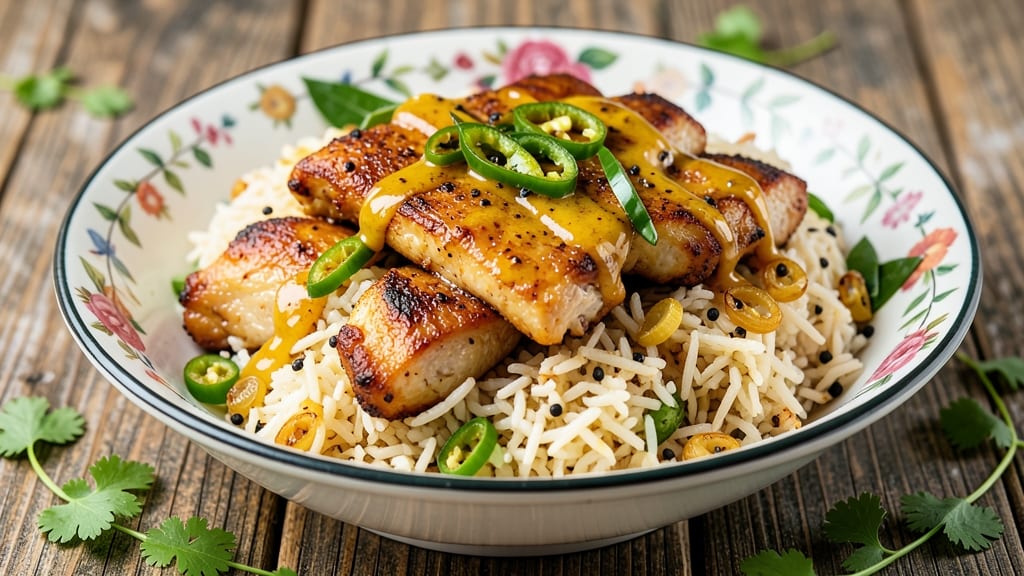
Kerala-style chicken fried rice recipe transforms simple ingredients into a fragrant, spice-kissed dish that tastes like a taste of home. The secret lies in the aromatic tempering of mustard seeds, curry leaves, and Kerala's signature spices that infuse every grain with flavor.
I've perfected this recipe over years of adapting my grandmother's handwritten notes—her intuitive approach to balancing heat and fragrance is what makes this dish truly special.
This recipe begins with perfectly cooked jasmine rice, stir-fried with tender chicken pieces that absorb the rich, spiced oil. The wok-hei technique creates that signature smoky aroma while keeping the rice grains separate and fragrant.
What sets this apart is the layering of flavors—first the tempering, then the chicken, and finally the rice—each step building complexity without overwhelming the palate.
By the end, you'll have a dish that's vibrant, aromatic, and packed with texture—crispy fried shallots, fresh cilantro, and the subtle heat of Kerala spices. The dish pairs beautifully with a cooling raita or a tangy mango pickle to balance the richness.
It's the kind of meal that feels both comforting and sophisticated, perfect for weeknight dinners or special occasions.
The best part? This recipe delivers restaurant-quality results with simple techniques anyone can master. Whether you're cooking for family or treating yourself, the combination of fragrant jasmine rice, tender chicken, and bold spices creates a dish that's impossible to resist. Let's get started on creating this flavorful masterpiece.
Ingredients for chicken fried rice recipe kerala
Fragrant jasmine rice, tender chicken, and Kerala's signature spices come together for a restaurant-quality dish.
| Ingredient | Amount | Notes |
|---|---|---|
| Jasmine Rice 🍚 | 2 cups | Uncooked, long-grain preferred |
| Boneless Chicken Thighs 🍗 | 1 ½ lb | Cut into 1-inch pieces |
| Mustard Seeds 🌶️ | 1 tbsp | Whole, yellow variety |
| Curry Leaves 🌿 | ¼ cup | Fresh, packed, stems removed |
| Green Chilies 🌶️ | 3 whole | Slit lengthwise, seeds removed |
| Shallots 🧅 | ½ cup | Minced, for tempering |
| Ginger 🧄 | 2 tbsp | Fresh, grated fine |
| Garlic Cloves 🧄 | 6 cloves | Peeled, minced fine |
| Vegetable Oil 🫒 | ½ cup | High smoke point preferred |
| Soy Sauce 🍶 | 2 tbsp | Light or dark variety |
| Fish Sauce 🐟 | 1 tbsp | Red Boat preferred |
| Fresh Cilantro 🌿 | ¼ cup | Chopped, for garnish |
| Salt 🧂 | 1 ½ tsp | Diamond Crystal preferred |
| Black Pepper 🌶️ | ½ tsp | Freshly ground preferred |
| Sugar 🍬 | 1 tsp | White granulated |
The curry leaves are non-negotiable—they carry that authentic Kerala aroma. Indian grocery stores carry them fresh year-round, or order online if your local market doesn't stock them. For the chicken, thighs stay juicier than breasts during the stir-fry. Look for free-range if possible, but regular supermarket chicken works perfectly. The mustard seeds must be whole—ground mustard won't give that satisfying pop when tempered. I always buy extra curry leaves since they're the heart of this dish's flavor profile, and they keep for months in the freezer if stored properly in an airtight container.
No curry leaves? Dried curry powder at half the amount is a decent substitute, though it lacks the fresh aroma. Running out of fish sauce? Extra soy sauce plus a splash of lime juice mimics the umami depth. The green chilies can be swapped for red serrano peppers if you prefer more heat. For the ginger and garlic, paste works in a pinch, but freshly grated delivers that bright, aromatic punch. The shallots can be regular onions if needed, though shallots add a delicate sweetness that complements the spices beautifully. If you're making this ahead, cook the rice and chicken separately—reheating fried rice is tricky once everything's combined.
This dish reheats best when made fresh, but the components keep well separately. Store cooked rice in the fridge for 3 days and chicken for 2 days—reheat gently with a splash of water to restore moisture. The tempering spices (mustard seeds, curry leaves, chilies) can be pre-toasted and stored in an airtight container for 2 weeks. For maximum flavor, assemble the dish just before serving. The fried shallots stay crisp for 1 week if kept in a cool, dark place. Portion the cilantro separately—it wilts quickly when combined with hot oil.
Why You'll Love This Recipe
- One-Pot Magic: I swear by this—no extra bowls, no messy cleanup. Toss the jasmine rice, chicken, and spices right into the pan with a splash of water, and let it all steam together. The mustard seeds pop like fireworks while the curry leaves perfume the air, and suddenly, dinner’s ready.
- Spice Without Guilt: Between us, this isn’t your bland takeout fried rice. The green chilies pack a gentle kick, but the curry leaves and mustard seeds soften it into something warm and familiar. My picky-eater son still asks for seconds—proof it’s not too spicy, just just right.
- Lunchbox Hero: Pack this the next day, and you’ve got a meal that tastes like you cared. The rice stays fluffy, the chicken stays juicy, and the flavors only get better after a night in the fridge. Honestly, it’s my go-to for work lunches or kids’ school lunches—no sad, soggy leftovers here.
- Budget Win: Chicken thighs stretch farther than breasts, jasmine rice is cheaper than quinoa, and a handful of spices turns cheap ingredients into something special. I’ll be real: this feeds four for under $10, and the leftovers? Even better reheated with a splash of water.
Step-by-step instructions for Kerala chicken fried rice
This dish balances bold spices with fragrant jasmine rice for a restaurant-quality result.
Parboil the Jasmine Rice
Rinse the 2 cups jasmine rice thoroughly under cold water until the water runs clear. This removes excess starch that would make the rice mushy. In a pot, combine the rinsed rice with 4 cups water and bring to a boil over high heat. Once boiling, reduce to medium-low heat, cover, and simmer for exactly 12 minutes. The rice should be 80% cooked—firm to the bite but not fully tender.
Drain immediately in a colander and spread the rice on a clean kitchen towel to stop cooking and remove excess moisture. I like to fan the rice gently with my hands to create separation—this prevents clumping in the final dish. The rice should be warm but not steaming when you return to it later.
Marinate and Cook the Chicken
In a bowl, combine the 1.5 lb boneless chicken thighs (cut into 1-inch pieces) with 1 tbsp soy sauce, 1 tbsp fish sauce, 1 tsp sugar, 1 tsp salt, and 0.5 tsp black pepper. Mix well and let marinate for 20 minutes at room temperature. This ensures even seasoning and tender meat.
Heat 0.25 cup vegetable oil in a wok or large skillet over medium-high heat until shimmering. Add the marinated chicken in a single layer and cook undisturbed for 3-4 minutes until golden brown on one side. Flip and cook another 3-4 minutes until fully cooked through. Remove chicken and set aside—it should be juicy and caramelized, not dry.
Build the Spiced Base
In the same wok (no need to clean it—the fond adds flavor), add the remaining 0.25 cup vegetable oil over medium heat. Add 1 tbsp mustard seeds and let them sizzle for 30 seconds until they pop audibly. Add the 0.5 cup minced shallots and cook for 2 minutes until soft and translucent.
Stir in the 2 tbsp grated ginger and 6 cloves minced garlic, cooking for 1 minute until fragrant. Add the 3 slit green chilies and 0.25 cup curry leaves, stirring for 30 seconds until the leaves darken slightly. This aromatic base forms the flavor foundation—don't rush this step or the spices won't develop properly.
Combine and Finish
Return the cooked chicken to the wok along with the 80% cooked rice. Using a spatula, gently fold everything together, breaking up any rice clumps. Add the remaining 1 tbsp soy sauce and 1 tbsp fish sauce, tossing well to coat evenly. Cook for 2-3 minutes over medium heat, stirring constantly to prevent sticking.
Taste and adjust seasoning—you may need an additional 0.5 tsp salt or 0.25 tsp black pepper depending on your preference. The rice should be tender but still slightly firm, with chicken pieces distributed evenly. Remove from heat and let rest for 2 minutes to allow flavors to meld.
Garnish and Serve
Transfer the fried rice to a serving platter and sprinkle generously with 0.25 cup chopped fresh cilantro. The bright green color contrasts beautifully with the golden rice and adds a fresh finish. Serve immediately while hot—Kerala fried rice tastes best straight from the wok when the rice is still slightly firm.
For an authentic touch, pair with a side of Kerala-style curry or a simple mango lassi to balance the spice. The dish should have crispy chicken pieces, fragrant jasmine rice, and a complex spice profile from the tempered base—each bite should deliver all three elements in perfect harmony.
Pro Tips For Making Chicken Fried Rice Recipe Kerala
- CRACK THE CHICKEN FIRST: Marinate the boneless chicken thighs in a mix of turmeric, salt, and a splash of vinegar for at least 30 minutes before cooking—this keeps them juicy and prevents them from drying out when stir-fried. I learned this the hard way after serving rubbery chicken in my first attempt.
- USE DAY-OLD RICE: Cold, day-old jasmine rice fries up better than fresh—it’s drier and won’t turn mushy. Spread leftover rice on a tray after cooking and refrigerate overnight for perfect texture. (Yes, even if you’re impatient like me.)
- TEMPER MUSTARD SEEDS LOW: Bloom the mustard seeds in oil on low heat—they’ll pop aggressively and burn if you rush it. A gentle sizzle for 30 seconds is all they need to release their nutty aroma before adding curry leaves and chilies.
- SAVE THE CHICKEN JUICES: After cooking the chicken, don’t discard the pan drippings—deglaze with a splash of water and scrape up the browned bits. Stir this into the rice at the end for deeper flavor. (It’s the thing that makes homemade taste restaurant-quality.)
Creative variations of this chicken fried rice recipe kerala
Spicy Kerala Fusion
Add 1 tbsp Kerala-style curry powder (available at Indian grocery stores) to the chicken marinade for deeper flavor. I also toss in 1 tsp grated coconut with the rice while stir-frying—it adds a subtle sweetness that balances the heat.
For extra spice, swap the green chilies for 1 tbsp fresh bird's eye chilies (seeds removed), but be warned, this will make your eyes water! 🌶️
Vegetarian Adaptation
Swap the chicken for 1 lb paneer cubes or 1.5 cups mixed vegetables (bell peppers, peas, and carrots). Toss the veggies in 1 tbsp oil and 0.5 tsp turmeric before stir-frying.
For paneer, press the cubes to remove excess moisture first—they'll crisp up beautifully during cooking. This version keeps all the aromatic spices while being completely plant-based.
Protein Swaps
For shrimp lovers, use 1.5 lb peeled shrimp (tails on or off) instead of chicken. Toss them in 1 tbsp soy sauce and 0.5 tsp black pepper before cooking. Shrimp cooks in just 2-3 minutes, so remove them early and keep warm while finishing the rice.
For a heartier option, try 1 lb ground pork—it absorbs the spices beautifully and adds rich texture.
Rice Variations
Swap jasmine rice for basmati rice (cooked al dente) for a nuttier flavor, or try brown rice (cooked 20 minutes longer). For extra richness, stir in 2 tbsp fried shallots during the final toss—they add a delightful crunch.
My grandmother used to make this with leftover rice, which works perfectly as long as it's not too dry.
Heat Level Control
Reduce heat by removing the green chilies entirely and using 0.5 tsp mild paprika instead. For a smoky twist, add 0.5 tsp smoked paprika to the chicken marinade. If you love spice, keep the chilies but add 1 tsp honey to the final toss—it balances the heat beautifully.
Always taste as you go; Kerala spices can be subtle or fiery depending on the source!
Make-Ahead Components
Cook the rice and chicken separately, then store them in airtight containers for up to 3 days. When ready to serve, reheat the chicken in a skillet with 1 tsp oil, then combine with the rice and any reserved spices.
For extra flavor, add 1 tbsp water while reheating to restore moisture. The fried shallots and cilantro should be added fresh for best texture and flavor.
Nutrition facts
Frequently asked questions
Why does Kerala-style fried rice use curry leaves instead of regular bay leaves?
Curry leaves are the heart of Kerala's aromatic profile—they release a floral, slightly bitter aroma when toasted that regular bay leaves can't replicate. These leaves contain unique compounds that create that signature "Kerala kitchen" scent. Fresh curry leaves are essential; dried versions lose their delicate flavor. If you can't find them, dried curry powder works in a pinch, but it won't give the same depth of flavor.
Can I use leftover rice for this recipe?
Yes, but with caution! Leftover rice should be completely dry (not sticky) and at least 1 day old. Spread it on a tray and dry it in the sun or oven at 200°F for 10 minutes to remove excess moisture. Cold, dry rice fries better and won't turn mushy. My grandmother always used day-old rice—it absorbs the spices beautifully while maintaining texture.
What's the secret to getting the rice perfectly crispy without burning?
High heat and constant stirring are key! Use a wok or cast-iron skillet and keep the heat at medium-high. Stir vigorously for 2-3 minutes until the rice is evenly coated with oil and slightly crispy around the edges. The rice should be 80% cooked before stir-frying—this prevents mushiness. If it sticks, add 1 tsp oil and keep moving it constantly.
How do I adjust the spice level for kids or sensitive eaters?
Remove the green chilies entirely and reduce the mustard seeds to 0.5 tbsp. For extra mildness, add 1 tsp grated coconut or 1 tbsp raisins during the final toss—they add natural sweetness that balances any remaining heat. Always taste as you go; Kerala spices can be adjusted gradually to suit any palate.
What's the best way to store leftovers?
Store in an airtight container in the fridge for up to 3 days. Reheat gently in a skillet with 1 tsp oil over medium heat, adding 1 tbsp water to restore moisture. The fried shallots and cilantro should be added fresh when reheating for best texture. Never microwave—it makes the rice soggy and dulls the flavors.