
Main Courses
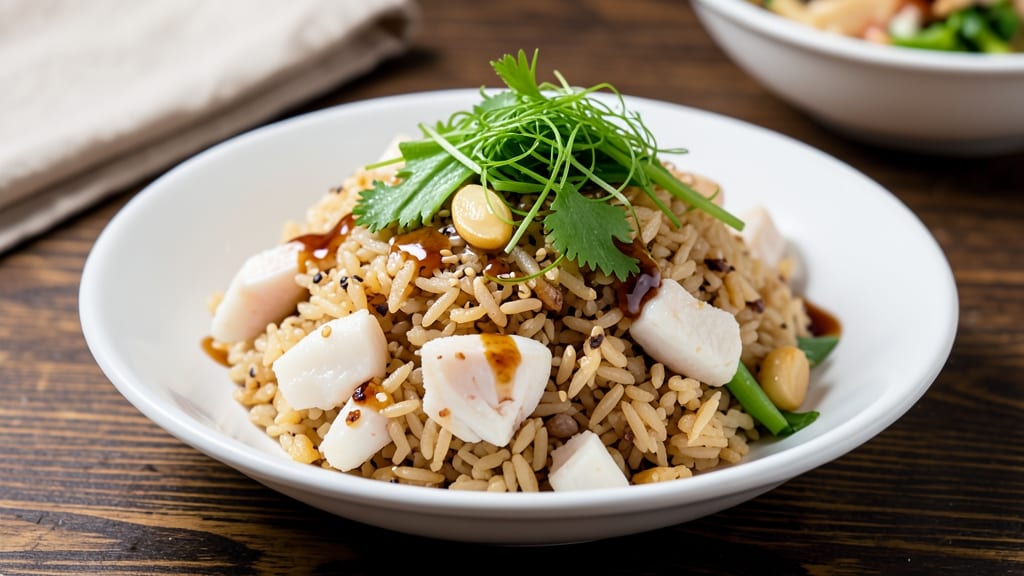
This Chinese crab fried rice recipe delivers the perfect balance of buttery crab, crisp celery, and aromatic wok hei in every bite. The secret lies in high-heat stir-frying and precise timing to lock in flavors while maintaining the signature smoky aroma.
I've refined this technique over years to ensure restaurant-quality results at home, using simple ingredients that transform into a luxurious dish.
What sets this recipe apart is the combination of tender crab meat, fresh celery crowns that stay crisp, and perfectly cooked jasmine rice. The sauce—a blend of soy, oyster, and sesame—adds depth without overpowering the delicate flavors.
Whether you're recreating an authentic Cantonese dish or modernizing it with your favorite proteins, this fried rice delivers consistent, impressive results every time.
Ingredients for chinese crab fried rice
High-quality ingredients transform simple rice into restaurant-style crab fried rice with crisp celery and buttery crab.
| Ingredient | Amount | Notes |
|---|---|---|
| Jasmine Rice 🍚 | 2 cups | Day-old, chilled for texture |
| Lump Crab Meat 🦀 | 1 ½ lb | Fresh, backfin preferred |
| Celery Crowns 🧅 | 2 cups | Thinly sliced, fresh preferred |
| Green Onions 🧅 | ½ cup | White and green parts separated |
| Garlic Cloves 🧄 | 6 cloves | Minced, fresh preferred |
| Light Soy Sauce 🥄 | ¼ cup | High-quality, low-sodium preferred |
| Oyster Sauce 🍶 | 2 tbsp | Authentic, thick consistency |
| Sesame Oil 🌰 | 1 tbsp | Toasted, for aroma |
| Vegetable Oil 🫒 | ½ cup | High smoke point for stir-frying |
| Eggs 🥚 | 2 whole | Fresh, beaten for binding |
| Salt 🧂 | 1 tsp | Adjust to taste |
| White Pepper 🌶️ | ½ tsp | Freshly ground for heat |
| Sesame Seeds 🌰 | 1 tbsp | Toasted, for garnish |
| Dried Shiitake Mushrooms 🍄 | 4 pieces | Rehydrated, sliced thin |
The crab meat is non-negotiable—backfin lump delivers that luxurious texture, while freshly shucked is ideal. Costco or seafood markets often carry the best quality, though frozen works if labeled 'sweet crab.' Celery crowns should be bright green and firm—avoid wilted stems. For the rice, day-old jasmine (cooked and chilled) prevents mushiness. If using fresh shiitake, rehydrate in hot water for 10 minutes—discard the soaking liquid to avoid bitterness.
No lump crab? Imitation crab or snow crab (though texture differs) or chicken breast diced finely works as a substitute. Fresh celery unavailable? Frozen celery works but thaw first—it loses crispness. The eggs bind everything together, so fresh, room-temperature eggs ensure proper texture. For the soy sauce, Kikkoman or Pearl River Bridge brands add authentic depth. Need a gluten-free option? Swap soy sauce for coconut aminos at 1:1 ratio—flavor will differ slightly.
Prep the crab and celery first—they cook fastest. Store the crab meat in an airtight container with a paper towel** to absorb moisture for up to 2 days. The rice keeps 3 days in the fridge, but for best texture, make it fresh. For leftovers, reheat gently in a wok with 1 tsp sesame oil to revive crispness. Freeze portions for up to 1 month—thaw overnight in the fridge before reheating.
Why You'll Love This Recipe
- One-Pan Magic: I swear by this—just one skillet, no extra dishes. Toss in the day-old jasmine rice, toss in the crab meat (still icy cold, because we’re fancy like that), and let the garlic and celery crowns sizzle into oblivion. Honestly, the cleanup is almost as good as the meal.
- Luxury in a Bowl: That first bite of tender crab meat against the crispy rice? It’s like someone sprinkled gold flakes in your takeout. The garlic cloves get caramelized just enough to wake up every grain, and the green onions add that bright finish that makes it feel special—without the restaurant price tag.
- Lunch or Dinner Hero: I make this for my book club meetings (yes, really) and it disappears faster than my willpower on a Monday. The crab meat stays plump, the rice absorbs all the good flavors, and it’s hearty enough for a full meal but light enough for a quick lunch. Between us, it’s my go-to when I’m hosting and don’t want to stress.
- Leftovers That Don’t Suck: Here’s what sold me—this tastes better the next day. The rice softens just enough to soak up even more flavor, and the crab stays moist (no sad, rubbery bits here). I portion it out for lunches, freeze half for lazy nights, and somehow always end up eating it all before the week’s out. Budget-friendly? Check. Time-saving? Double check.
Step-by-step instructions for Chinese crab fried rice
Master this restaurant-style dish with tender crab, crisp celery crowns, and aromatic shiitake mushrooms.
Prepare the Day-Old Rice and Rehydrate Shiitake Mushrooms
Spread the 2 cups of day-old jasmine rice on a baking sheet and break up any clumps with your fingers. This ensures even cooking and prevents gummy texture. Meanwhile, soak the 4 pieces dried shiitake mushrooms in hot water for 15 minutes until pliable. Drain, then slice thinly—discard the soaking liquid as it's bitter.
I always use day-old rice because it's drier and absorbs the sauce better than fresh rice. If you're short on time, cook fresh rice, spread it on a tray, and refrigerate for 30 minutes before using. The mushrooms should yield about ½ cup sliced shiitake—this adds umami depth that complements the crab beautifully.
Stir-Fry Aromatics and Eggs for Flavor Foundation
Heat 0.5 cup vegetable oil in a wok or large skillet over high heat until shimmering. Add the 6 cloves minced garlic and 2 cups sliced celery crowns, stirring constantly for 2 minutes until the celery softens slightly but remains crisp. Remove and set aside—we'll add this back later.
In the same wok, add a thin layer of oil and scramble the 2 whole beaten eggs over medium-high heat for 30 seconds until just set but still slightly runny. Remove and set aside with the celery-garlic mixture. This egg base creates the perfect binder for the fried rice while adding protein richness.
Cook Crab and Shiitake Mushrooms Separately
Increase heat to high and add 0.25 cup vegetable oil to the wok. Add the 1.5 lb lump crab meat in a single layer and cook undisturbed for 2 minutes until the edges turn opaque. Flip gently and cook another 1-2 minutes until just cooked through—overcooking turns crab rubbery. Remove and set aside.
In the same wok, add 0.25 cup vegetable oil and stir-fry the ½ cup sliced shiitake mushrooms for 3 minutes until any moisture evaporates. The mushrooms should release their umami essence but remain tender. Remove and combine with the crab and egg-celery mixture.
Combine All Ingredients with Sauce
Return the wok to high heat and add 0.25 cup vegetable oil. Toss in the 2 cups day-old rice, breaking up clumps as it sizzles for 2 minutes. Add the 0.5 cup white and green onion parts (separated), 1 tbsp sesame oil, 0.25 cup light soy sauce, 2 tbsp oyster sauce, 1 tsp salt, and 0.5 tsp white pepper. Stir-fry vigorously for 3-4 minutes until the rice is heated through and the sauce is absorbed.
Return the crab, egg, celery, and shiitake mixture to the wok. Toss everything together for 1-2 minutes until well-coated. The rice should be hot but not dry—if needed, add 1-2 tablespoons water to maintain moisture. Taste and adjust seasoning, adding more soy sauce if needed.
Finish and Garnish for Restaurant-Quality Presentation
Remove from heat and transfer to serving plates. Garnish immediately with 1 tbsp toasted sesame seeds and an extra sprinkle of green onion tops. Serve while hot, with additional white pepper on the side for those who prefer more heat.
This dish should have a perfect balance of textures—tender crab, crisp celery crowns, chewy shiitake, and fluffy egg threads throughout. The aroma should be rich with garlic, sesame, and a hint of umami from the oyster sauce. For best results, serve immediately while the rice is still warm and the crab retains its delicate texture.
Pro Tips For Making Chinese Crab Fried Rice
- STIR-FRY THE CRAB LAST: Lump crab meat turns rubbery if overcooked—add it to the wok after the rice and veggies are nearly done, just to warm through. I learned this the hard way when I tried to "sear" it first; now I toss it in with a splash of soy sauce and let the residual heat cook it gently.
- CHOP GREEN ONIONS THIN: Thin slices (not chopped) of green onions look better and distribute flavor more evenly. Cut them into 1-inch lengths first, then slice diagonally—this keeps them intact during stir-frying and adds texture contrast. (Yes, even if you’re impatient like me.)
- USE DAY-OLD RICE: Fresh jasmine rice is too sticky and turns mushy when fried. Spread cooked rice on a tray to cool for 30 minutes before using—it’ll be dry enough to sizzle properly and absorb the sauce like a dream. (Your future self will thank you.)
- SAUTÉ GARLIC UNTIL GOLDEN: Cook the garlic until it’s just golden (not brown) before adding the rest of the ingredients—this prevents bitter flavors. If you rush it, you’ll taste the raw garlic in every bite. (I was skeptical until I tried it.)
Essential equipment for perfect results
Wok Essentials
Your wok is the heart of this dish—opt for a carbon steel wok (like Made In woks) for superior heat retention and that signature wok hei aroma. If you're new to wok cooking, a 14-inch diameter is ideal for home cooks.
Preheat it over high heat for 5-10 minutes before cooking to ensure even searing. For non-stick convenience, a well-seasoned cast iron skillet works too—just avoid overcrowding. 🔥
High-Heat Tools
A stainless steel spatula (like OXO Good Grips) is perfect for tossing ingredients without sticking, while a tongs set (such as Merax) helps distribute heat evenly. For precise temperature control, a laser thermometer (like ThermoWorks IR) lets you monitor heat without guesswork.
Keep a small bowl nearby for holding prepped ingredients while cooking—this keeps your workspace organized. ⚡
Knife and Cutting
Invest in a sharp chef's knife (I recommend Shun Premier) for clean cuts on celery crowns and shiitake mushrooms. A mandoline (like Benriner) speeds up celery slicing if you're prepping for a crowd.
Keep a cutting board (preferably bamboo for grip) and microplane (for garlic) handy. Prep all ingredients before cooking to maintain that high-heat stir-fry rhythm.
Sauce and Garnish Tools
Small measuring spoons (like OXO Stainless Steel) ensure precise sauce ratios, while a fine-mesh strainer (such as OXO Good Grips) helps drain rehydrated mushrooms efficiently. For garnishing, a small sieve (like Norpro) toasts sesame seeds evenly.
A mini whisk (like Zyliss) blends sauces quickly if you're making adjustments on the fly. 💫
Optional Pro Upgrades
For restaurant-style results, a wok burner (like King Kooker) gives you better heat control than stovetop burners. A smoke extractor (such as Smoke Boss) keeps your kitchen ventilated during high-heat cooking.
If you love crab fried rice, a food thermometer (like Thermoworks Smoke) ensures your crab reaches 145°F without overcooking. These tools elevate the dish from home-cooked to chef-level. 💡
Nutrition facts
Frequently asked questions
Can I substitute imitation crab for real lump crab?
Yes, but expect a texture difference. Imitation crab (surimi) works in a pinch and absorbs flavors well, though it lacks the delicate sweetness of real crab. For best results, use high-quality imitation crab like Kani brand and add 1 tsp sugar to mimic natural crab sweetness.
How do I prevent the rice from turning mushy?
Use day-old, chilled jasmine rice that's been spread on a tray to dry out. Cook fresh rice, then refrigerate for 30 minutes before using. Never use warm rice—it releases moisture and creates steam, making the fried rice soggy. High heat and constant stirring keep grains separate.
What's the secret to crisp celery crowns?
Slice celery crowns thinly (1/8-inch thick) and stir-fry them separately for just 2 minutes at high heat before setting aside. Re-add them at the very end of cooking to maintain crispness. Avoid overcrowding the wok—cook in batches if needed.
Can I make this vegetarian?
Replace crab with 1.5 lb firm tofu (pressed and cubed) or mushroom blend (shiitake + oyster). Add 1 tbsp nutritional yeast for umami depth. Keep the egg and soy sauce base—they provide the signature fried rice flavor profile.
Why does my fried rice taste bland?
Check your sauce ratios—oyster sauce adds umami, while sesame oil provides aroma. Taste as you go and adjust with extra soy sauce (saltiness), white pepper (heat), or a splash of fish sauce (depth)**. Fresh ingredients (especially garlic and mushrooms) make the biggest flavor difference.