
Main Courses
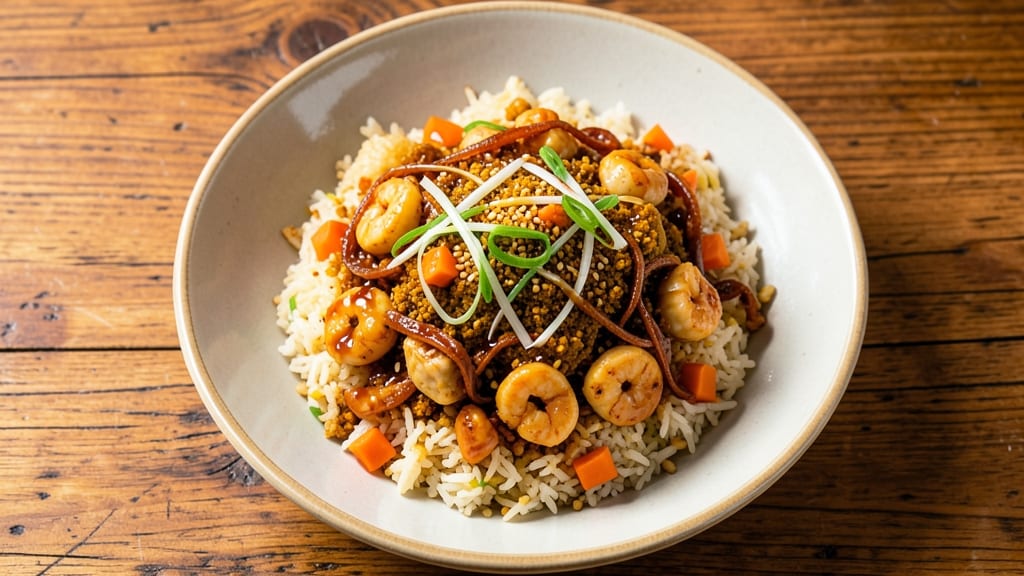
This Chinese curry fried rice recipe delivers restaurant-quality flavor with a perfect balance of spicy, savory, and umami notes. The secret lies in using day-old rice that absorbs flavors beautifully while achieving that signature wok-tossed texture.
I've perfected this technique over years of testing, ensuring every bite is packed with tender scrambled eggs, aromatic curry powder, and crisp vegetables.
The recipe begins with high-heat stir-frying to develop deep flavors in the garlic and ginger base before adding the rice. Curry powder infuses the dish with warmth without overpowering, while soy sauce and sesame oil add depth.
The eggs scramble perfectly into soft, creamy strands that blend seamlessly with the rice, creating that signature "eggy" texture that defines this dish.
What you'll end up with is golden, fragrant fried rice with crisp edges and tender centers, all coated in a complex sauce that's both spicy and savory. The combination of textures—crisp vegetables, fluffy rice, and creamy eggs—makes each bite satisfying.
This dish comes together in under 30 minutes, perfect for weeknight dinners or meal prep.
Serve it with a side of cucumber salad or steamed greens to balance the richness. The recipe works equally well with chicken, shrimp, or tofu for protein variations. Let's get cooking!
Ingredients for chinese curry fried rice
Four cups of day-old rice and aromatic spices kickstart this restaurant-style fried rice.
| Ingredient | Amount | Notes |
|---|---|---|
| Day-Old Cooked White Rice 🍚 | 4 cups | Cold, not freshly cooked |
| Large Eggs 🥚 | 4 whole | Room temperature preferred |
| Curry Powder 🌶️ | 1 ½ tbsp | Mild to medium heat |
| Garlic Cloves 🧄 | 5 cloves | Minced for deep flavor |
| Fresh Ginger 🌿 | 1 ½ tbsp | Finely grated, peeled |
| Light Soy Sauce 🥄 | 3 tbsp | Kikkoman preferred |
| Sesame Oil 🫒 | 1 tbsp | Toasted sesame oil |
| Green Onions 🧅 | ½ cup | White and green parts, chopped |
| Carrots 🥕 | ½ cup | Diced, small pieces |
| Peas 🌱 | ½ cup | Frozen or fresh |
| Vegetable Oil 🫒 | 2 tbsp | High smoke point |
| Salt 🧂 | ½ tsp | Kosher or sea salt |
| Black Pepper 🌶️ | ¼ tsp | Freshly ground |
| Optional Protein 🍗 | 1 cup | Chicken, shrimp, or tofu |
The rice is non-negotiable—day-old works best as it absorbs flavors without turning mushy. Trader Joe's sells pre-cooked jasmine rice that reheats beautifully, or cook your own white rice the night before. For the curry powder, Badia or Gourmet Garden brands deliver consistent flavor without overpowering. Fresh ginger and garlic are essential—peel and grate ginger with a microplane for fine texture. If you're short on time, jarred minced garlic works, but fresh is always better. The optional protein can be swapped based on preference—chicken thighs stay juicier than breasts, while tofu absorbs the curry beautifully.
No curry powder? Turmeric plus a pinch of cayenne mimics the color and some heat, though it won't taste identical. Substitute soy sauce with tamari for gluten-free or coconut aminos for a lighter flavor. Frozen peas are perfect here—they're pre-cut and never get soggy. For extra crunch, add crispy fried shallots at the end. The eggs should be scrambled to soft curds, not fully cooked—this creates that signature 'eggy' texture. If you're using tofu, press and cube it first for better texture. The recipe works equally well with shrimp—just cook it separately and add back at the end.
Store leftovers in an airtight container for up to 3 days, though it reheats best within 2 days. The flavors meld beautifully overnight, making it even more aromatic. For meal prep, portion into containers with a splash of sesame oil on top to keep it fresh. This dish reheats best in a skillet over medium heat—just add a bit of oil and stir until everything is hot through. The rice will dry out slightly, so consider adding a splash of water if it seems too dry. Freeze portions for up to 1 month—just thaw in the fridge overnight before reheating.
Why You'll Love This Recipe
- No-Fuss Staples: I keep a bag of curry powder and frozen ginger in my pantry just for this—no specialty shopping, no last-minute grocery runs. The eggs and garlic are things I always have, so it’s basically using what’s already there.
- Ginger-Garlic Magic: That fresh ginger and minced garlic? They sizzle into something ridiculously fragrant before the curry even hits the pan. Honestly, the aroma alone makes me want to eat it straight from the wok.
- Lunchbox Hero: Between us, this is my go-to for packed lunches—it reheats like a dream and still tastes fresh hours later. I double the batch on Sundays, and by Wednesday, I’m the office snack hero.
- Budget Buster: A handful of rice, a few eggs, and a teaspoon of curry powder stretch into enough for four servings. I’ll be real: my wallet thanks me every time I make this instead of takeout.
Step-by-step instructions for Chinese curry fried rice
Master this wok-tossed classic with aromatic spices and perfectly timed ingredients.
Prepare the Protein and Vegetables
Start by dicing the ½ cup carrots into small, even pieces—this ensures they cook quickly and evenly. If using 1 cup optional protein like chicken or shrimp, cut it into bite-sized pieces and set aside. For tofu, press it first to remove excess moisture, then cube it. Chop the ½ cup green onions into ½-inch pieces, separating the white and green parts.
Peel and finely grate the 1.5 tbsp fresh ginger using a microplane or fine grater. Mince the 5 cloves garlic into a fine paste—this helps distribute flavor evenly. Keep all prepped ingredients within easy reach of your wok or large skillet for efficient cooking.
Scramble the Eggs to Perfect Texture
Heat a wok or large skillet over medium-high heat and add 2 tbsp vegetable oil. Let it shimmer for 30 seconds before cracking in the 4 whole eggs. The oil should be hot enough to create a thin, even layer of egg without sticking.
Use a spatula to gently push the eggs from the edges toward the center, creating soft, silky curds. Once mostly set but still slightly runny in the center, remove the eggs to a plate and set aside. This step ensures your eggs stay creamy rather than rubbery when mixed with the rice later.
Stir-Fry Aromatics and Protein
Return the wok to medium-high heat and add the prepped carrots and ½ cup peas. Stir-fry for 2-3 minutes until the carrots soften slightly but still retain their shape. Add the garlic and ginger, cooking for another 30 seconds until fragrant.
If using protein, add it now and cook for 3-4 minutes until fully heated through. For chicken, aim for an internal temperature of 165°F. Sprinkle with ½ tsp salt and ¼ tsp black pepper, then remove the mixture to a large bowl. Keep warm while you prepare the rice.
Cook the Curry Rice
Increase the heat to high and add the 4 cups day-old cooked white rice, breaking up any clumps with your spatula. Stir-fry for 2-3 minutes until the rice is evenly heated and begins to sizzle. Add the 1.5 tbsp curry powder and stir for 30 seconds to toast the spices and infuse the rice.
Pour in the 3 tbsp light soy sauce and 1 tbsp sesame oil, tossing constantly for 1-2 minutes until the rice absorbs the flavors. The rice should be hot and slightly sticky—this ensures each grain coats evenly with the sauce.
Combine and Finish
Return the protein-vegetable mixture to the wok and combine with the rice. Add the scrambled eggs back in and toss everything together for 1-2 minutes until well integrated. Sprinkle with the chopped green onions, reserving a few for garnish, and toss one final time.
Taste and adjust seasoning if needed—add a splash of water if the rice is too dry, or more soy sauce for extra umami. Serve immediately while hot, garnished with extra green onions. The dish should be fragrant with warm curry notes, slightly sticky rice, and tender protein in every bite.
Pro Tips For Making Chinese Curry Fried Rice
- STIR-FRY THE RICE DRY: Skip the watery rice trap—spread your day-old rice on a tray and let it sit uncovered for 15-20 minutes before frying. This evens out moisture so it sizzles properly instead of steaming into a sad, clumpy mess. (Yes, even if you’re impatient like me, resist the urge to skip this.)
- SCRAMBLE EGGS LOW AND SLOW: After pushing the eggs to the side, turn the heat to medium-low and let them cook undisturbed for 20 seconds. This creates a soft, custardy base that soaks up the curry flavor instead of turning rubbery. I learned this the hard way—over-stirring eggs ruins the whole dish.
- MINCE GINGER FINE: Use a knife to chop fresh ginger into a paste—don’t just grate it. The finer the texture, the more it blends into the rice without leaving chewy bits. (Pro move: Freeze the ginger first for 10 minutes; it slices like butter.)
- TOAST THE CURRY POWDER: Bloom the curry powder in the wok for 30 seconds before adding garlic—this deepens the aroma and prevents a bitter aftertaste. Just watch it like a hawk; burned spice ruins everything. (Start with 1 tsp and adjust; store-bought powder varies wildly.)
Creative variations of chinese curry fried rice
Spicy Thai Fusion
Transform this dish into a Thai-inspired curry fried rice by swapping the mild curry powder for 1 tbsp Thai red curry paste (like Maesri) along with 1 tsp fish sauce.
Add ½ cup bell peppers and ½ cup Thai basil at the end for authentic flavor. Garnish with crushed peanuts and lime wedges for that signature Thai street food touch. 🌶️
Vegetarian Power Bowl
Skip the protein entirely and load up on veggies: add ½ cup bell peppers, ½ cup snap peas, and ¼ cup shredded carrots with the initial stir-fry. For extra protein, fold in ½ cup crumbled firm tofu or ½ cup chickpeas.
Boost umami with 1 tsp miso paste instead of soy sauce. Top with sesame seeds and cilantro for freshness. 🥕
Coconut Curry Twist
For a creamy variation, stir in ¼ cup coconut milk along with the soy sauce and sesame oil. Use 1 tbsp Madras curry powder for deeper flavor. Add ½ cup diced pineapple or mango for sweetness that balances the spice.
Finish with toasted coconut flakes for texture. This version tastes like a fusion of fried rice and curry. 🥥
Protein Swap Guide
For chicken, use 1 cup diced thighs (juicier than breasts) and marinate in 1 tbsp soy sauce for 15 minutes before cooking. For shrimp, toss 1 cup peeled shrimp with ½ tsp garlic powder and cook just until pink (2-3 minutes).
For tofu, press extra-firm tofu, cube, and pan-fry until golden before adding to the rice. 🍗
Meal Prep Adaptation
Double the recipe for easy meal prep: cook all components separately, then combine when reheating. Store rice, veggies, and protein in separate airtight containers. When ready to eat, stir-fry everything together with 1 tsp sesame oil to revive the flavors.
Add a splash of water if the rice seems dry. This keeps the texture perfect for 3-4 days in the fridge. ⏰
Nutrition facts
Frequently asked questions
Why does the recipe call for day-old rice instead of freshly cooked?
Day-old rice works best because it's firmer and absorbs flavors without turning mushy. Freshly cooked rice contains too much moisture, which can make your fried rice soggy. The slight dryness helps create those signature crisp edges while keeping the centers tender. If you're short on time, spread freshly cooked rice on a tray and refrigerate for 1 hour to mimic day-old texture.
Can I make this recipe without a wok?
A large skillet or frying pan works perfectly. The key is using medium-high to high heat and stirring constantly to achieve that wok-tossed texture. For best results, choose a pan with sloped sides to help toss the ingredients easily. A cast iron skillet is ideal as it retains heat well and creates great sear marks.
How do I adjust the heat level if I don't like spicy food?
Start with 1 teaspoon of curry powder instead of 1.5 tablespoons for a milder version. You can always add more later if needed. For extra depth without heat, add ½ teaspoon turmeric or a pinch of smoked paprika. The soy sauce and sesame oil already provide rich flavor, so you won't lose any savory notes by reducing the spice.
What's the best way to store leftovers?
Store in an airtight container in the refrigerator for up to 3 days. The flavors actually improve overnight as they meld together. To reheat, warm in a skillet over medium heat with a splash of water or sesame oil—this prevents drying out. For longer storage, freeze portions for up to 1 month, but thaw in the fridge before reheating for best texture.
Can I substitute any of the vegetables?