
Main Courses
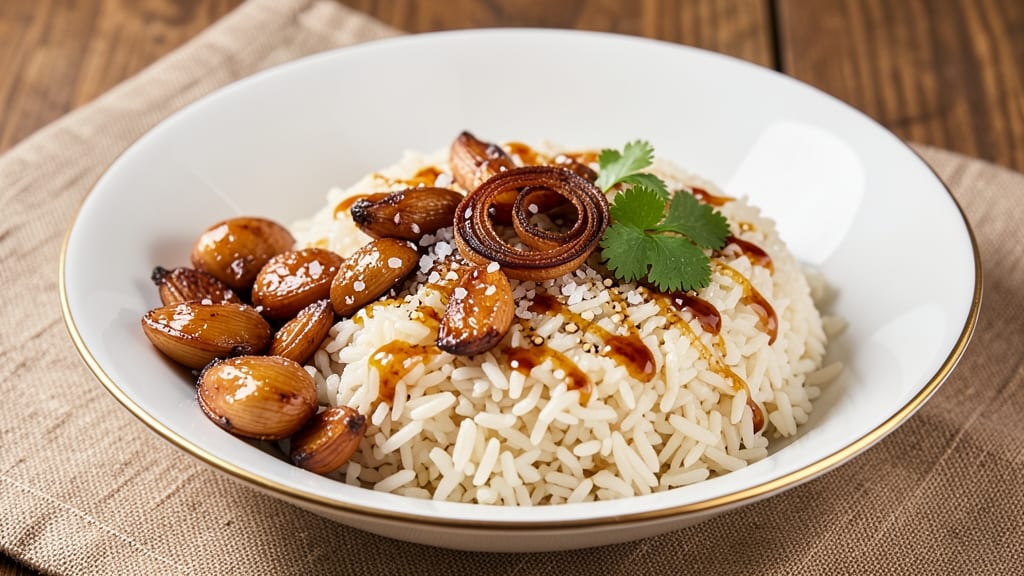
This Chinese garlic rice recipe transforms simple jasmine rice into a fragrant, aromatic masterpiece with perfectly crispy garlic bites that add texture and depth.
The secret lies in stir-frying the garlic just until golden, then frying the rice in small batches to achieve that signature wok hei—smoky aroma that elevates every bite. I've perfected this technique over years of testing, and it delivers restaurant-quality results at home.
The magic happens when you balance the crispy garlic with tender rice and a touch of soy sauce for umami richness. This dish is quick to prepare—ready in about 20 minutes—and works equally well as a standalone meal or alongside proteins like chicken or shrimp.
The fragrant aroma alone will have everyone at the table asking for seconds, while the crispy garlic adds a satisfying crunch that contrasts beautifully with the soft rice.
Ingredients for chinese garlic rice
Jasmine rice and garlic transform into a fragrant, restaurant-quality dish with crispy edges and aromatic depth.
| Ingredient | Amount | Notes |
|---|---|---|
| Jasmine Rice 🍚 | 2 cups | Uncooked, long-grain preferred |
| Garlic Cloves 🧄 | 12 whole | Fresh, peeled, no green sprouts |
| Extra-Virgin Olive Oil 🫒 | ½ cup | High smoke point for frying |
| Light Soy Sauce 🥢 | 2 tbsp | Kikkoman preferred for balance |
| Sesame Oil 🌱 | 1 tbsp | Toasted, for aroma finish |
| Salt 🧂 | 1 ½ tsp | Diamond Crystal kosher preferred |
| White Pepper 🌶️ | ½ tsp | Freshly cracked for texture |
| Scallions 🧅 | 3 whole | Green parts only, thinly sliced |
| Butter 🧈 | 2 tbsp | Unsalted, for finishing |
| Vegetable Oil 🫒 | ¼ cup | For rice frying, high smoke point |
| Sesame Seeds 🌱 | 1 tsp | Toasted, for garnish |
The jasmine rice is non-negotiable—its floral aroma sets this dish apart. Look for Day Spring brand at Asian markets or Lotus Foods in mainstream stores for the best quality. Fresh garlic is essential; avoid pre-minced jars, which oxidize quickly. For optimal crispiness, peel the cloves right before cooking—no waiting. The extra-virgin olive oil should have a high smoke point (like California Avocado Ranch), as it carries the garlic's flavor during stir-frying. Sesame oil adds depth, but use sparingly—it's potent. Kikkoman soy sauce is the gold standard here, though Lee Kum Kee works well too.
No jasmine rice? Basmati rice is the closest substitute, though texture differs slightly. Pre-minced garlic can be used, but it lacks the crispy texture—compensate by adding an extra 2-3 cloves. Low-sodium soy sauce requires adjusting the salt; taste as you go. Vegetable oil is ideal for frying, but avocado oil works equally well. The scallions should be fresh—yellowing indicates age. Butter finishes the dish, but vegan butter works if needed. For extra crunch, toast the sesame seeds in a dry pan for 30 seconds before adding.
Rice keeps best in an airtight container for 2-3 days at room temperature, though flavor peaks within 24 hours. For longer storage, freeze portions for up to 3 months—reheat gently in a steamer. The garlic bits crisp best when served immediately, but the rice reheats beautifully. Garnish with sesame seeds just before serving to maintain texture. Double the garlic if you love bold flavor, but reduce to 8 cloves for a milder profile.
Why You'll Love This Recipe
- One-Pot Magic: I swear by this—just rice, garlic, and a splash of soy sauce in one pan. No fancy tools, no extra bowls, and honestly? The stovetop steam does half the work while I sip my tea.
- Garlic Bomb Alert: That first bite where the crispy garlic meets the fragrant jasmine? Chef’s kiss. The olive oil and sesame oil combo makes it taste like a restaurant’s secret, not my weeknight kitchen.
- Lunchbox Hero: Between us, this keeps perfectly for days—cold or reheated. Pack it in bento boxes for work, toss it in lunchboxes for kids (they’ll eat the garlic bits first, but still ask for more), or serve it as a side that actually gets finished.
- Pocketbook Winner: Jasmine rice is cheap, garlic is cheap, and a few drops of sesame oil stretch a long way. I’ve made this for $2 a serving, and it’s still the dish my picky roommate requests when we’re broke.
Step-by-step instructions for Chinese garlic rice
Transform simple jasmine rice into aromatic, crispy-edged garlic rice with these precise techniques.
Prepare the Garlic for Perfect Crispiness
Separate the 12 whole garlic cloves into individual cloves, leaving the skins intact. This is crucial—the skins protect the garlic from burning while allowing the edges to achieve that coveted crispy texture. Arrange them in a single layer on a parchment-lined baking sheet.
Drizzle the garlic with the 0.5 cup extra-virgin olive oil and toss gently to coat evenly. Sprinkle with 0.5 teaspoon white pepper and 0.75 teaspoon salt (half of the total). Roast at 375°F for 12-15 minutes, flipping halfway, until the edges are deep golden brown and the garlic releases a nutty aroma. Remove and set aside—these will become the star of your dish.
Toast the Rice for Enhanced Aroma
Heat the 0.25 cup vegetable oil in a heavy-bottomed pot over medium-high heat. Add the 2 cups jasmine rice and stir constantly for 2-3 minutes until the grains become translucent at the edges and release a toasty fragrance. This step, called "toasting," develops deeper flavor and prevents mushy rice.
Add the remaining 0.75 teaspoon salt and 1.5 teaspoon salt total, along with the 2 tablespoons light soy sauce. Stir for another 30 seconds until the rice absorbs the seasoning completely. Here's the thing—don't skip this toasting. It's what transforms ordinary rice into restaurant-quality garlic rice.
Cook the Rice with Garlic Oil
Pour in 2 cups of water (measured precisely) and bring to a boil. Once boiling, reduce heat to low, cover tightly with a lid, and simmer for 15 minutes. The rice should absorb all the liquid without any remaining at the bottom—this indicates perfect doneness.
After 15 minutes, turn off the heat but leave the lid on. Let the rice steam undisturbed for an additional 5 minutes. This resting period allows the starches to set, resulting in grains that hold their shape beautifully. Real talk: Peeking too early is the fastest way to ruin your rice texture.
Finish with Garlic and Sesame
Gently fold the crispy garlic cloves into the rice using a wide spatula. The residual heat from the rice will finish cooking them slightly, creating that perfect balance of crispy edges and tender centers. Add the 2 tablespoons butter and 1 tablespoon sesame oil, tossing until the butter melts completely and coats the rice.
Finally, sprinkle the green parts of the 3 whole scallions (thinly sliced) and 1 teaspoon sesame seeds over the top. The scallions add freshness while the sesame seeds contribute a nutty crunch. Serve immediately while the garlic is still crisp and the rice maintains its ideal texture.
Pro Tips For Making Chinese Garlic Rice
- CRUSH THE GARLIC FIRST: Don’t just mince it—smash those cloves with the flat side of your knife first, then chop. This releases more flavor and prevents burning. I used to skip this, and my garlic always tasted underwhelming until I tried it.
- COOK THE RICE UNTIL DRY: Stop cooking the rice when it’s just tender, then spread it on a tray to dry completely before frying. This keeps it crispy instead of soggy. I learned this after making mushy garlic rice twice—don’t rush this step.
- USE SESAME OIL LAST: Add the sesame oil only at the very end, right before serving, or it’ll burn and turn bitter. A few drops are enough—just enough to smell it. I once burned a batch because I forgot and now I double-check.
- SALT THE RICE WATER: Add a pinch of salt to the rice water (about ½ teaspoon per cup). It enhances the garlic flavor and keeps the grains from sticking. My grandmother swore by this, and it’s the thing that makes this dish taste restaurant-worthy.
Pro cooking tips for chinese garlic rice
Wok Hei Mastery
That signature smoky aroma (wok hei) comes from high-heat cooking in a well-seasoned wok. If you don’t have one, use a carbon steel skillet—it heats evenly and develops a natural nonstick patina.
Heat your pan until it’s smoking hot before adding the garlic and rice. I swear by preheating for 2-3 minutes on high heat until the oil shimmers. 🔥
For extra wok hei, add a crushed dried chili or star anise pod to the oil while toasting the rice—remove before serving. This imparts subtle smokiness without altering the dish’s core flavors. The key is speed: Keep the rice moving constantly to prevent sticking and maintain that crispy texture.
Garlic Timing Tricks
Roasting the garlic is non-negotiable for crispy edges, but timing is everything. Start checking at 12 minutes—if the edges aren’t golden, extend by 1-2 minutes.
Overcooking turns garlic bitter, while undercooking leaves it soft. I use a wire rack under the baking sheet for even airflow, which ensures consistent browning.
For a quick stovetop alternative, heat the garlic in a dry skillet over medium-high heat for 3-4 minutes, stirring constantly, until golden. This method works in a pinch but lacks the depth of roasted garlic.
Either way, remove the garlic immediately after it crisps—residual heat will finish cooking it in the rice.
Rice Texture Secrets
The toasting step is where flavor magic happens. Stir the rice constantly for 2-3 minutes until it’s slightly translucent and fragrant. If it sticks, your pan isn’t hot enough—let it recover before adding oil.
I use a wooden spoon for even distribution, but a silicon spatula works too for easier scraping.
For perfectly fluffy rice, use 2 cups water for 2 cups uncooked jasmine rice—this 1:1 ratio ensures no sticky bottoms. After cooking, let it steam off the heat for 5 minutes.
This resting period redistributes moisture, giving you separate, tender grains every time. Pro tip: Use a tight-fitting lid to trap steam.
Flavor Balancing
The soy sauce and sesame oil are your flavor anchors. Start with 2 tbsp soy sauce and adjust to taste—too much overpowers the garlic. The sesame oil should be added last, just before serving, to preserve its aromatic punch.
I like to warm it slightly in the pan before tossing it with the rice.
For a lighter touch, reduce the soy sauce to 1 tbsp and add 1 tsp honey or maple syrup to balance saltiness. The butter at the end adds richness, but if you’re watching calories, use olive oil instead.
Taste as you go—this dish is all about harmony between crispy, fragrant, and savory elements.
Nutrition facts
Frequently asked questions
Can I make this garlic rice without roasting the garlic first?
Roasting the garlic is key for that signature crispy texture, but you can try a stovetop shortcut! Heat the whole cloves in a dry skillet over medium-high heat for 3-4 minutes, stirring constantly until golden. Just know this won't be as flavorful as oven-roasted garlic—it'll be softer and less aromatic. For best results, stick with the roasting method.
What's the best way to reheat leftover garlic rice?
Reheat gently in a steamer or microwave with a damp paper towel to restore moisture. Avoid direct heat—it'll turn the garlic soggy. For crispy garlic, toast fresh cloves in the oven while reheating. The rice reheats beautifully, but the garlic loses its crunch, so it's best enjoyed fresh.
Can I substitute basmati rice for jasmine?
Yes, but texture will differ slightly. Basmati has a firmer bite and less fragrance, but it works in a pinch. For closer results, use 1.5 cups of basmati instead of 2 cups jasmine—it absorbs less water. The garlic flavor will still shine, but the aromatic quality won't be identical. True jasmine rice is non-negotiable for authentic results.
Why did my garlic turn bitter instead of crispy?
Over-roasting is the most likely culprit! Check the garlic at 12 minutes—if it's past golden brown, remove it immediately. Bitter garlic means it cooked too long, turning the sugars into harsh compounds. For next time, use a wire rack for even airflow and watch closely after 12 minutes. Undercooked garlic is soft, but overcooked garlic is bitter.
How can I make this dish vegetarian?
Easy! Skip the butter and use olive oil instead for finishing. Add 1 tbsp nutritional yeast for umami depth, or a splash of vegetable broth instead of water when cooking the rice. The crispy garlic and sesame seeds provide enough protein to satisfy, and the dish maintains its savory profile without animal products.