Main Courses
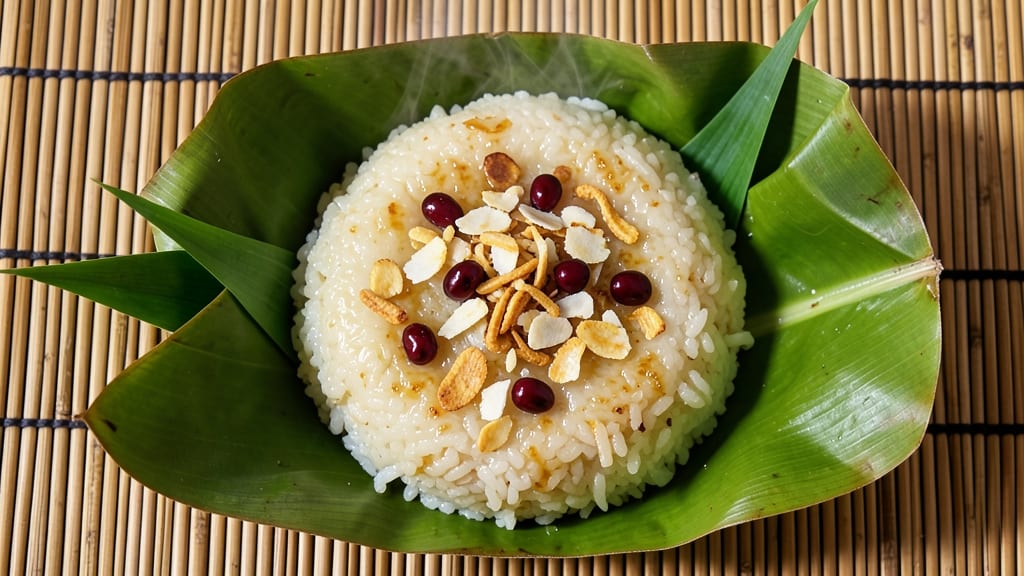
This Chinese sticky rice in banana leaf recipe transports you straight to a bustling Southeast Asian market with its aromatic blend of coconut and pandan.
The traditional method of wrapping fragrant glutinous rice in banana leaves creates a dish that's as visually stunning as it is delicious, steamed to perfection for tender, slightly sticky grains infused with natural flavors.
What makes this recipe special is the balance of textures and aromas—creamy coconut milk meets the floral notes of pandan, all wrapped in tender banana leaves that impart their own subtle earthiness.
The process might seem intricate at first, but once you master the wrapping technique, it becomes a meditative experience that results in a dish worthy of any celebration.
By the time you're done, you'll have a fragrant bundle that releases intoxicating coconut-pandan aromas as it steams, creating a dish that's both comforting and elegant. The rice emerges tender yet firm, with just enough stickiness to hold together while still offering that satisfying bite.
This is the kind of recipe that turns a simple meal into a memorable experience. Whether you're preparing it for a special occasion or treating yourself to a taste of tradition, this sticky rice is versatile enough to adapt to both vegetarian and non-vegetarian preferences.
Let's get started on creating your own wrapped masterpiece.
Ingredients for chinese sticky rice in banana leaf
Pantry staples meet Southeast Asian market magic—just 13 ingredients for fragrant, wrapped perfection.
| Ingredient | Amount | Notes |
|---|---|---|
| Glutinous Rice 🍚 | 1 ½ cups | Uncooked, short-grain preferred |
| Coconut Milk 🥥 | 1 ½ cups | Full-fat, canned preferred |
| Pandan Juice 🌿 | ½ cup | Fresh or paste, 1 tbsp paste = 0.5 cup juice |
| Coconut Sugar 🍯 | ¼ cup | Or brown sugar in pinch |
| Salt 🧂 | ½ tsp | Fine sea salt preferred |
| Banana Leaves 🌿 | 4 whole | Fresh, 12x18 inches each |
| Coconut Oil 🫒 | 2 tbsp | For brushing leaves |
| Fresh Lemongrass 🌿 | 1 whole | Bruised stems only |
| Kaffir Lime Leaves 🍋 | 2 whole | Fresh, torn into pieces |
| Tofu 🍱 | 8 oz | Firm, cubed for vegetarian |
| Vegetable Oil 🫒 | 1 tbsp | For tofu cooking |
| Soy Sauce 🥢 | 1 tbsp | For tofu marinade |
| Sesame Seeds 🌰 | 1 tbsp | Toasted for garnish |
Banana leaves are the secret weapon here. Asian markets usually carry them fresh, but if you can't find them, substitute parchment paper in a pinch—just brush it with coconut oil first. Look for leaves that are vibrant green and slightly pliable, not brittle. The size matters too—each should be about 12x18 inches to wrap our bundles properly. For tofu, firm or extra-firm holds up best during steaming. If you're using silken tofu, drain it well and press between paper towels for 10 minutes first.
No pandan juice? Pandan paste works perfectly—just dilute it with water to make 0.5 cup. Fresh lemongrass can be swapped for dried lemongrass powder at half the amount, but the flavor won't be as bright. For the tofu, if you're vegetarian but want extra protein, add edamame or chickpeas to the bundle. The coconut milk is non-negotiable—light coconut milk won't give the same richness. For the rice, if you can't find glutinous rice, short-grain white rice works in a bind but the texture won't be quite as sticky.
Prep the banana leaves ahead—they soften beautifully when steamed. Store them in a damp paper towel in a bag in the fridge for up to 3 days if you're not using them immediately. The wrapped bundles keep for 2 days in the fridge before steaming, perfect for meal prep. Once steamed, they reheat beautifully—just pop them in the steamer for 5-10 minutes. For extra presentation, brush the finished bundles with melted coconut oil before serving.
Why You'll Love This Recipe
- No Soaking Required: I’ll be real—this is the first sticky rice I’ve made that didn’t demand overnight soaking. Just rinse the glutinous rice, simmer it with coconut milk and pandan juice, and let it steam in banana leaves. That’s it. No waiting around while the clock ticks.
- Coconut-Pandan Magic: The moment that creamy coconut milk meets the faintly floral pandan? Chef’s kiss. The banana leaf adds this earthy aroma that wraps around every bite, making it taste like a tropical vacation without the plane ticket. Honestly, I’ve never had sticky rice this fragrant.
- Banquet in a Leaf: Between us, this feeds a crowd with almost no extra effort. Wrap individual portions in banana leaves, and suddenly you’ve got a showstopper for potlucks, family gatherings, or even a lazy Sunday brunch. My aunt made 12 servings in 45 minutes—no one left hungry.
- Leftovers That Don’t Suffer: Most sticky rice turns gummy the next day, but not this. The banana leaf keeps it moist, and the coconut sugar adds just enough sweetness to make reheated slices taste like they were just made. I’ve had it cold, warm, and even packed for lunch—still delicious. My secret weapon.
Step-by-step instructions for Chinese sticky rice in banana leaf
Here's how to create this fragrant, aromatic dessert that's perfect for special occasions.
Prepare the Tofu Filling
Cut the 8 oz tofu into 1-inch cubes and place them in a bowl. In a small separate bowl, mix together the 1 tablespoon soy sauce and 1 tablespoon vegetable oil. Pour this marinade over the tofu cubes and gently toss to coat evenly. Let the tofu marinate while you prepare the banana leaves.
Heat a non-stick skillet over medium heat and add the tofu cubes in a single layer. Cook for 3-4 minutes on each side until golden brown and slightly crispy. Remove from heat and set aside. The tofu should have a nice caramelized crust that contrasts beautifully with the sticky rice.
Prepare the Banana Leaves
Fill a large bowl with hot water and submerge the 4 whole banana leaves for 1-2 minutes to soften them. Remove each leaf and place it on a clean kitchen towel. Using a clean cloth or paper towel, gently rub each leaf to remove any remaining moisture and to make them pliable. This step is crucial for preventing the rice from sticking to the leaves.
While the leaves are still damp, use a pastry brush to lightly coat each leaf with ½ tablespoon of the 2 tablespoon coconut oil. This creates a barrier that helps the rice release cleanly when unwrapped. Work quickly as the leaves will dry out as they cool.
Cook the Sticky Rice Mixture
In a medium saucepan, combine the 1.5 cups glutinous rice, 1.5 cups coconut milk, 0.5 cup pandan juice, and 0.25 cup coconut sugar. Stir well to ensure all ingredients are evenly distributed. Bring the mixture to a boil over medium-high heat, then reduce the heat to low and let it simmer for 20-25 minutes, stirring occasionally.
You'll notice the mixture thickens significantly as it cooks. It should reach a consistency similar to thick pudding, where it coats the back of a spoon but still moves smoothly. Stir in the 0.5 teaspoon salt and the cooked tofu cubes, gently folding them into the rice mixture. Remove from heat and let it cool slightly for 5 minutes.
Assemble and Steam the Packages
Divide the rice mixture evenly among the 4 prepared banana leaves, spreading it into a long rectangle about 4 inches wide and 8 inches long on each leaf. Place 1 bruised lemongrass stem and 1 torn kaffir lime leaf on top of each portion of rice. Fold the sides of the banana leaves inward, then fold the bottom up and roll tightly into a neat package, tucking in the ends to seal completely.
Arrange the packages seam-side down in a steamer basket lined with a damp kitchen towel. Steam over medium-high heat for 25-30 minutes until the rice is tender and the banana leaves are slightly crispy around the edges. The aroma will fill your kitchen with that wonderful pandan-coconut fragrance.
Serve with Toasted Sesame Seeds
Remove the packages from the steamer and let them cool for 5 minutes. While still warm, carefully unwrap one package to check the rice consistency. It should be perfectly tender with a slight bounce when pressed gently. If needed, steam for an additional 5 minutes.
Toast the 1 tablespoon sesame seeds in a dry skillet over low heat for 2-3 minutes until golden brown, stirring constantly. Sprinkle the toasted sesame seeds over each package just before serving. The contrast of the warm, aromatic rice with the nutty sesame seeds creates the perfect balance of flavors and textures.
Pro Tips For Making Chinese Sticky Rice In Banana Leaf
- SOAK THE RICE OVERNIGHT: I learned this the hard way—rushing the soak with glutinous rice leaves you with gummy, uneven texture. Cover it in water for at least 8 hours (or up to 12) and change the water once mid-soak. The longer it soaks, the creamier the final texture, and that’s non-negotiable for proper sticky rice.
- STEAM ON MEDIUM-LOW HEAT: High heat turns this dish into a sad, watery mess. Once the rice is in the banana leaf (or lined steamer), keep the heat at medium-low—think gentle simmer, not a rolling boil. Too much heat = broken leaves or undercooked centers. A steady 15-20 minutes at this pace gives you perfect, jiggly rice every time.
- SALT THE COCONUT MILK: Skipping this step makes the flavor flat, even if you salt the rice later. Mix a pinch of salt (about ¼ teaspoon per cup of coconut milk) right into the coconut milk before combining with the rice. The salt dissolves evenly, balancing the sweetness of coconut sugar and pandan. Trust me, your taste buds will notice.
- USE FRESH PANDAN LEAF: Dried pandan juice or powder won’t cut it here. Fresh pandan leaf (or the best quality extract you can find) gives that bright, floral aroma that defines this dish. If you can’t find fresh, at least avoid the cheap extracts—they taste like artificial perfume. Squeeze or scrape the juice directly into the coconut milk for maximum impact.
Common mistakes when making this dish
Overcooking the Rice
The biggest mistake is oversteaming the rice, which turns it mushy instead of perfectly sticky. I’ve seen people steam these bundles for 40+ minutes thinking more time equals better results—but that’s not the case.
The rice should reach 203°F internal temperature after 25-30 minutes. If it’s still firm with a slight bounce, it’s done. Overcooking releases too much starch, making the texture gummy. 🌡️
Skipping Leaf Prep
Using banana leaves straight from the package without softening them first is a game-changer for texture. Unprepared leaves can tear or stick to the rice, ruining the presentation. Always soak them in hot water for 1-2 minutes to make them pliable, then dry them with a towel.
Pro tip: Brush with ½ tbsp coconut oil to prevent sticking and add extra flavor. 🌿
Uneven Folding
If your bundles look lumpy or uneven, the rice won’t steam properly, leading to dry spots. The key is spreading the mixture into a 4x8-inch rectangle before folding. Use a ruler or measuring cup to ensure even distribution.
I like to tap the leaf gently to settle the rice before rolling. Uneven bundles also steam unevenly, so take your time here. ✨
Rushing the Cooling
Unwrapping the bundles too soon is another common mistake. The rice needs 5 minutes to set after steaming—otherwise, it’ll fall apart. I’ve seen people slice into packages immediately, only to have the rice spill out like wet sand.
Let it rest, then unwrap carefully. Patience here makes all the difference. 💫
Ignoring the Aroma Test
Some cooks rely solely on time, but the real test is the aroma. When the bundles release that intense coconut-pandan scent while steaming, they’re ready. If your kitchen doesn’t smell like a tropical paradise, steam them 5 more minutes.
This is your cue that the flavors are melding perfectly. Trust your nose—it’s the best indicator! 🌴
Substituting Key Ingredients
Swapping glutinous rice for regular rice or using light coconut milk are shortcuts that backfire. Glutinous rice is non-negotiable for that signature sticky texture, and full-fat coconut milk is essential for richness.
If you’re in a pinch, use short-grain white rice*, but the texture won’t be the same. Stick to the recipe’s core ingredients for the best results. 🥥
Nutrition facts
Frequently asked questions
Can I use regular rice instead of glutinous rice?
While you can substitute short-grain white rice in a pinch, it won't give you that signature sticky texture. Glutinous rice contains more starch, which creates the perfect chewy bite when steamed in banana leaves. For a similar texture, try sweet rice (also called mochi rice) if available. The flavor will be slightly different but still delicious!
How do I make the banana leaves more pliable for wrapping?
Soak the leaves in hot water for 1-2 minutes to soften them, then pat dry with a clean towel. This makes them flexible enough to wrap without tearing. For extra pliability, gently rub them with your hands or use a rolling pin lightly. If you can't find fresh leaves, parchment paper brushed with coconut oil works as a substitute.
What's the best way to steam these packages?
Use a bamboo steamer lined with a damp towel to prevent sticking. Steam over medium-high heat for 25-30 minutes, ensuring the water doesn't touch the packages. The rice is done when it's tender with a slight bounce—oversteaming makes it mushy. A quick aroma test: when your kitchen smells like tropical paradise, it's ready!
Can I make this recipe ahead of time?
Yes! Prepare the wrapped bundles up to 2 days ahead and refrigerate them. Steam just before serving—this keeps the texture perfect. For extra convenience, cook the rice mixture and tofu separately, then assemble and steam when ready. The flavors actually improve when made ahead, as the aromas meld together over time.
What are good non-vegetarian additions?
For a meat version, try adding shredded chicken or pork belly to the rice mixture. Cook the meat separately until tender, then fold it in with the rice. Another option is shrimp or prawns, which pair beautifully with the coconut-pandan flavors. Just adjust the cooking time slightly—meat versions may need 5 extra minutes of steaming.