
Salads
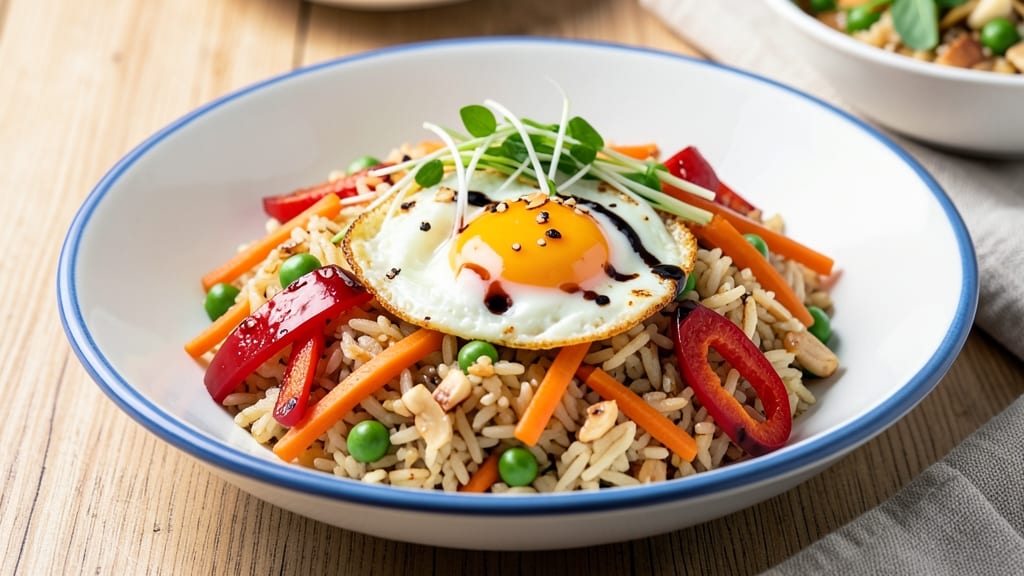
This Chinese vegetable fried rice recipe with egg delivers restaurant-quality flavor in your own kitchen, starting with day-old jasmine rice and a high-heat wok.
The secret lies in proper technique—scrambling eggs just until set, stir-frying vegetables at high heat for that signature wok hei, and balancing soy sauce and Shaoxing wine for depth. Every bite offers a perfect harmony of textures: tender rice, silky eggs, and crisp vegetables.
The process is simpler than it sounds: chop your vegetables uniformly, beat the eggs until frothy, and cook everything in quick succession over high heat. Traditional methods like using cold rice (which absorbs flavors better) and proper seasoning elevate this dish from ordinary to extraordinary.
Garnish with green onions and sesame seeds for freshness and crunch, completing a meal that feels both comforting and sophisticated.
Ingredients for chinese vegetable fried rice recipe with egg
Four cups of day-old jasmine rice and fresh vegetables transform into restaurant-quality fried rice with these essential ingredients.
| Ingredient | Amount | Notes |
|---|---|---|
| Day-Old Jasmine Rice 🍚 | 4 cups | Cold rice absorbs flavors better |
| Large Eggs 🥚 | 4 whole | Room temperature for even cooking |
| Carrots 🥕 | 1 cup | Julienned into matchsticks |
| Green Bell Pepper 🌶️ | 1 whole | Diced into small pieces |
| Frozen Peas 🌱 | ½ cup | Thawed and drained |
| Green Onions 🧅 | 4 whole | White and green parts separated |
| Sesame Seeds 🌰 | 1 tbsp | Toasted for garnish |
| Light Soy Sauce 🥄 | 3 tbsp | Kikkoman preferred |
| Dark Soy Sauce 🥄 | 1 tbsp | For color depth |
| Shaoxing Wine 🍷 | 1 ½ tbsp | Substitute dry sherry |
| Vegetable Oil 🫒 | 3 tbsp | High smoke point preferred |
| Garlic Cloves 🧄 | 3 cloves | Minced finely |
| Ginger 🌿 | 1 tsp | Fresh, grated |
| Salt 🧂 | ½ tsp | Diamond Crystal preferred |
| White Pepper 🌶️ | ¼ tsp | Freshly ground |
The rice is non-negotiable—day-old jasmine rice with its distinct floral aroma and slightly chewy texture is the foundation. Costco or Asian grocery stores carry the best quality in bulk, and it's worth investing in a few extra pounds. For the vegetables, fresh is ideal, but frozen peas work perfectly if you're short on time. The bell pepper should be firm and vibrant, while the carrots should have a crisp bite. Green onions add freshness, so use the white parts for cooking and reserve the green for garnish—it's the finishing touch that elevates the dish from good to exceptional.
No Shaoxing wine? Dry sherry or even a splash of rice vinegar will work in a pinch, though the flavor profile won't be identical. The soy sauces are crucial—light for saltiness, dark for color. Kikkoman is the gold standard, but any reputable brand will do. Fresh ginger and garlic should be pungent and aromatic; if they're not, your dish will lack depth. For the eggs, room temperature is key—it ensures even cooking and that silky texture. If you're using pre-minced garlic or ginger, toast it in the oil first to deepen the flavor. The sesame seeds? Toast them in a dry pan until fragrant—that aroma is what makes it taste authentic.
Store cooked fried rice in an airtight container in the fridge for up to 4 days, though it's best enjoyed within 2 days for peak texture. The flavors actually improve slightly the next day as the rice absorbs more of the seasonings. For freezing, portion into single servings and reheat in a skillet with a splash of water to restore crispness. The key to reheating is high heat and quick cooking—don't let it sit in the microwave, or you'll lose that wok hei. Garnish with extra green onions and sesame seeds right before serving to maintain freshness.
Why You'll Love This Recipe
- No-Chop Night Saver: I swear by this recipe when I’m too tired to dice anything—just rough-chop the carrots and bell pepper (or buy pre-cut veggies), crack eggs into the wok, and let the heat do the work. The peas? Straight from the freezer. Thirty minutes max, and zero stress.
- Eggy Umami Magic: That first crack of the egg into the hot pan? Pure satisfaction. The edges get crispy while the center stays silky, then it all gets folded into the rice with a splash of soy sauce—salty, savory, and just a little sweet from the carrots. Honestly, the egg makes this dish.
- Lunchbox Hero: Between us, this is my go-to for packed lunches. Taste better cold than most takeout, and the day-old rice? Perfect texture. I portion it into containers the night before, and by Wednesday, I’m still eating it like it’s fresh. (Yes, even on a Tuesday night.)
- Pantry Goldmine: I make this when my fridge is bare or my wallet’s thin. Carrots, bell peppers, and frozen peas last forever, and a few eggs stretch this into three meals. Leftovers? Even better the next day—if there are any. My daughter picks out the peas first, but still asks for seconds.
Step-by-step instructions for Chinese vegetable fried rice with egg
This method delivers restaurant-quality fried rice with perfectly scrambled eggs and vibrant vegetables.
Prepare and Preheat the Ingredients
First, separate the white and green parts of the 4 whole green onions. Finely mince the 3 cloves garlic and grate the 1 tsp ginger using a microplane for maximum flavor extraction. Thaw and drain the 0.5 cup frozen peas by placing them in a colander under warm running water for 30 seconds. Meanwhile, julienne the 1 cup carrots into thin matchsticks and dice the 1 whole green bell pepper into small, even pieces—this ensures even cooking and consistent texture.
While prepping, heat a 14-inch wok or large skillet over high heat until it's smoking hot. The high heat is crucial for that authentic wok hei flavor. Keep the 4 cups day-old jasmine rice at room temperature—cold rice absorbs flavors better and prevents mushiness. Crack the 4 whole large eggs into a bowl and season lightly with 0.25 tsp white pepper and 0.25 tsp salt (reserve the rest for later).
Scramble the Eggs and Set Aside
With the wok at maximum heat, add 1 tablespoon vegetable oil and swirl to coat. Pour in the seasoned eggs and let them sit undisturbed for 5-8 seconds until the edges begin to set. Using a spatula, gently push the eggs from one side to the other, creating soft, silky curds. Continue folding until the eggs are just set—about 20 seconds total. Remove from the wok and set aside on a plate. The eggs should be creamy, not rubbery, so don't overcook them.
Leave the wok empty for now—this residual heat will help prevent the vegetables from steaming instead of searing. Wipe out any excess oil with a paper towel if needed, but leave a thin film to prevent sticking. Here's the thing—if the wok isn't hot enough, your fried rice will turn out soggy. You'll know it's ready when you see a fine haze of smoke rising from the surface.
Stir-Fry the Vegetables and Aromatics
Add the remaining 2 tablespoons vegetable oil to the wok and let it heat until shimmering. Add the minced garlic and grated ginger, stirring for 10 seconds until fragrant—this prevents burning. Immediately add the diced green bell pepper and julienned carrots, stirring constantly for 1-2 minutes until they begin to soften but still retain a slight crunch. The vegetables should be tender-crisp, not mushy.
Add the 0.5 cup thawed frozen peas and the white parts of the green onions, stirring for another 30 seconds until everything is evenly coated and heated through. Here's where it gets important: push the vegetables to one side of the wok, creating space. Add 1 tablespoon vegetable oil to the empty side, then pour in the 1.5 tablespoons Shaoxing wine and scrape up any browned bits from the bottom with a wooden spoon. This deglazing step captures all the concentrated flavors that would otherwise burn.
Combine Rice and Season
Add the 4 cups day-old jasmine rice to the wok, breaking up any clumps with your spatula. Stir-fry for 2-3 minutes, letting the rice absorb the flavors from the vegetables and aromatics. This is when the dish starts to come together—you'll smell the soy sauce and wine melding with the rice.
Pour in the 3 tablespoons light soy sauce and 1 tablespoon dark soy sauce, stirring vigorously to distribute evenly. The dark soy sauce adds that signature deep color, while the light soy sauce brings the umami depth. Sprinkle in the 0.25 tsp reserved white pepper and 0.25 tsp salt, then add the green parts of the green onions for freshness. Toss everything together for another 1-2 minutes until the rice is heated through and the flavors are fully integrated.
Finish and Garnish
Return the scrambled eggs to the wok and gently fold them into the rice mixture. The residual heat will warm the eggs through without overcooking them. Taste and adjust seasoning if needed—you might need a touch more soy sauce or salt, depending on your preference. The rice should be flavorful but not salty.
Transfer the fried rice to serving plates and garnish immediately with the 1 tablespoon toasted sesame seeds. The toasted seeds add a nutty crunch and visual appeal. Serve while hot, straight from the wok—this dish is best enjoyed immediately when the rice is still warm and the flavors are at their peak. Each bite should deliver a perfect balance of textures: tender rice, silky eggs, crisp vegetables, and aromatic seasoning.
Pro Tips For Making Chinese Vegetable Fried Rice Recipe With Egg
- STIR-FRY PEAS LAST: Frozen peas release moisture like a sweaty gym sock—toss them in only after the rice is fully cooked. I learned this the hard way when my fried rice turned into a sad, mushy pile. Add them for the final 30 seconds, then mix just until warmed through.
- PREP CARROTS SMALL: Dice those carrots into ¼-inch cubes, not thin matchsticks. Thick pieces stay crisp while absorbing flavor, and they won’t turn to mush before the rice gets its wok hei. (Yes, even if it looks less "Instagram.") Use a sharp knife—this isn’t a patience test.
- SCRAMBLE EGGS SEPARATELY: Fry the eggs in a clean, dry pan first, then chop them into rough pieces. Mixing them in with the rice later keeps them tender and prevents a rubbery, overcooked mess. Pro move: Add a splash of soy sauce to the eggs while cooking—they’ll thank you.
- USE DAY-OLD RICE: Fresh rice sticks together like glue—no amount of stirring will fix it. Spread yesterday’s rice on a tray, let it dry out slightly, then break up clumps with your fingers before frying. (If you’re desperate, microwave it for 30 seconds first, but it won’t be the same.)
Flavor customization for this dish
Spicy Kick
Add ½ teaspoon of chili crisp or 1 teaspoon of Sichuan peppercorn powder when stir-frying the vegetables for a fiery finish. For heat lovers, mix 1 tablespoon of gochujang (Korean chili paste) with 1 teaspoon of rice vinegar and toss it into the rice at the end.
The gochujang adds a sweet-spicy depth that pairs perfectly with the eggs and vegetables. 🌶️
Umami Boost
Enhance the savory profile by adding 1 tablespoon of hoisin sauce or 1 teaspoon of fish sauce (if vegetarian, use 1 teaspoon of soy sauce substitute) when combining the rice with the vegetables.
For extra depth, stir in 1 teaspoon of miso paste at the same time—it dissolves quickly and adds a rich, fermented complexity. Trust me, this elevates the dish to another level.
Sweet and Tangy Twist
Brighten the flavors with 1 teaspoon of rice vinegar or ½ teaspoon of white vinegar when tossing the rice with soy sauce. For a sweeter touch, add 1 teaspoon of honey or ½ teaspoon of sugar to balance the saltiness.
I love finishing with a drizzle of chili oil for a sweet-spicy contrast that’s irresistible. ✨
Herbaceous Freshness
Swap out the green onions for cilantro or Thai basil for a fresher, more aromatic finish. Add 2 tablespoons of chopped cilantro or 1 tablespoon of Thai basil leaves at the end for a bright, herbal note.
If using cilantro, toast the leaves in the wok for 10 seconds to soften their sharpness while preserving their vibrant color.
Nutty Crunch
For extra texture, sprinkle 1 tablespoon of crushed peanuts or 1 teaspoon of fried shallots on top before serving. The peanuts add a satisfying crunch, while the fried shallots bring a savory, oniony depth.
Toast the peanuts in the same wok used for the fried rice for 30 seconds to infuse them with the dish’s flavors. 💫
Nutrition facts
Frequently asked questions
Why is day-old rice better for fried rice?
Day-old rice is less sticky and absorbs flavors better than fresh rice. The slight dryness helps create individual grains that stay separate when stir-fried. Plus, cold rice prevents mushiness from excess moisture during cooking. Pro tip: Spread freshly cooked rice on a tray and refrigerate uncovered for 30 minutes before storing to speed up drying.
Can I substitute fresh vegetables for frozen ones?
Use fresh carrots, bell peppers, and peas for better texture, but prep them properly. Cut vegetables into uniform sizes so they cook evenly. For peas, blanch fresh ones for 1 minute in boiling water before stir-frying to maintain their bright green color.
What's the secret to perfect scrambled eggs in fried rice?
Scramble eggs on high heat with minimal stirring until just set (20 seconds max). Remove them from the wok immediately and set aside—the residual heat will keep them warm while you cook the rice. The eggs should be soft and creamy, not rubbery. For extra flavor, add a pinch of white pepper to the beaten eggs before cooking.
How do I fix fried rice that's too dry or too wet?
Too dry? Sprinkle 1-2 teaspoons of hot water and stir-fry for 30 seconds. Too wet? Add 1-2 tablespoons of soy sauce and cook longer over high heat to evaporate excess moisture. The key is high heat—it helps balance moisture levels while building wok hei flavor.
Can I make this recipe with basmati rice?
Yes, but jasmine rice is ideal for its floral aroma and slightly sticky texture. If using basmati, cook it slightly underdone (al dente) and spread it thinly to dry faster. For best results, mix half jasmine and half basmati to get the aroma of jasmine with basmati's firmer bite.