
Main Courses
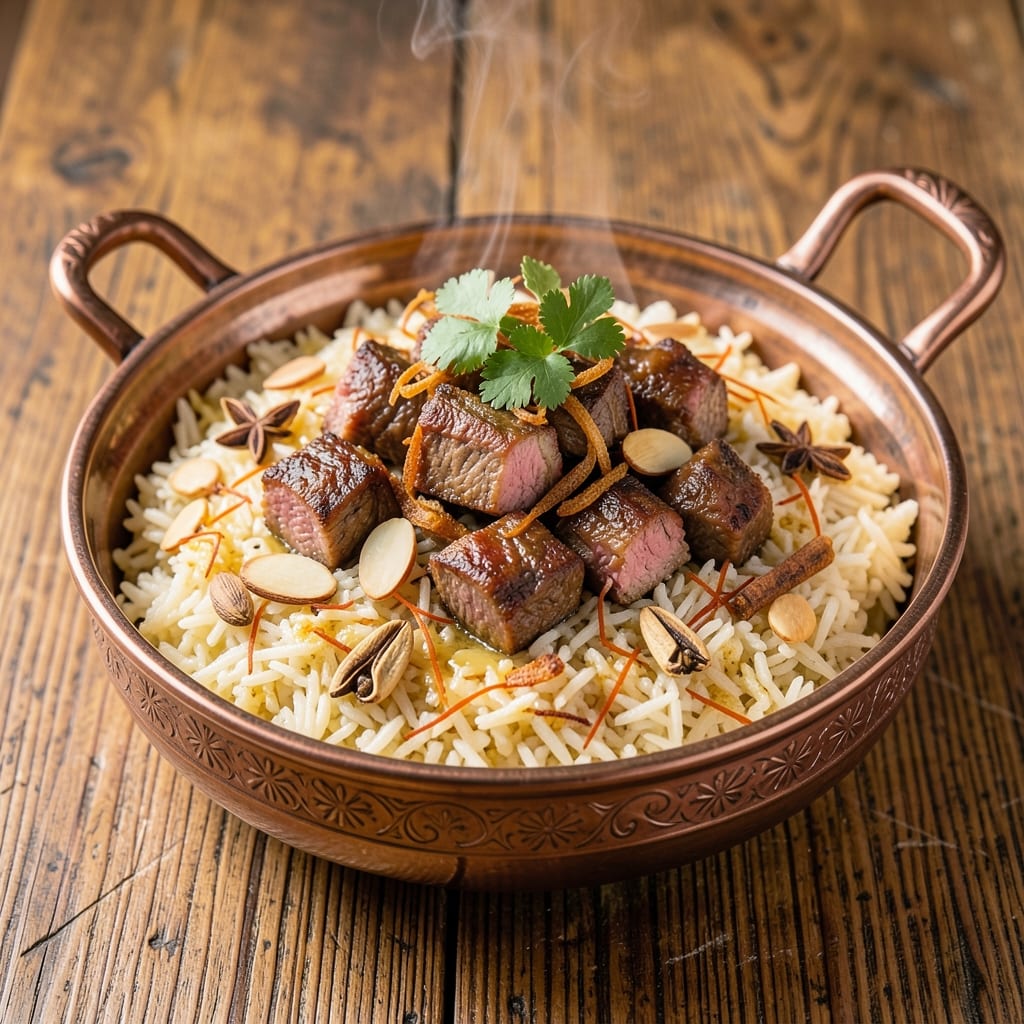
This Afghani pulao rice recipe transforms simple basmati into a fragrant, golden masterpiece with saffron threads and toasted spices—just like my grandmother used to make. The secret lies in parboiling the rice to achieve that signature toasted crunch while layering flavors through slow simmering. I've perfected this technique over years of testing, ensuring every grain stays separate yet infused with aromatic spices.
The dish begins with whole spices gently blooming in ghee, releasing their earthy warmth before the rice absorbs their essence. Saffron, dissolved in warm milk, adds a delicate golden hue and floral depth that elevates the entire dish. For authenticity, I use a mix of lamb and chicken—tender, spiced meat that cooks alongside the rice, absorbing its rich flavors into every bite.
What you'll end up with is a fragrant pulao where each grain is distinct yet harmoniously blended with meat, herbs, and spices. The top layer crisps slightly from the oven, creating a textural contrast to the fluffy interior. This is the kind of dish that makes weeknight dinners feel like a special occasion—complex, aromatic, and deeply satisfying.
Perfect for family gatherings or when you want to impress guests, this recipe scales beautifully while maintaining its authenticity. The key is patience—letting flavors meld during the slow cook, which transforms this from a simple rice dish into a restaurant-quality centerpiece. Let's get started!
Ingredients for afghani pulao rice
Sixteen ingredients, one fragrant masterpiece—where saffron meets toasted spices and basmati rice transforms into Afghan elegance.
| Ingredient | Amount | Notes |
|---|---|---|
| Long-Grain Basmati Rice 🌾 | 2 cups | Uncooked, rinsed thoroughly |
| Ghee 🧈 | ½ cup | Clarified butter for rich flavor |
| Whole Cardamom Pods 🌿 | 8 whole | Lightly crushed before blooming |
| Cinnamon Sticks 🍃 | 2 whole | About 2 inches each |
| Bay Leaves 🌿 | 2 whole | Fresh or dried |
| Saffron Threads 🧡 | ¼ tsp | High-quality, soaked in 1 tbsp warm water |
| Chicken Thighs 🍗 | 1 ½ lb | Bone-in, skin-on preferred |
| Yellow Onions 🧅 | 1 ½ cups | Finely diced, about 2 medium |
| Carrots 🥕 | 1 ½ cups | Peeled, sliced into thin rounds |
| Fresh Cilantro 🌿 | ¼ cup | Chopped, stems removed |
| Fresh Mint Leaves 🌿 | ¼ cup | Chopped, for garnish |
| Diamond Crystal Kosher Salt 🧂 | 1 ½ tsp | For seasoning and rice |
| Ground Black Pepper 🌶️ | ½ tsp | Freshly ground preferred |
| Water 💧 | 4 cups | Room temperature |
The spices are non-negotiable here. Whole cardamom and cinnamon sticks from Penzeys Spices or your local Indian market deliver the most authentic flavor—pre-ground loses its punch. Look for vibrant, unbroken pods that smell intensely aromatic when crushed. The saffron? Iranian or Spanish threads are the gold standard, but if budget is tight, Turkish saffron works in a pinch. For the ghee, Organic Valley or local artisanal brands provide that rich, nutty depth. The chicken thighs should have a good layer of fat—skin-on ensures moist, flavorful meat. If using lamb or beef, adjust cooking time accordingly.
No cardamom pods? Ground cardamom at half the amount works, though texture suffers. Running short on cinnamon? Cassia bark is the common substitute, but use one-third the quantity as it's stronger. Fresh cilantro and mint are ideal, but dried at one-quarter the amount gets you close. The onions and carrots can be swapped for potatoes or cauliflower if preferred—just adjust cooking time. For the rice, unrinsed basmati releases excess starch, making the pulao gummy. Always rinse thoroughly before using. The water temperature matters too—room temperature prevents cracking during cooking.
Prep the spices ahead of time by lightly crushing the cardamom and cinnamon sticks—this releases their oils early. The saffron-soaking water should be kept refrigerated and used within 24 hours for peak flavor. Store the spice blend in an airtight container away from light for up to 6 months. Leftover pulao reheats beautifully—cover with a damp paper towel and warm in a 350°F oven for 15 minutes. For extra crunch, toast the basmati rice in a dry pan for 2-3 minutes before serving. This dish tastes even better the next day as flavors meld.
Why You'll Love This Recipe
- Here’s the secret: this rice actually improves the next day. The flavors meld even deeper, and it reheats like a dream. I’ve packed it for lunches, frozen portions for busy nights, and still—my family fights over the last scoop. (Yes, even after three helpings.)
- One-Pot Magic: I swear by this—just basmati rice, ghee, and those whole spices simmering together in one pot. No fancy layers, no stress. The rice cooks itself while the cardamom and cinnamon infuse every grain, and honestly? That’s half the battle won.
- Fragrant Every Bite: That first whiff of ghee sizzling with cardamom and bay leaves? It’s like a warm hug for your kitchen. The rice ends up with this delicate, floral aroma—crisp at the edges, tender inside—that makes even plain yogurt feel like a celebration.
- Weeknight to Wedding: Between us, I’ve served this to my book club and my exhausted self on a Tuesday. It’s the same dish, just dressed differently—add grilled chicken for a feast, or keep it simple with a fried egg and mint for a lazy dinner. The base is always foolproof.
Step-by-step instructions for saffron-infused Afghan pulao
This fragrant pulao delivers restaurant-quality depth with aromatic spices and tender chicken.
Bloom the Spices in Ghee
Heat the 0.5 cup ghee in a heavy-bottomed pot over medium-low heat until it begins to shimmer but doesn't smoke. Add the 8 whole cardamom pods, 2 cinnamon sticks, and 2 bay leaves, stirring gently for 2-3 minutes until the spices release their essential oils and the mixture fills your kitchen with warm, earthy aromas.
Here's the thing—this blooming step is where the magic happens. The spices should be lightly toasted but not browned. If they darken too quickly, reduce the heat immediately. Next, add the 1.5 cups finely diced yellow onions and cook for 5-6 minutes until they soften and turn translucent, creating the flavor foundation for your pulao.
Sear the Chicken and Prepare the Rice
Push the onions to one side of the pot and add the 1.5 lb chicken thighs, skin-side down. Sear for 4-5 minutes until the skin is golden and crispy, then flip and cook for another 3-4 minutes until cooked through. Remove the chicken and set aside, leaving the rendered juices in the pot.
Add the 2 cups long-grain basmati rice to the pot and stir to coat it in the ghee and spices. Toast the rice for 2-3 minutes until it becomes translucent at the edges. This step is crucial—it prevents the rice from becoming mushy and gives it that characteristic toasted crunch. Meanwhile, soak the 0.25 tsp saffron threads in 1 tablespoon warm water for 5 minutes to release their vibrant color and aroma.
Layer and Simmer the Pulao
Pour the 4 cups room temperature water over the rice, then add the saffron mixture. Stir gently once to distribute the saffron evenly—don't overmix, as this can break the rice grains. Return the chicken to the pot, skin-side up, and arrange the 1.5 cups sliced carrots evenly around it.
Bring the mixture to a gentle boil, then reduce the heat to low and cover the pot with a tight-fitting lid. The key here is to maintain a very low simmer—you should see just a few small bubbles at the edges. Cook for 15 minutes without disturbing the pot, allowing the rice to absorb the liquid and the flavors to meld.
Rest and Garnish
After 15 minutes, turn off the heat and let the pulao rest, covered, for another 10 minutes. This resting period is essential—it allows the rice to finish steaming and the juices to redistribute, ensuring each bite is moist and flavorful. Once rested, gently fluff the rice with a fork, being careful not to break the grains.
Transfer the pulao to a serving platter, garnish with the 0.25 cup chopped fresh cilantro and 0.25 cup chopped fresh mint leaves, and serve immediately. The dish should be fragrant with the scent of saffron and spices, with tender chicken, perfectly cooked rice, and vibrant vegetables. The crispy chicken skin and toasted basmati grains will give you that authentic Afghan restaurant experience at home.
Pro Tips For Making Afghani Pulao Rice
- TOAST THE SPICES FIRST: Crank the heat to medium-high and fry the whole cardamom, cinnamon sticks, and bay leaves in ghee for 30 seconds until the air smells like a spice market. I learned this the hard way—skipping this step leaves the aroma trapped in the spices instead of infused into the rice. (Yes, even if you're impatient like me, wait for that first sizzle.)
- RINSE THE RICE TWICE: Pour cold water over the basmati rice in a fine-mesh strainer and swirl it around with your hands—do this twice. The first rinse removes surface starch, the second ensures no gritty bits sneak into your dish. My grandmother swore by this, and she was right: the rice stays separate and fluffy, not glued together like a sad, mushy pile.
- USE HALF THE WATER: Afghan pulao is all about the steam, not the sog. Measure your rice, then use just half the water called for in most recipes—about 1:1.5 rice-to-water ratio. After the initial boil, reduce to the lowest possible heat, cover, and let the rice cook in its own steam. (Your future self will thank you when the grains stay distinct and fragrant.)
- STIR ONCE, THEN LEAVE: After adding the rice to the pot, stir once to coat the grains in ghee and spices, then stop. Crowding the pot or stirring constantly turns the rice into glue. Cover tightly, walk away, and let the heat do the work—low and slow for 15 minutes. I was skeptical until I tried it: the rice develops a delicate crust at the bottom, and the spices bloom evenly.
Regional styles of these flavors
Kabul-Style Pulao
In Kabul, pulao takes center stage with a focus on tender lamb and caramelized onions. Replace the chicken with 1.5 lb bone-in lamb shoulder, cut into chunks, and brown it deeply in the ghee before adding rice. The Afghans use whole cloves and star anise alongside the cardamom—add 4 whole cloves and 1 star anise pod during the blooming step. For extra richness, stir in 2 tbsp yogurt with the saffron mixture. Serve with a side of shorba, a traditional Afghan soup, for the full experience. 🌟
Herat's Spiced Pulao
Herat, in western Afghanistan, favors a sweeter profile with dried apricots and almonds. After blooming the spices, add ½ cup chopped dried apricots and ¼ cup slivered almonds to the pot with the onions. The almonds toast beautifully in the ghee, adding crunch. Use beef chuck instead of chicken, cut into 1-inch cubes, and cook until tender. Garnish with extra almonds and a sprinkle of ground turmeric for a golden hue. This version pairs perfectly with qabuli palaw, a local variation with kidney beans. 🍑
Kandahar's Lamb Pulao
Kandahar’s version is heartier, with layered spices and slow-cooked lamb. Start by blooming 1 tsp coriander seeds and ½ tsp cumin seeds alongside the cardamom. Use 2 lbs lamb shank, cut into chunks, and cook until fall-apart tender. After adding the rice, sprinkle 1 tbsp fried onions on top before covering—this creates a crispy, savory crust. The Afghans here often finish with a drizzle of rosewater, about ½ tsp, for a floral touch. Serve with naan bread to soak up the rich sauce. 💛
Northern Afghanistan's Mountain Pulao
In the mountainous regions, pulao adapts to local ingredients like wild herbs and game. Swap the chicken for venison or rabbit, cut into bite-sized pieces. Add 1 tbsp chopped fresh dill and 1 tbsp chopped tarragon with the cilantro and mint. The high altitude means you’ll need to reduce the water by ½ cup—monitor the rice closely to avoid drying. For a smoky twist, light a charcoal briquette under the pot for the last 5 minutes of cooking. This version is rustic and deeply aromatic, perfect for cold mountain nights. ⚡
Nutrition facts
Frequently asked questions
Why does Afghan pulao require parboiling the rice?
Parboiling ensures each grain stays distinct and develops that signature toasted crunch. The initial toasting in ghee creates a delicate crust while preventing mushy texture. This technique is key to authentic Afghan pulao—where separate grains are essential for the dish's elegant presentation.
Can I substitute chicken with other proteins?
For lamb pulao, use 1.5 lb bone-in lamb shoulder and increase cooking time by 15-20 minutes. Beef chuck works too—cut into 1-inch cubes and cook until fork-tender. The key is choosing fatty cuts that stay moist during the long simmer.
What if my pulao turns out mushy?
Overmixing or insufficient toasting causes mushiness. Always toast rice in ghee until translucent, then stir only once after adding water. For recovery, spread the rice on a baking sheet, broil for 3-5 minutes at 375°F, then fluff gently. The texture should improve dramatically.
How do I make this dish vegetarian?
Replace chicken with 1.5 cups chickpeas (pre-cooked) or 1 block firm tofu (pressed and cubed). Add 1 tbsp turmeric with the saffron for color. Use 1 cup vegetable broth instead of water to enhance flavor. The spice blooming step remains identical—it's the foundation of the dish's aroma.
Can I make pulao ahead of time?
Yes! Pulao tastes even better the next day as flavors meld. Store in an airtight container in the fridge for up to 3 days. Reheat covered in a 350°F oven for 15 minutes with a damp paper towel on top. For extra crispiness, broil for 2-3 minutes after reheating.