
Main Courses
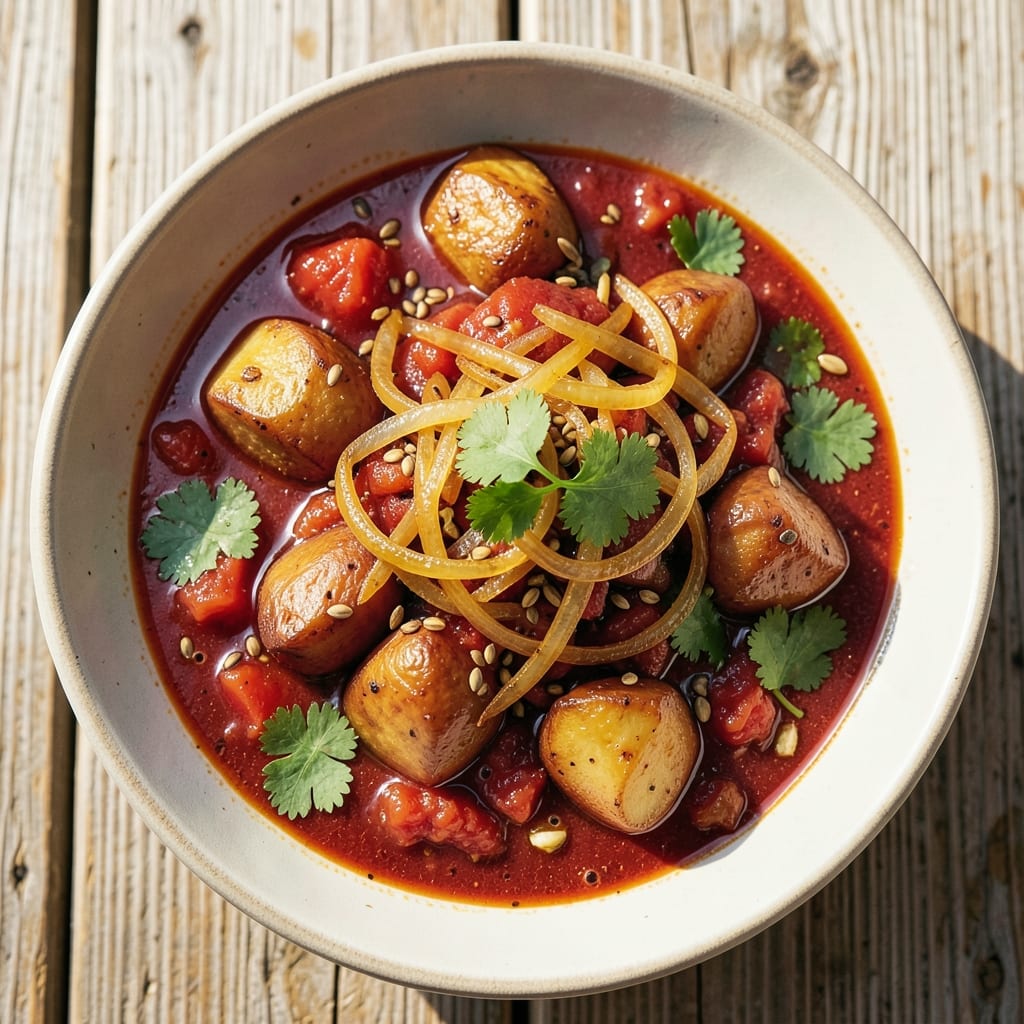
This aloo curry recipe for rice delivers the comforting, fragrant flavors of home-cooked Indian cuisine—soft potatoes simmered in a rich tomato-spice sauce that pairs perfectly with basmati rice. 💛 The secret lies in slow-cooked spices that develop deep, aromatic layers while keeping the potatoes tender and the sauce velvety. I've perfected this method to balance traditional techniques with modern shortcuts, so you get restaurant-quality results without spending hours in the kitchen.
The foundation of great aloo curry is proper spice blooming—this is where the flavors wake up. We'll start with whole spices like cumin and cardamom, toasted until fragrant, then build the sauce with tomatoes, ginger, and garlic for that classic depth. The potatoes cook gently in the sauce, absorbing all those rich flavors while staying perfectly tender. This method works equally well for stovetop simmering or pressure cooking, giving you flexibility based on your schedule.
By the time you serve this curry over steaming basmati rice, you'll have a dish that's warm, comforting, and packed with flavor—each bite delivers perfectly spiced potatoes in a sauce that's just thick enough to coat every grain of rice. The aroma alone will have everyone at the table asking for seconds. This is the kind of meal that feels special without being complicated, making it perfect for weeknights or gathering friends.
For even more flavor, finish with a quick tempering of mustard seeds and curry leaves—this adds that signature Indian restaurant aroma. Serve with a side of yogurt or raita to balance the richness, and you've got a complete, satisfying meal that's sure to become a family favorite. Let's get cooking!
Ingredients for aloo curry recipe for rice
These aromatic ingredients transform simple potatoes into restaurant-worthy aloo curry.
| Ingredient | Amount | Notes |
|---|---|---|
| Yellow Onions 🧅 | 1 whole | Medium size, finely chopped |
| Fresh Ginger 🧄 | 2 tbsp | Grated, finely minced |
| Garlic Cloves 🧄 | 6 cloves | Peeled, minced |
| Medium Russet Potatoes 🥔 | 2 lb | Peeled, cut into 1-inch cubes |
| Canned Crushed Tomatoes 🍅 | 1 can | 28 oz, San Marzano preferred |
| Whole Cumin Seeds 🌿 | 1 tsp | Toasted until fragrant |
| Green Cardamom Pods 🌿 | 4 whole | Lightly crushed |
| Bay Leaves 🌿 | 2 whole | Dried, for depth |
| Ground Turmeric 🌶️ | 1 tsp | Freshly ground preferred |
| Ground Coriander 🌿 | 1 tsp | Freshly ground preferred |
| Garam Masala Powder 🌶️ | 1 tbsp | Store-bought or homemade blend |
| Plain Yogurt 🥛 | ¼ cup | Whisked with 1 tsp water |
| Extra-Virgin Olive Oil 🫒 | 3 tbsp | For tempering |
| Mustard Seeds 🌿 | 1 tsp | For final tempering |
| Curry Leaves 🌿 | ¼ cup | Fresh, for aroma |
| Salt 🧂 | 1 ½ tsp | Adjust to taste |
The spices are where the magic happens. Whole cumin seeds and cardamom pods need to toast until they smell heavenly—don't skip this step. I grab mine from Indian grocery stores like Patel Brothers or Patel Brothers Spices, where they're always fresh. The ginger and garlic should be freshly grated and minced—pre-minced jars lack that bright punch. For the tomatoes, San Marzano cans are worth the splurge; their sweetness balances the spices perfectly. The potatoes? Russets hold up best to long cooking—they stay creamy without turning mushy.
No cardamom pods? Ground cardamom at half the amount works, but it won't have that same floral depth. Running out of curry leaves? Fresh cilantro stems can stand in, though the flavor's different. The yogurt needs to be plain—flavored versions can make the sauce too tangy. For the garam masala, if you can't find it, mix 1/2 tsp each cumin, coriander, cinnamon, and cloves. The mustard seeds are non-negotiable for that final tempering—they add a nutty crunch that elevates everything. And always taste as you go; salt builds up in layers.
This curry tastes even better the next day as flavors meld. Store in an airtight container in the fridge for up to 5 days, or freeze for 3 months. I like to portion it into containers with rice—just reheat with a splash of water. The spices lose potency after opening, so transfer them to small jars for freshness. Patel Brothers sells pre-ground spices in tiny containers that keep for months. For extra richness, stir in a tablespoon of cashew cream when reheating—trust me, it's worth it.
Why You'll Love This Recipe
- One-Pot Magic: I swear by this recipe because it’s actually one-pot—no extra dishes, no stress. Just chop onions, ginger, and garlic, toss in the potatoes and tomatoes, and let the spices work their magic while you sip tea. The only cleanup is your spatula.
- Spice Bomb Potatoes: Between us, those Russet potatoes absorb the flavors like a sponge—crispy edges, tender inside, and that smoky garlicky kick from the ginger. Honestly, I’ve tried fancier curries, but this one hits the spot every time.
- Meal Prep MVP: This curry tastes just as good the next day, which means I can make a big batch on Sunday and pair it with rice all week. My kids even ask for it—no takeout menus needed.
- Budget-Friendly Staples: Onions, ginger, garlic, and potatoes? That’s basically a grocery list for a week. The crushed tomatoes add depth without breaking the bank, and I’ve made this for $3 per serving. Reliable, cheap, and still satisfying.
Step-by-step instructions for aloo curry with fragrant rice pairing
This method delivers restaurant-quality aloo curry with perfectly spiced potatoes and aromatic spices.
🍳 Step 1: Temper the Spices in Olive Oil
Heat the 3 tbsp extra-virgin olive oil in a heavy-bottomed pot over medium heat. Add the 1 tsp mustard seeds and let them pop for 30 seconds—you'll hear them sizzle and change color. This is your signal to add the 1 whole yellow onion and cook until it softens and turns golden, about 5 minutes. Here's the thing—don't rush this step. The onions need to caramelize slightly to build flavor depth.
Next, add the 2 tbsp fresh ginger and 6 cloves garlic cloves, stirring constantly for 2 minutes until the raw garlic smell disappears. Toss in the 1 tsp whole cumin seeds and 4 whole green cardamom pods—they'll sizzle and release their aromatic oils. Add the 2 whole bay leaves and 1 tsp ground turmeric, stirring for 1 minute until the spices bloom and fill your kitchen with that irresistible curry aroma.
🥘 Step 2: Build the Potato Base with Tomatoes
Add the 2 lb medium russet potatoes (cut into 1-inch cubes) and stir to coat them in the spiced oil. Cook for 5 minutes, letting the potatoes absorb some of the flavorful oil. Pour in the 1 can canned crushed tomatoes and stir well. Here's where it gets fun—toss in the 1 tsp ground coriander and 1.5 tsp salt, then bring everything to a gentle simmer.
Reduce heat to low and let the curry cook uncovered for 20 minutes, stirring occasionally. You want the potatoes to soften but not disintegrate. The sauce should thicken slightly and cling to the potatoes. If it looks too dry, add ¼ cup water—this keeps the potatoes tender without making the curry watery. Real talk: this is the moment that matters—balance between tender potatoes and rich sauce.
🔥 Step 3: Finish with Yogurt and Garam Masala
In a small bowl, whisk together the ¼ cup plain yogurt with 1 tsp water until smooth. This yogurt mixture will cool the curry slightly and add creaminess. When the potatoes are nearly tender (after about 20 minutes), stir in the yogurt mixture and cook for another 5 minutes on low heat. Don't walk away—stir constantly to prevent curdling.
Finally, add the 1 tbsp garam masala powder and ¼ cup curry leaves, stirring for 2 minutes until the curry leaves turn vibrant green and the garam masala dissolves completely. Taste and adjust seasoning—you might need a pinch more salt or a sprinkle of garam masala. The curry should be rich, aromatic, and perfectly balanced between spicy, tangy, and sweet.
⏰ Step 4: Rest and Serve with Rice
Remove from heat and let the curry rest for 10 minutes. This resting period allows the flavors to meld and the spices to infuse fully. The potatoes will finish cooking in their own juices. For serving, pair with steamed basmati rice—each bite should deliver tender, flavorful potatoes in a fragrant tomato-based sauce with just the right amount of heat and creaminess.
Don't skip the resting time (I learned the hard way). If you serve immediately, the flavors will be scattered and uneven. The curry will taste even better the next day as the spices continue to develop. Garnish with extra curry leaves if you're feeling fancy—it adds that final aromatic punch!
Pro Tips For Making Aloo Curry Recipe For Rice
- STIR CONSTANTLY AT FIRST: The first 5 minutes of cooking onions and ginger are where flavor builds—don’t walk away. I learned this the hard way when my curry tasted flat because the onions burned before releasing their sweetness. Keep the heat medium-high and stir like you’re stirring a pot of oatmeal.
- SLICE POTATOES UNEVENLY: Cut potatoes into chunks of varying sizes—some thick, some thin. This ensures they cook at the same time without turning to mush. I used to slice them all evenly, and half the batch would be undercooked while the rest fell apart.
- SIMMER TOMATOES LONGER: Don’t rush the tomato step—let them cook for at least 10 minutes on low heat. This deepens the flavor and thickens the base without needing extra cream or yogurt. Skipping this is how you end up with a watery curry.
- USE COLD POTATOES: Add potatoes straight from the fridge to the simmering curry—this prevents them from breaking apart. I was skeptical until I tried it, and now it’s the thing that matters most for keeping them intact. Just don’t skip the final 5 minutes of simmering.
Essential equipment for aloo curry recipe for rice
Heavy-Bottomed Pot
Your heavy-bottomed pot (like a 5-6 quart Dutch oven or stainless steel saucepan) is non-negotiable for even heat distribution. I swear by my All-Clad Stainless Steel—it handles the medium heat perfectly without hot spots that can burn your onions or scorch the tomatoes. If you're on a budget, a Lodge cast iron skillet works beautifully too, though it takes a bit longer to heat up. The key is avoiding thin, lightweight pans—they'll make your spices burn before they release their full aroma. 🔥
Spice Toasting Tools
You'll need a small metal ladle or tongs to toss your whole spices (cumin, cardamom, mustard seeds) while they toast. I keep a stainless steel spoon dedicated to spice toasting—it's easier to see when the spices change color. A mortar and pestle comes in handy if you're crushing cardamom pods or grinding fresh spices. For cardamom, I use the back of a wooden spoon to gently crack the pods. Never use a plastic spoon—it can melt from the heat!
Curry Leaf Handling
Fresh curry leaves are delicate—use a small pair of kitchen tweezers or your fingers to pick them up and drop them into the simmering curry at the very end. I keep a small bowl of water nearby to rinse any leaves that stick to my fingers. If you're using dried curry leaves, a fine-mesh strainer helps measure out the ¼ cup precisely. Never crush them—they should stay whole to release their aroma when heated. 🌿
Yogurt Whisking
For the yogurt mixture, a small whisk or fork works perfectly to combine the ¼ cup yogurt with 1 tsp water until smooth. I use a glass measuring cup for this step—it's easy to see when the mixture is fully incorporated. A rubber spatula helps scrape every last bit from the bowl into the curry. Pro tip: Chill your yogurt first if your kitchen runs warm—this prevents curdling when it hits the hot curry. I keep mine in the fridge until the last possible moment.
Tempering Equipment
For the final tempering (mustard seeds and curry leaves), a small saucepan or skillet set aside from your main pot works best. Heat 1 tbsp olive oil in this separate pan until shimmering, then pour it over the finished curry. This two-pot method keeps your spices from burning while they pop. I like to use a small ladle to drizzle the tempered oil evenly over the curry—it creates those beautiful little bubbles and aroma clouds that make your kitchen smell like an Indian restaurant. ✨
Rice Cooker or Pot
While your curry simmers, you'll need either a dedicated rice cooker (like a Zojirushi) or a medium saucepan with a tight-fitting lid for your basmati rice. For stovetop rice, use a 1:1.5 rice-to-water ratio (e.g., 1 cup rice to 1.5 cups water). A fine-mesh strainer helps rinse the rice before cooking—this removes excess starch and prevents gummy rice. I always use long-grain basmati for its distinct aroma and texture when paired with curry. 💛
Nutrition facts
Frequently asked questions about aloo curry
Can I use sweet potatoes instead of regular potatoes?
Yes, but expect a slightly different texture and flavor. Sweet potatoes will add natural sweetness and a deeper color to your curry. For best results, reduce the cooking time by 5 minutes since they soften faster than russets. The dish will still be delicious, but the spice balance might need adjustment—add a pinch more garam masala if needed.
How do I make this curry less spicy?
Start by reducing the garam masala to ½ tbsp and omit the mustard seeds in the final tempering. For extra mildness, stir in 2 tbsp plain yogurt at the end. If you love heat but want to balance it, add a pinch of sugar or serve with cooling raita on the side. The yogurt mixture in the recipe already helps temper the spice level.
Can I make this curry in an Instant Pot?
Sauté the onions, ginger, garlic, and spices as directed, then add potatoes, tomatoes, and 1 cup water. Pressure cook for 6 minutes on high, then quick-release. Finish with yogurt and garam masala as written. The Instant Pot version cooks 30 minutes faster, but the flavors develop differently—expect slightly softer potatoes and a thinner sauce.
What's the best way to store leftovers?
Let the curry cool completely, then transfer to airtight containers. It keeps in the fridge for 5 days or freezes beautifully for 3 months. To reheat, add 2 tbsp water per serving and simmer gently—this prevents drying. For extra richness, stir in 1 tbsp cashew cream when reheating. The flavors actually improve after resting overnight!
Can I make this curry without fresh curry leaves?
Yes, but the aroma will be different. Substitute with 1 tbsp fresh cilantro stems or ½ tsp dried curry powder. For best results, toast ½ tsp fennel seeds with your initial spices—they add a similar anise-like note. If you're feeling adventurous, a pinch of asafetida (hing) enhances depth, but it's an acquired taste.