
Main Courses
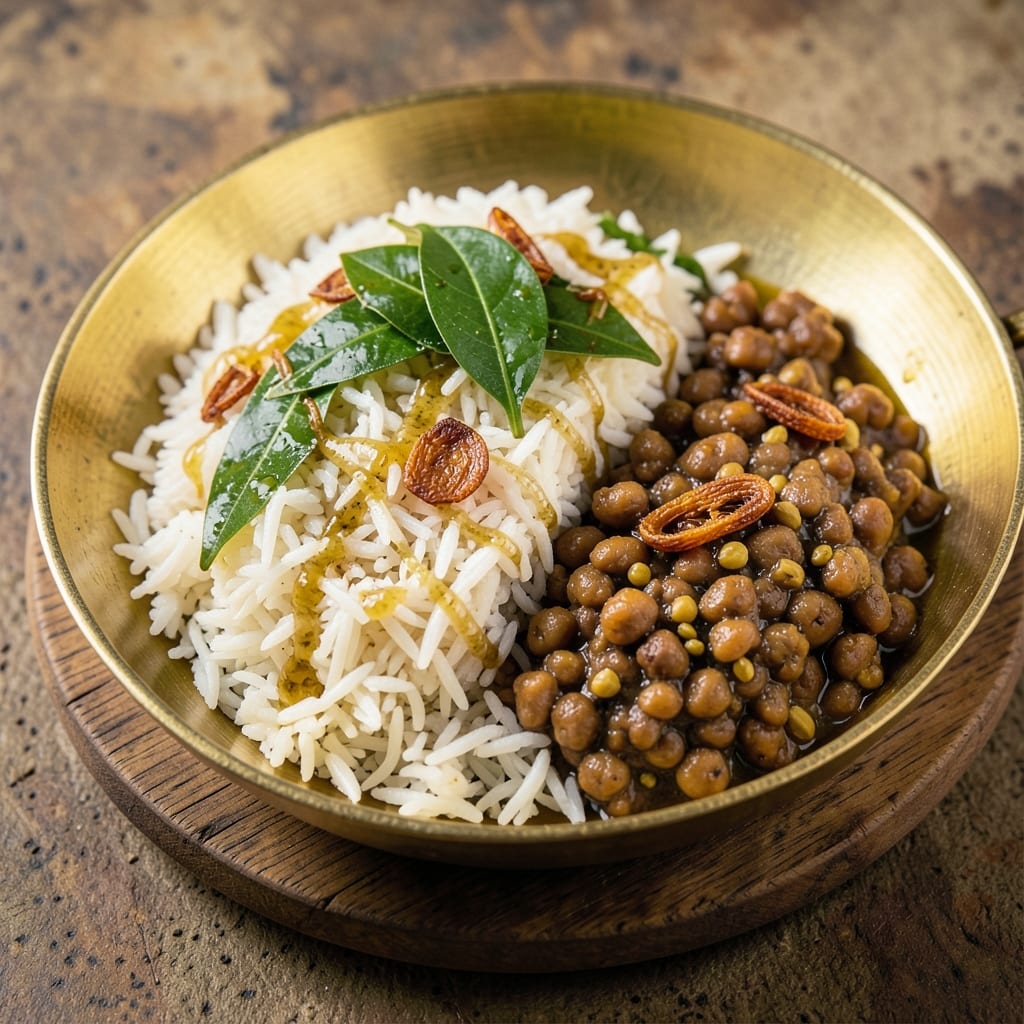
This Andhra Bagara rice recipe brings the heart of South Indian cuisine to your kitchen, where fragrant basmati rice meets a rich lentil stew infused with tangy tamarind and aromatic spices. The dish is a staple in Andhra Pradesh, where it's cherished for its balance of flavors—earthy lentils, spicy tempering, and the bright acidity of tamarind. What makes this recipe special is the two-pot technique: one for the rice and another for the stew, cooked simultaneously to achieve perfect harmony.
The foundation of Bagara lies in its tempering, where mustard seeds, curry leaves, and red chilies sizzle in ghee, releasing their distinctive aromas. This spiced oil is then layered with cooked rice and lentils, creating a dish that's both comforting and vibrant. The tamarind adds a tangy contrast that cuts through the richness, making every bite complex and satisfying. Unlike many rice dishes, Bagara is designed to be hearty yet light, ideal for a weeknight dinner or a festive spread.
By the time you serve this dish, you'll have a fragrant, spiced rice with tender lentils and a sauce that's velvety yet bright. The rice absorbs the flavors of the lentil stew, resulting in grains that are separate yet infused with depth. This recipe isn't just about the food—it's about the ritual of cooking, where every step, from tempering to tamarind, plays a role in creating something truly special.
Pair it with a simple curd or a side of sambar to complete the meal, and you'll have a dish that's as authentic as it is delicious. The beauty of Bagara is its versatility—it can be a standalone meal or part of a larger spread, always delivering on its promise of bold, layered flavors. Let's bring this Andhra classic to life in your kitchen.
Ingredients for andhra bagara rice
Fragrant basmati rice, earthy lentils, and tangy tamarind—this is the heart of Andhra Bagara.
| Ingredient | Amount | Notes |
|---|---|---|
| Basmati Rice 🍚 | 1 ½ cups | Uncooked, long-grain preferred |
| Toor Dal (Split Pigeon Peas) 🌾 | 1 cup | Rinsed thoroughly |
| Tamarind Paste 🍋 | 2 tbsp | Adjust for tanginess |
| Ghee 🧈 | ½ cup | Clarified butter for richness |
| Mustard Seeds 🌱 | 1 tbsp | For tempering aroma |
| Curry Leaves 🌿 | ¼ cup | Fresh, tightly packed |
| Red Chilies 🌶️ | 2 whole | Dried, adjust for heat |
| Asafoetida (Hing) 🌿 | ¼ tsp | Pinch for depth |
| Cumin Seeds 🌿 | 1 tsp | Toasted for warmth |
| Coriander Seeds 🌿 | ½ tsp | Ground lightly |
| Salt 🧂 | 1 ½ tsp | Adjust to taste |
| Fresh Coriander Leaves 🌿 | ¼ cup | Chopped for garnish |
| Water 💧 | 4 cups | For rice and dal |
The rice and dal are the stars, so basmati rice is non-negotiable—look for long grains that stay separate. Toor dal is the traditional choice, but moong dal or masoor dal work too if that's what you've got. Tamarind paste can be tricky to find, but Trader Joe's or Indian grocery stores usually carry it. If you can't find paste, tamarind pulp works too—just dissolve it in warm water. For the tempering, ghee is essential—it gives that rich, nutty flavor that separates Bagara from other rice dishes. Mustard seeds and curry leaves are the aromatic backbone, so don't skip them. If you're sensitive to mustard, you can reduce it to 1/2 tbsp, but trust me, the flavor is worth it.
No tamarind? Lemon juice or vinegar in a pinch, but it won't be the same—tamarind's unique sourness is key. Running low on curry leaves? Dried curry leaf powder at half the amount works, but fresh is ideal. The spices in the tempering—cumin, coriander, red chilies—are all about balance. Toast your whole spices for 30 seconds in a dry pan before adding to ghee—it deepens the flavor. For the rice, I always use the two-pot method: one pot for rice, one for dal. This keeps the grains separate and lets you control the texture perfectly. If you're making this for a crowd, double the rice and dal but keep the tempering spices proportional—you don't want to overpower the dish.
The rice and dal reheat beautifully—actually, they taste even better the next day as the flavors meld. Store in separate containers in the fridge for up to 3 days. For the tamarind paste, keep it in an airtight jar in the pantry—it lasts for 6-12 months. If you're prepping ahead, cook the dal first, then reheat it with a splash of water when ready to serve. The rice can be cooked fresh or reheated with a little ghee to keep it moist. Garnish with fresh coriander just before serving—it adds that final pop of brightness that ties everything together.
Why You'll Love This Recipe
- No-Soaking Needed: I’ve made this so many times that I’ve stopped soaking the rice—just rinse it once, and it turns out fluffy every time. The toor dal softens perfectly alongside, so you’re not stuck waiting for two separate pots.
- Tamarind & Ghee Magic: That tangy tamarind paste cuts through the richness of the ghee, and the mustard seeds sizzle into a nutty crunch. Honestly? It’s the kind of balance that makes you reach for seconds without even thinking.
- Weeknight & Potluck Star: I’ve served this at lazy dinners and family gatherings—it’s light enough for summer but hearty enough for winter. Packs well for lunches too, and the dal adds protein, so no one leaves hungry.
- Budget-Friendly Staple: Toor dal and basmati rice are pantry basics, and a little ghee goes a long way. I’ve made this for under $3 a serving, and it still feels like a special treat. (Yes, even on a Tuesday night.)
Step-by-step instructions for Andhra Bagara rice
Here's how to create this fragrant, tangy Andhra specialty with perfectly spiced rice and lentils.
Prepare the Rice and Temper the Spices
Rinse the 1.5 cups basmati rice under cold water until the water runs clear, then soak for 20 minutes. Drain well and set aside. In a heavy-bottomed pot, heat the 0.5 cup ghee over medium heat until it shimmers but doesn't smoke.
Add the 1 tbsp mustard seeds and let them splutter for 30 seconds. Add the 2 whole red chilies and 0.25 cup curry leaves, cooking for 1 minute until the mustard seeds turn golden and the curry leaves crisp slightly. Stir in the 1 tsp cumin seeds and 0.5 tsp coriander seeds, toasting for 30 seconds until fragrant. This aromatic base forms the flavor foundation for the dish.
Cook the Lentils and Rice Together
Add the 1 cup rinsed toor dal to the pot and stir to coat in the ghee and spices. Pour in 2 cups of the 4 cups water and bring to a gentle boil. Reduce heat to low and simmer for 10 minutes, stirring occasionally to prevent sticking.
Add the drained basmati rice and remaining 2 cups water. Stir gently and bring to a boil again. Once boiling, reduce heat to low, cover, and cook for 15 minutes. The rice should be tender but still slightly firm - it will finish cooking in the residual heat.
Add Tamarind and Finish Cooking
After 15 minutes, stir in the 2 tbsp tamarind paste and 1.5 tsp salt. The tamarind will create a tangy contrast that balances the rich ghee and spices. Cook uncovered for another 5 minutes, stirring occasionally, until the rice absorbs all the liquid and becomes fluffy.
Check for doneness by pressing a grain of rice between your fingers - it should be tender but still hold its shape slightly. The rice should be moist but not mushy, with a light golden tint from the ghee.
Rest and Garnish
Remove from heat and let the rice sit covered for 5 minutes. This resting period allows the flavors to meld and the rice to absorb any remaining moisture. Fluff gently with a fork and stir in the 0.25 cup chopped fresh coriander leaves.
Serve immediately while still warm. The bagara rice should have a delicate balance of spicy, tangy, and nutty flavors from the tempered spices and tamarind. Each grain should be distinct yet tender, with a subtle aroma from the ghee and curry leaves.
Pro Tips For Making Andhra Bagara Rice
- Split the Dal First: Soak your toor dal for at least 2 hours—no, overnight is better—then pressure cook it until it’s almost mushy. I learned this the hard way: undercooked dal turns to paste when mixed with rice, and overcooked dal just tastes bland. Aim for a texture where it’s still slightly firm but breaks easily when pressed. ---
- Ghee Over Heat: Bloom your mustard seeds in ghee on medium-low heat—yes, even if your pan screams at you. High heat burns them before they pop, and that bitter taste ruins the whole dish. Let them sizzle gently for 30 seconds before adding curry leaves; this is where the real flavor starts. ---
- Tamarind Balance: Start with half the tamarind paste called for, taste, then adjust. Store-bought paste is often concentrated, and Andhra-style bagara rice needs that tang to cut through the richness of the dal and rice. If it’s too sharp, a pinch of jaggery or sugar fixes it—just don’t skip the taste test. ---
- Rice Ratio Matters: Use 1.5 cups of water per 1 cup of basmati rice—not the 2:1 ratio you’d use for plain rice. The dal and spices already add moisture, and you want the grains to stay separate but tender. I used to flood it like biryani and ended up with mushy rice every time. Trust the numbers.
Common mistakes when making this recipe
Skipping the Soak
Rinsing your basmati rice is non-negotiable, but don't skip the 20-minute soak—this step ensures even cooking and prevents mushy grains. I've learned the hard way that skipping it leads to uneven texture, with some grains undercooked and others overdone. The soak also helps the rice absorb the ghee and spices more evenly during cooking. 💧
Overcrowding the Pot
Using a heavy-bottomed pot is key, but overcrowding with rice and dal will steam the dish instead of allowing the grains to separate. Stick to the 1.5 cups rice and 1 cup dal ratio—any more and you'll end up with a sticky mess. I once doubled the recipe in a small pot and ended up with a gluey pile. Use a pot with at least 2-3 inches of headspace above the ingredients. ✨
Burning the Spices
Mustard seeds and curry leaves need gentle heat to release their flavors without burning. If you crank the heat too high, they'll turn bitter and ruin the dish. Keep the ghee at a medium-low heat and let the spices sizzle gently for 30-60 seconds. I've seen people rush this step and end up with a pot full of acrid smoke—trust me, it's not worth it. 🌿
Adding Tamarind Too Late
The tamarind paste needs time to meld with the rice and dal, so don't add it in the final 5 minutes—it should go in after the initial 15 minutes of cooking. Adding it too late means the tangy flavor won't integrate properly, leaving your dish tasting flat. Think of it like a marinade—it needs time to work its magic. 🍋
Underestimating the Resting Time
Skipping the 5-minute rest after cooking means you'll serve rice that's still firm in the center. This resting period lets the residual heat finish cooking the grains and allows the flavors to settle. I've rushed this step and ended up with a pot of unevenly cooked rice. Cover it and let it sit—your patience will be rewarded with perfectly fluffy, fragrant grains. 💫
Using Subpar Ghee
Ghee is the soul of Bagara rice, so don't cut corners with low-quality or flavored versions. Use pure, unflavored ghee—brands like Gowardhan or Amul are reliable. I once used a "light" ghee substitute and the dish lacked that rich, nutty depth. Ghee adds richness and helps the spices cling to the rice, so invest in the good stuff. 🧈
Nutrition facts
Frequently asked questions
What makes Andhra Bagara rice different from regular rice dishes?
Bagara rice stands out because of its two-pot technique—rice and lentils are cooked together with a rich ghee tempering, then finished with tangy tamarind. Unlike plain rice dishes, it combines spiced rice and lentil stew into one flavorful bowl, creating a balanced meal with earthy, spicy, and tangy notes. The tamarind adds that signature Andhra twist!
Can I make this recipe without tamarind?
While tamarind is traditional, you can substitute with 1 tbsp lemon juice or vinegar for tanginess. However, tamarind's unique sour depth is irreplaceable—it cuts through the richness of the ghee and spices. For best results, try finding tamarind pulp at Indian grocery stores or use 1/2 tsp tamarind extract if available.
How do I know when the rice is perfectly cooked?
The rice should be tender but still slightly firm with a light golden tint from the ghee. Press a grain between your fingers—it should give slightly but not be mushy. The grains should separate easily, not clump together. If it's still firm after resting, add 1-2 tbsp hot water and cover for 5 more minutes.
What sides pair well with Andhra Bagara rice?
This dish is hearty on its own, but traditional pairings include yogurt (curd), sambar, or a simple kothu mirchi (stir-fried green chilies). For a lighter meal, add a cucumber raita to balance the richness. The tangy tamarind and spicy tempering make it versatile—try it with grilled fish or chicken too!
Can I make this recipe in a pressure cooker?
Yes! For the rice and dal, use 1.5 cups water (instead of 4 cups) and cook on medium heat for 4-5 whistles. After cooking, let the pressure release naturally, then add tamarind and finish on low heat for 5 minutes. The texture will be slightly softer, but the flavors remain intact. Just avoid overcrowding the pot!