
Main Courses
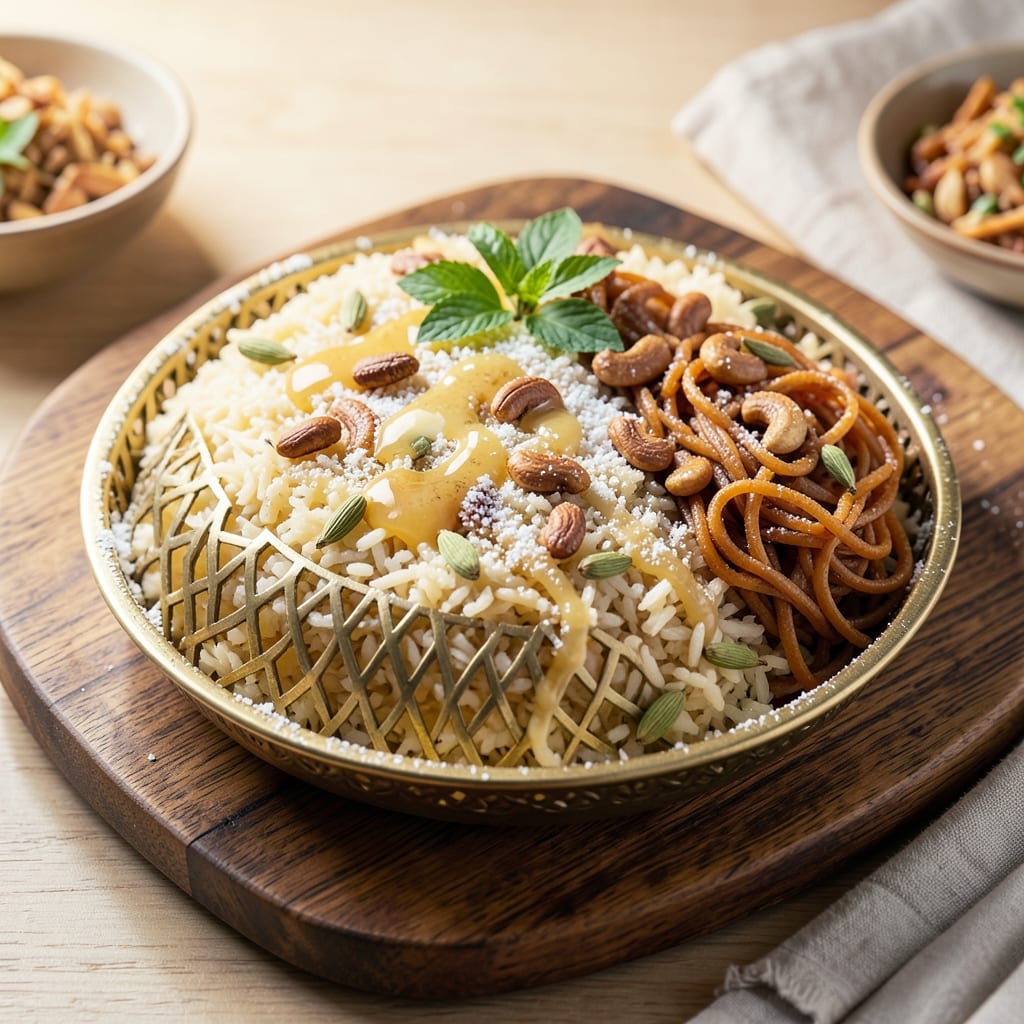
This Anil Rice Sevai recipe delivers delicate, golden lacy rice threads with a toasted spice crunch that’s impossible to resist. 💛 The secret lies in a perfectly balanced rice batter and slow-cooked ghee, creating those signature crispy strands that dissolve on the tongue. As a staple in South Indian celebrations, this dish transforms simple rice into a sweet, aromatic masterpiece that’s both visually stunning and deeply satisfying.
What sets this recipe apart is the crispy texture—achieved through precise batter consistency and controlled heat. The process involves shaping thin rice rolls that unfurl into intricate lace-like patterns as they cook, creating a delicate yet sturdy structure. Every strand carries a subtle nutty flavor from the ghee, while optional spices like cardamom or cashews add depth for those who prefer extra richness.
The result is a dish that’s as beautiful as it is delicious—ideal for festive occasions, temple offerings, or as a special treat with warm coconut milk or banana slices. The aroma alone fills your kitchen with comfort, while the texture offers a satisfying contrast between crispy edges and tender centers. Perfect for those who appreciate traditional techniques with a modern twist.
Whether you're making it for Diwali, a family gathering, or simply craving something unique, this recipe delivers restaurant-quality results at home. The method is straightforward once you master the batter consistency and cooking technique—trust me, the crispy payoff is worth every step.
Ingredients for anil rice sevai
Eleven ingredients transform delicate rice into crispy, golden lace—perfect for celebrations or special treats.
| Ingredient | Amount | Notes |
|---|---|---|
| Short-Grain Rice (Anil Rice) 🍚 | 1 cup | Uncooked, soaked for 30 minutes |
| Clarified Butter (Ghee) 🧈 | ½ cup | Slow-cooked for nutty aroma |
| Unsalted Butter 🧈 | 2 tbsp | For shaping and crisping |
| Cardamom Pods 🌿 | 4 whole | Lightly crushed for aroma |
| Cashews 🥜 | ¼ cup | Toasted and ground for richness |
| Sugar 🍯 | ¼ cup | Fine granulated for sweetness |
| Water 💧 | 1 ½ cups | Room temperature for batter |
| Salt 🧂 | ½ tsp | Fine sea salt for balance |
| Coconut Oil 🫒 | 1 tbsp | For deep-frying strands |
| Banana Leaves (Optional) 🌿 | 2 whole | For serving or aroma |
| Coconut Milk (Optional) 🥥 | ½ cup | Warm for dipping |
| Ghee (Optional) 🧈 | ¼ cup | For extra richness |
The Anil rice is the heart of this dish—unsoaked jasmine or short-grain rice works best, but Anil rice (available at Indian specialty stores like Patel Brothers or Bharat Bazaar) delivers that signature crispy texture. Cardamom pods should be lightly crushed to release their aroma without bitterness, while cashews add richness when toasted and ground into a fine powder. For the ghee, look for pure, slow-cooked varieties from brands like Gowardhan or Amul—these provide the nutty depth essential for authentic flavor. If you can't find Anil rice, basmati rice is a close substitute, though the texture will be slightly less delicate.
No cardamom? A pinch of cinnamon or vanilla extract can mimic its warmth, though it won't be identical. Short on cashews? Almonds or pistachios work, but toast them longer for extra nuttiness. The sugar can be swapped for palm sugar if you prefer a caramel-like sweetness, though granulated works perfectly fine. For the ghee, vegetable ghee substitutes like Earth Balance or Melt Organic are vegan-friendly alternatives, though they lack the traditional aroma. If you're deep-frying, coconut oil is ideal for its high smoke point, but avocado oil is a great backup—just ensure it's 100% pure.
The rice batter should be used within 2 hours of mixing for best texture, though you can refrigerate it for up to 4 hours if needed. Toasted cashews and cardamom can be prepped a day ahead and stored in an airtight container for 1 week. The banana leaves, if used, should be washed and dried thoroughly before wrapping the sevai strands—this enhances the aroma and keeps them crispy. Once fried, store the sevai in an airtight container for 3-4 days at room temperature, though they're best enjoyed fresh. For a festive touch, arrange strands on banana leaves before serving—this not only looks stunning but also keeps them crispier longer.
Why You'll Love This Recipe
- No Rice Burner Needed: I swear by this method—just toast the anil rice in a pan with ghee until it’s fragrant and golden, no constant stirring required. The rice stays separate and fluffy, so you’re not left with a gluey mess like my first attempts at biryani.
- Cardamom Butter Magic: That first bite of warm sevai with cashews and cardamom-infused butter? It’s like a hug in rice form. The pods release their aroma right into the ghee, making every mouthful taste like a little celebration.
- Packable for Anything: I take this to potlucks, pack it for hikes, and even reheat it for lazy Sundays—it stays intact, doesn’t dry out, and still tastes fresh. Honestly, it’s my go-to for when I need something hearty but hands-off.
- Budget-Friendly Luxury: Anil rice and ghee aren’t cheap, but this recipe stretches them perfectly—no waste, just layers of flavor. Between us, I’ve made this for under $10 and still felt like I served something special. (Yes, even on a Tuesday night.)
Step-by-step instructions for Anil rice sevai
Transforming soaked rice into delicate, crispy threads requires precision and patience—here's how to achieve perfect sevai every time.
👨🍳 Step 1: Prepare the Rice Batter
Start by soaking the 1 cup short-grain rice (anil rice) in room-temperature water for 30 minutes. This hydrates the grains for easier grinding. Drain thoroughly and transfer to a blender with the 1.5 cups water, 0.25 cup sugar, 0.5 tsp salt, and 4 whole cardamom pods. Blend until completely smooth—you want a fine, liquid batter with no graininess.
Here's the thing—this batter needs to be perfectly balanced. Too thin, and your sevai will be flimsy; too thick, and they won't form delicate threads. If it's too thick, add 1-2 tablespoons water at a time until it reaches a pudding-like consistency that coats the back of a spoon. The batter should be smooth enough to flow through a piping bag but dense enough to hold its shape when fried.
🔥 Step 2: Toast the Spice Mixture
In a dry skillet over medium heat, toast the 0.25 cup cashews until they turn a rich golden brown—about 3-4 minutes. Immediately transfer to a plate and let cool slightly. While still warm, grind them into a fine powder using a mortar and pestle or spice grinder. This toasting enhances their natural oils, creating the signature crunch.
In the same skillet, melt the 0.5 cup clarified butter (ghee) with the 2 tbsp unsalted butter over low heat. Add the ground cashews and cook for 1-2 minutes until fragrant. Remove from heat and let cool to room temperature. This spice mixture will later coat your sevai strands, giving them that signature toasted crunch. Don't skip the cooling step—hot butter will melt the cashew oil prematurely.
🍳 Step 3: Pipe and Fry the Rice Threads
Transfer the cooled spice mixture to a piping bag fitted with a fine star tip (or a plastic bag with a tiny corner cut). Pipe 1-inch long strands onto a banana leaf (if using) or directly onto parchment paper, spacing them 1 inch apart. The strands should be uniform—about ¼-inch thick—for even cooking.
Heat 1 tbsp coconut oil in a deep, heavy-bottomed pan over medium-high heat until it shimmers. Fry the sevai strands in batches, being careful not to overcrowd the pan. They'll cook quickly—about 1-2 minutes per batch—until they turn a delicate golden brown. Watch closely: they should puff up slightly and develop a crisp texture. Remove with a slotted spoon and drain on paper towels to remove excess oil.
⏰ Step 4: Finish and Serve
While still warm, gently toss the fried sevai strands with the remaining 0.25 cup ghee (optional) if using. This adds an extra layer of richness and helps distribute the spice mixture evenly. For serving, arrange on a platter lined with banana leaves (if using) and drizzle with warm 0.5 cup coconut milk (optional) for a fragrant presentation.
The key to perfect sevai is timing—serve immediately while still crisp. Each strand should be light, airy, and crunchy with a delicate snap. The cardamom and cashew spice mixture should be evenly distributed throughout, giving every bite that signature toasted crunch. For extra indulgence, serve with a side of coconut milk for dipping—it balances the sweetness and enhances the nutty flavors.
Pro Tips For Making Anil Rice Sevai
- Toast the Cashews: Lightly fry the cashews in a dry pan until they’re just golden—about 2-3 minutes—before adding them to the rice. I learned this the hard way: raw cashews can taste bitter and won’t soften properly. A quick toast also prevents them from turning mushy later. ---
- Layer Ghee Slowly: Add the ghee in thin streams while stirring constantly—this keeps the rice from turning greasy or clumping. I used to dump it all at once, and the rice would either burn or stay dry. Low heat here is non-negotiable; let the ghee melt into the rice gradually. ---
- Crush Cardamom Pods: Lightly pound the cardamom pods with the side of a knife before adding them to the rice—this releases their oils and aroma without turning the dish bitter. Whole pods? You’ll just chew them later. A few quick smashes make all the difference. ---
- Rest Before Serving: Let the sevai sit covered for 5 minutes after cooking—this lets the flavors meld and the texture firm up. I know, I know, you’re eager to dig in, but skipping this step means a softer, less cohesive sevai. Trust the wait.
Dietary considerations for this anil rice sevai
Vegetarian-Friendly
This recipe is naturally 100% vegetarian and requires no animal products beyond the traditional ghee and butter, which can easily be substituted for plant-based alternatives. For a vegan version, replace the ghee with vegetable ghee (like Earth Balance) or coconut oil, and use vegan butter (such as Melt Organic). The texture remains crispy, though the aroma will differ slightly. 🌱
Gluten-Free
Anil rice sevai is inherently gluten-free since it relies solely on rice flour and natural ingredients. Unlike many Indian sweets that contain wheat flour, this dish is safe for those with celiac disease or gluten sensitivities. Always double-check your ghee and butter labels for hidden gluten, as some brands may process them in shared facilities. The crispy texture and delicate flavor profile make it a gluten-free favorite at celebrations. ✨
Nut-Free Option
While the traditional recipe includes cashews, you can easily omit them or replace them with sunflower seeds or pumpkin seeds for a nut-free version. Simply toast and grind the seeds into a fine powder, then proceed with the same method. The strands will still achieve that signature crispiness, though the flavor will be subtly different—more earthy than nutty. This makes the recipe accessible for those with nut allergies without sacrificing texture. 🥜
Diabetic-Friendly Adaptations
For a lower-glycemic version, reduce the sugar to 1-2 tablespoons and sweeten with stevia or erythritol instead. You can also replace ½ of the rice with cauliflower rice (blended smooth) to cut carbs while maintaining the crispy texture. The resulting sevai will be less sweet but still rich in flavor from the cardamom and ghee. Always monitor portion sizes, as even reduced-sugar versions can be calorie-dense. 💡
Dairy-Free Adjustments
To make this recipe dairy-free, skip the ghee and butter entirely and use coconut oil or avocado oil for frying. For the spice mixture, toast and grind cashews (or seeds) with 1 tablespoon melted coconut oil instead. The strands will still be crispy, though the flavor will be lighter on the traditional ghee aroma. Serve with coconut milk for a creamy, dairy-free dipping option. 🥥
Nutrition facts
Frequently asked questions
What makes Anil Rice Sevai different from regular rice sweets?
Anil Rice Sevai uses Anil rice (or basmati) ground into a fine batter, creating delicate lace-like strands when fried. The key difference is the crispy texture achieved through precise batter consistency and slow-cooked ghee, unlike traditional rice puddings that are soft. The strands unfurl into intricate patterns, making it both visually stunning and texturally unique!
Can I make this recipe without a piping bag?
If you don't have a piping bag, use a plastic bag with a tiny corner cut (about ¼-inch) or a zip-top bag with the tip snipped. Squeeze gently to create thin strands. For even thickness, practice on parchment paper first. The strands should be 1-inch long and ¼-inch thick for perfect frying.
Why did my sevai strands turn out too thick or flimsy?
Batter consistency is critical! If too thick, add 1 tbsp water at a time until it coats the back of a spoon. Too thin? Add 1 tbsp rice flour (mixed with water) to thicken. The ideal texture is like pudding—smooth but able to hold shape when piped. Also, ensure your frying oil is at medium-high heat for even cooking.
How do I store Anil Rice Sevai for later?
Store in an airtight container at room temperature for 3-4 days, but they're best enjoyed fresh. For longer storage, freeze for up to 1 month. Reheat in a dry skillet for 30 seconds to restore crispiness. Avoid refrigerating—moisture makes them soggy!
Can I add other flavors like vanilla or cocoa?
Yes! For a twist, replace ½ the cardamom with ½ tsp vanilla extract or add 1 tbsp cocoa powder to the batter for a chocolatey version. Adjust sugar to taste. The texture remains crispy, but flavors will differ from the traditional spiced profile. Experiment with orange zest or rose water for floral notes too!