
Main Courses
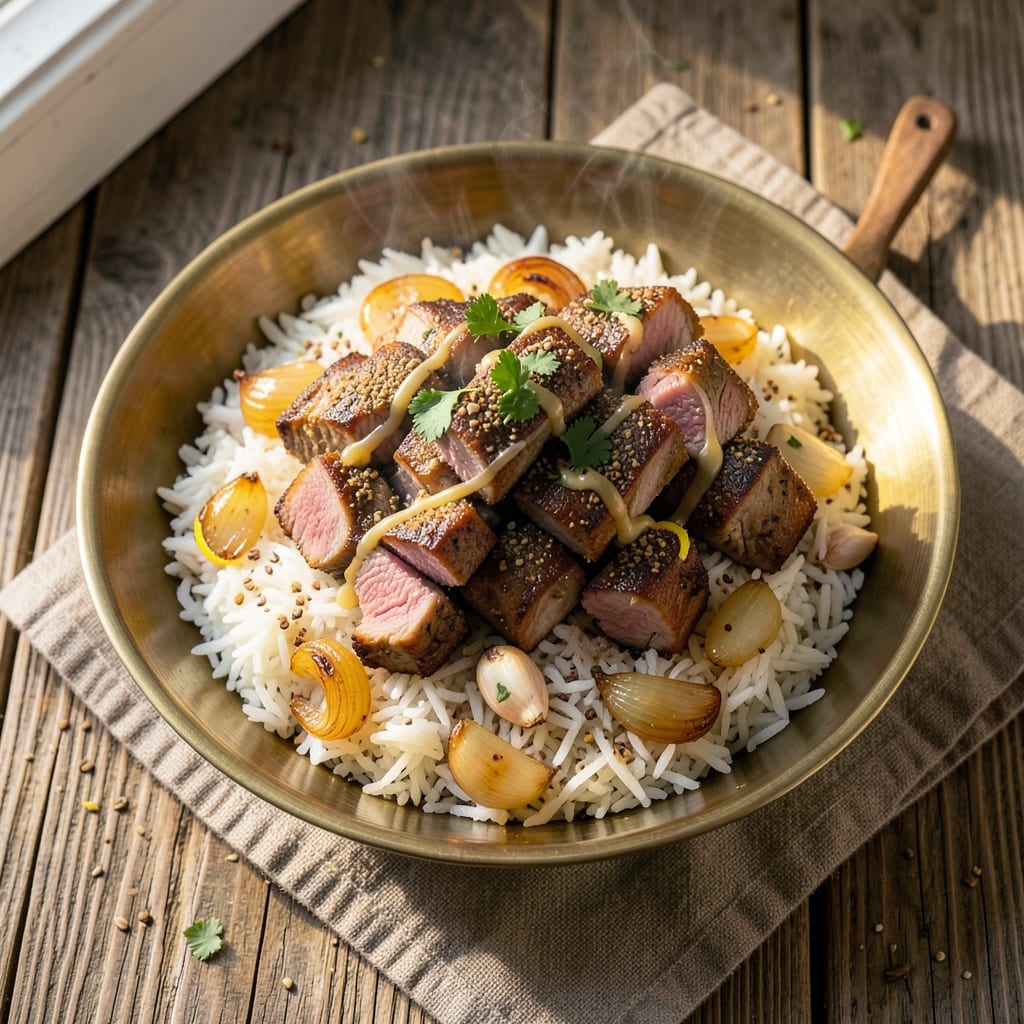
This Arabic kabsa rice recipe brings the heart of Saudi Arabia to your kitchen with its fragrant basmati rice and tender spiced lamb. The dish starts with a marinade of baharat spice blend—warm, earthy, and slightly sweet—that transforms simple lamb into melt-in-your-mouth perfection. What makes kabsa special is the slow-cooking process, where meat simmers in its own juices until fork-tender, while the rice absorbs the rich flavors of cardamom, cloves, and cinnamon.
The key to authentic kabsa lies in the rice-to-liquid ratio and layering technique. Basmati rice is cooked separately in a flavorful broth, then gently folded with the lamb, ensuring every grain stays distinct yet infused with aroma. Fried onions and raisins add texture and sweetness, balancing the dish’s bold spices. This recipe delivers restaurant-quality results with minimal effort—just 45 minutes of active time followed by slow cooking.
By the time you serve this dish, your kitchen will smell like a Middle Eastern feast, and your guests will taste the care in every bite. The lamb remains juicy and flavorful, while the rice is fragrant and perfectly tender. Kabsa is traditionally served with a side of fresh salad or dates, making it a complete, satisfying meal. Let’s create this aromatic masterpiece together.
Whether you're cooking for a gathering or treating yourself to a special meal, this kabsa recipe will impress. The slow-cooked lamb and fragrant rice make it ideal for weeknight dinners or festive occasions. Here’s how to bring the flavors of Arabia to your table.
Ingredients for arabic kabsa rice
Sixteen ingredients to create a dish that smells like a Middle Eastern feast.
| Ingredient | Amount | Notes |
|---|---|---|
| Lamb Shoulder 🥩 | 3 lb | Bone-in, cut into 2-inch cubes |
| Basmati Rice 🍚 | 2 cups | Uncooked, long-grain preferred |
| Yellow Onions 🧅 | 3 whole | Medium size, sliced for frying |
| Garlic Cloves 🧄 | 8 cloves | Minced for marinade |
| Baharat Spice Blend 🌶️ | 2 tbsp | Homemade or store-bought |
| Ground Cumin 🌿 | 1 tbsp | Toasted for deeper flavor |
| Ground Coriander 🌿 | 1 tbsp | Freshly ground preferred |
| Cardamom Pods 🌿 | 6 whole | Lightly crushed, seeds only |
| Cinnamon Sticks 🌿 | 2 whole | For broth infusion |
| Cloves 🌶️ | 4 whole | Lightly crushed |
| Raisins 🍇 | ½ cup | Plump, seedless preferred |
| Chicken Broth 💧 | 4 cups | Low-sodium preferred |
| Olive Oil 🫒 | ½ cup | Extra-virgin for frying |
| Salt 🧂 | 1 ½ tsp | Kosher or sea salt |
| Black Peppercorns 🌶️ | 1 tsp | Freshly cracked |
The lamb is the heart of kabsa, so bone-in shoulder gives you the best flavor and texture. Look for well-marbled cuts at your butcher or the meat department—Costco or Whole Foods usually have great options. If you can't find lamb, beef chuck works in a pinch (though it won't be as authentic). The baharat spice blend is non-negotiable—it's what makes kabsa sing. Penzeys sells a great one, but you can mix your own with cinnamon, cardamom, cloves, and cumin if you're feeling ambitious.
No baharat? Mix 1 tsp each of cinnamon, cumin, coriander, and allspice—it's close enough. The onions need to be fried until golden, so don't rush this step—it adds depth. Raisins might seem odd, but they balance the spices beautifully. If you can't find plump raisins, soak regular raisins in warm water for 10 minutes first. The broth should be low-sodium—you'll be adding plenty of salt during cooking. For extra richness, add a splash of lemon juice to the broth before cooking the rice.
Lamb keeps best in the fridge for 3-4 days before cooking, but you can freeze it for up to 3 months. The cooked kabsa reheats beautifully—just add a splash of water or broth to keep the rice moist. Portion into airtight containers for easy lunches. The rice-to-liquid ratio is critical—measure carefully to avoid mushy grains. If you have leftovers, they're even better the next day as the flavors meld further.
Why You'll Love This Recipe
- One-Pot Wonder: I swear by this recipe—just brown the lamb, toss in the onions and garlic, sprinkle that baharat, then let it all simmer with rice. No extra pots, no stress. The lamb falls apart on its own, and the rice soaks up every last bit of flavor.
- Baharat Magic: That spice blend is the real MVP. It’s not just "spicy"—it’s warm, earthy, and just a little smoky, with notes of cinnamon and cumin that make the lamb taste like it’s been slow-cooking for hours. Honestly, I’ve tried other kabsa recipes, but this one hits different.
- Weeknight Workhorse: Between us, this is my go-to when I need to feed a crowd or prep for the week. The leftovers? Even better the next day—more tender, more flavorful. I’ll make a big batch on Sunday, and by Wednesday, it’s still a hit.
- Budget-Friendly Luxury: Lamb shoulder is cheaper than you think, and a few spices stretch this dish far. I’ve served it at potlucks, family dinners, and even a last-minute dinner party—no one ever guesses how easy it was. (Yes, even on a Tuesday night.)
Step-by-step instructions for Arabic kabsa rice
Here's how to create this aromatic Middle Eastern masterpiece with tender lamb and fragrant rice.
Prepare the Lamb for Maximum Flavor
Cut the 3 lb lamb shoulder into 2-inch cubes and place them in a large bowl. Add the 8 cloves minced garlic cloves, 2 tbsp baharat spice blend, 1 tbsp toasted ground cumin, 1 tbsp freshly ground coriander, 1.5 tsp salt, and 1 tsp freshly cracked black peppercorns. Use your hands to massage the spices into the lamb, ensuring every piece is evenly coated.
Let the lamb marinate at room temperature for 30 minutes while you prepare the remaining ingredients. This step is crucial—it allows the spices to penetrate deeply, creating that signature kabsa flavor. If you're short on time, you can marinate for 15 minutes, but longer is always better.
Sear the Lamb for Rich Depth
Heat 0.25 cup olive oil in a large, heavy-bottomed pot over medium-high heat. Working in batches to avoid crowding, add the marinated lamb and sear for 3-4 minutes per side until deeply browned. The lamb should develop a rich crust—this is where all the flavor begins. Remove the seared lamb and set it aside on a plate.
In the same pot, add 0.25 cup more olive oil and the 3 whole sliced yellow onions. Cook over medium heat for 5-6 minutes, stirring occasionally, until the onions soften and begin to caramelize. This onion base will form the aromatic foundation of your kabsa.
Build the Spiced Rice Base
Add the seared lamb back to the pot along with the 2 cups basmati rice, stirring to coat the grains in the onion-lamb mixture. Pour in the 4 cups chicken broth, ensuring all rice is submerged. Bring to a gentle boil, then immediately reduce heat to low and cover tightly with a lid.
Here's the key: let the rice simmer undisturbed for 15 minutes. This initial cooking period allows the rice to absorb liquid evenly and prevents it from becoming mushy. The broth should reduce slightly, but don't peek or stir—the rice needs this quiet time to develop proper texture.
Incorporate Aromatics and Raisins
After 15 minutes, gently fold in the 6 lightly crushed cardamom pods, 2 whole cinnamon sticks, and 4 lightly crushed cloves using a wooden spoon. These whole spices will infuse the rice with their delicate flavors without overpowering the dish. Add the 0.5 cup raisins and stir gently to distribute them throughout.
Continue cooking on low heat for another 15 minutes, maintaining a gentle simmer. The rice should be 80% cooked by now—it will finish cooking in the residual heat. If you notice the rice is absorbing liquid too quickly, add 2-3 tablespoons of hot water to maintain the proper consistency.
Finish and Rest for Perfect Texture
Once the rice is tender but still has a slight bite (about 30 minutes total cooking time), remove the pot from heat. Let it sit covered for 10 minutes—this resting period allows the rice to absorb any remaining liquid and develop its final texture. The spices will continue to mingle, creating that complex kabsa flavor profile.
Before serving, gently fluff the rice with a fork, being careful not to break the grains. The finished kabsa should have tender lamb pieces scattered throughout, with fragrant rice that's perfectly cooked but still holds its shape. The raisins should be plump and sweet, adding a delightful contrast to the savory lamb and spices.
Pro Tips For Making Arabic Kabsa Rice
- CRISP THE LAMB FIRST: After browning the lamb shoulder, pull it out and sear the meat in a single layer on high heat—no crowding. I used to rush this, and the lamb would steam instead of develop that deep, caramelized crust that carries the baharat flavor. Take your time; this step makes the difference between good and showstopping.
- SOAK RICE 30 MINUTES: Don’t skip soaking basmati rice—30 minutes in warm water (not boiling) removes excess starch and prevents mush. I learned this after a batch turned out gluey, and now my rice stays separate and fluffy. Drain well before cooking, or you’ll end up with a sad, dense pile.
- LOWER HEAT FOR BAHARAT: Add baharat spice blend to the lamb after it’s browned, then simmer on low heat. High heat burns the spices, turning them bitter. My grandmother swore by this, and she was right: the flavors meld gently, not overpower or turn acrid.
- RESERVE LAMB FAT: When skimming fat from the lamb broth, save about 2 tablespoons to finish the rice. Sounds weird, but it works—it adds richness and helps steam the rice evenly. I skip this when I’m lazy, but the dish is noticeably better when I don’t.
Serving suggestions for leftovers
Traditional Garnishes
Finish your kabsa with fried onions for that signature crunch and golden color. Heat 0.25 cup olive oil in a pan over medium heat and fry 1 cup thinly sliced yellow onions until deep golden brown—about 8-10 minutes. Sprinkle them over the top just before serving, or serve them on the side for guests to add to their plates. 🌟
Fresh Contrasts
Balance the rich flavors with a simple cucumber-tomato salad. Toss 2 cups diced cucumbers, 1 cup cherry tomatoes halved, and ¼ cup chopped fresh mint with 2 tbsp lemon juice, 1 tbsp olive oil, and a pinch of salt. The cool, crisp salad cuts through the spiced lamb beautifully.
Date Platter Pairing
Serve kabsa with a mixed date platter for an authentic touch. Include Medjool dates stuffed with almonds, Barhi dates with cardamom, and Deglet Noor dates with a sprinkle of sea salt. The natural sweetness complements the savory-spiced rice perfectly. 🍇
Yogurt Dip Option
Offer a cooling mint yogurt dip on the side. Mix 1 cup plain Greek yogurt with 1 tbsp lemon juice, 1 tbsp chopped fresh mint, and a pinch of salt. This creamy dip helps balance the heat and adds a refreshing contrast to each bite.
Beverage Pairings
Pair your kabsa with Arabic coffee or mint tea for an authentic experience. For a modern twist, serve a sparkling pomegranate juice—its tartness cleanses the palate between bites. Avoid heavy wines; instead, opt for a crisp white wine like Sauvignon Blanc if you prefer alcohol.
Plating Presentation
Serve kabsa in a large communal dish for a festive feel, or portion into individual plates with the lamb and rice layered neatly. Garnish with extra fried onions and a sprinkle of toasted cumin seeds for visual appeal. Use a wooden serving spoon to scoop portions for an authentic touch.
Nutrition facts
Frequently asked questions
Can I substitute chicken for lamb in this recipe?
Yes, you can use bone-in chicken thighs instead of lamb for a milder flavor. Marinate the chicken for 20 minutes (instead of 30) since it cooks faster, and reduce the baharat spice blend to 1.5 tbsp to balance the flavor. The cooking time will also be shorter—aim for 25-30 minutes total instead of 45.
Why does my kabsa rice turn out mushy?
Mushy rice usually happens from stirring too much or using too much liquid. The key is to let the rice cook undisturbed for 15 minutes after adding broth, then only stir gently when adding whole spices. Use a 1:1.5 rice-to-broth ratio (2 cups rice to 3 cups broth) and avoid lifting the lid during cooking.
How do I make kabsa in a rice cooker?
You can adapt this recipe with a few adjustments. Sear the lamb and onions as directed, then transfer everything to your rice cooker. Use 2 cups rice and 2.5 cups broth (instead of 4 cups). Cook on the white rice setting, but add the whole spices and raisins 5 minutes before the cooking cycle ends. Let it rest 10 minutes after cooking.
What's the best way to reheat kabsa?
Reheat kabsa gently to prevent drying out. Place leftovers in an oven-safe dish with 2 tbsp broth or water per cup of rice, cover with foil, and bake at 300°F for 20 minutes. For stovetop reheating, use low heat with a splash of liquid and stir carefully to avoid breaking the rice grains.
Can I make kabsa ahead of time?
Kabsa actually tastes better the next day as flavors meld! Cook it completely, then store in an airtight container in the fridge for up to 3 days. The rice will firm up slightly—just add a splash of water and reheat gently. For longer storage, freeze portions for up to 3 months, thawing overnight in the fridge before reheating.