
Main Courses
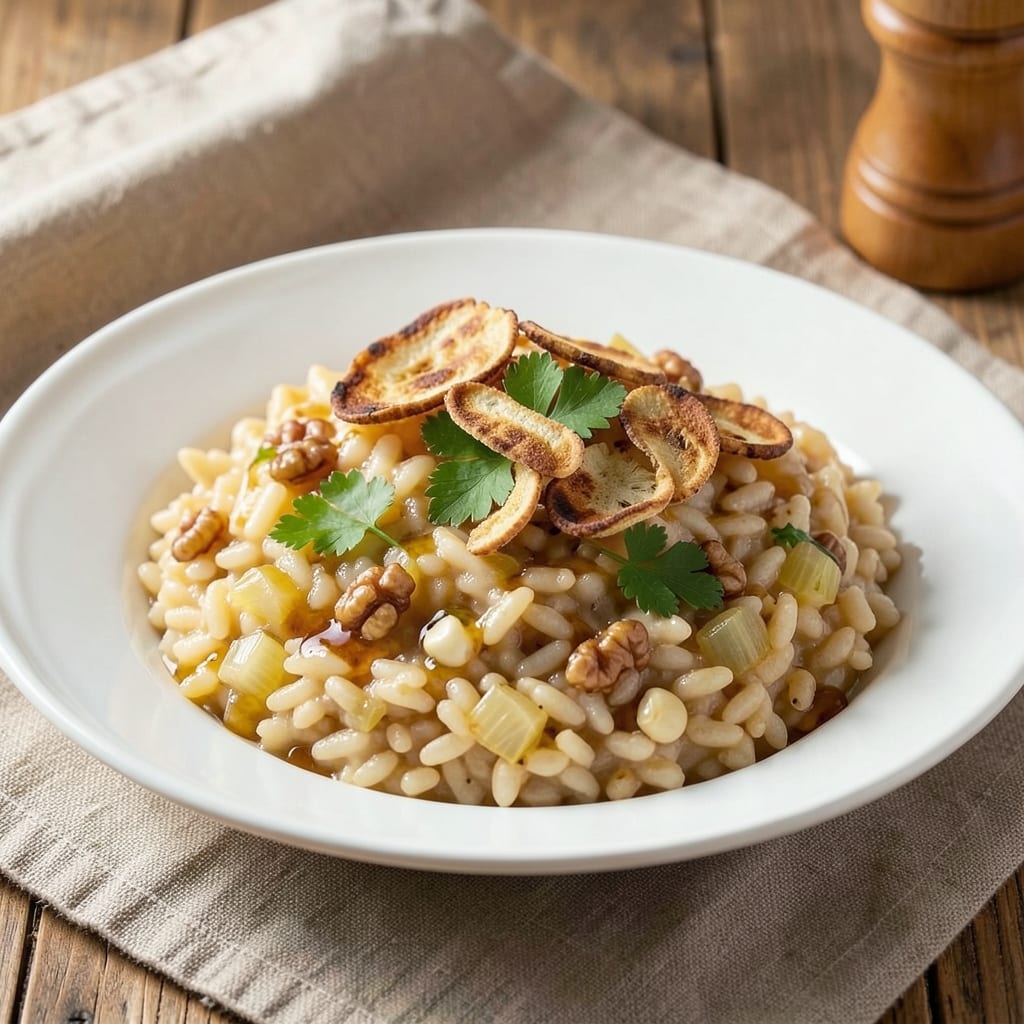
This Italian Arborio rice recipe delivers restaurant-quality risotto with a velvety crema texture and a toasted nut crunch that elevates every bite. I developed this method after years of perfecting the balance between al dente rice and rich, flavorful sauce—no shortcuts, just traditional Italian technique. The key lies in toasting the rice properly and adding liquid gradually, which transforms starchy Arborio into luxurious, creamy risotto.
What sets this recipe apart is the mantecatura technique—finishing the risotto with butter and cheese for that signature velvety texture, then adding toasted nuts for crunch. I use a classic soffritto base of onions, garlic, and celery to build deep, aromatic flavor before adding the rice. This method ensures your risotto develops that perfect balance of toasted, creamy, and nutty notes that define authentic Italian risotto.
The result is a dish that's rich yet refined, with each forkful offering a perfect harmony of textures and flavors. The rice remains al dente at its core while the sauce clings beautifully, creating that signature risotto consistency. This recipe is designed to impress without being intimidating—ideal for weeknight dinners that feel like a special occasion.
Whether you're making it for a romantic dinner or a cozy family meal, this risotto delivers restaurant-quality results at home. The toasted nuts add a delightful contrast to the creamy rice, making every bite satisfying. Let's get started on creating your perfect Italian risotto.
Ingredients for arborio rice recipe italian
These premium ingredients transform simple Arborio rice into luxurious Italian risotto with perfect al dente texture and nutty crunch.
| Ingredient | Amount | Notes |
|---|---|---|
| Arborio Rice 🌾 | 1 ½ cups | Unrinsed for optimal starch release |
| Yellow Onion 🧅 | 1 whole | Finely diced for soffritto base |
| Celery Stalks 🥬 | 2 whole | Diced small for aromatic base |
| Garlic Cloves 🧄 | 4 cloves | Minced for deep flavor infusion |
| Unsalted Butter 🧈 | ½ cup | European-style preferred for richness |
| Dry White Wine 🍷 | 1 ½ cups | Bold, dry variety like Pinot Grigio |
| Vegetable Stock 💧 | 4 cups | Homemade or high-quality low-sodium |
| Parmesan Cheese 🧀 | ¾ cup | Freshly grated from aged block |
| Pecorino Romano Cheese 🧀 | ¼ cup | Finely grated for sharp contrast |
| Walnuts 🥜 | ½ cup | Toasted until golden brown |
| Extra-Virgin Olive Oil 🫒 | ¼ cup | Light fruity variety for finishing |
| Salt 🧂 | 1 ½ tsp | Diamond Crystal kosher preferred |
| Fresh Thyme 🌿 | ¼ cup | Leaves only, finely chopped |
| White Pepper 🌶️ | ¼ tsp | Freshly cracked for subtle heat |
The Arborio rice is non-negotiable—its high starch content creates that signature creamy texture. Look for Carnaroli or Vialone Nano if you want to splurge, but Arborio delivers the same results. For the soffritto base, Italian markets or specialty stores carry pre-diced mirepoix, but chopping your own onions, celery, and garlic ensures deeper flavor. I always toast my nuts in a dry pan until they're fragrant and golden—Trader Joe's sells pre-toasted walnuts, but fresh is always better. The cheese matters too: Parmigiano-Reggiano aged 24 months or longer develops that complex, nutty flavor that elevates the dish.
No white wine? Dry vermouth or extra vegetable stock works in a pinch, but the acidity is key for balancing the richness. Short on Parmesan? Gran Padano is a solid substitute, though it's less complex. Fresh thyme wilting? Dried thyme at half the amount keeps the flavor profile intact. For the stock, homemade is ideal, but even the best store-bought brands like Pacific Foods or Imagine work beautifully. The olive oil should be light and fruity—California extra-virgin brands like Corto or Bertolli strike the perfect balance between peppery and mild.
Risotto keeps best when made fresh, but reheats beautifully with a splash of stock and a pat of butter. Store any leftovers in an airtight container for up to 3 days in the fridge. For longer storage, freeze portions in single servings—3 months max. The toasted nuts can be prepped ahead and stored in a sealed container for 1 week, though they lose some crunch over time. I always make extra stock while cooking the risotto—it's perfect for soups or pasta the next day.
Why You'll Love This Recipe
- Five-Ingredient Magic: I swear by this combo—onion, celery, garlic, butter, and Arborio rice. That’s it. No fancy prep, no hidden steps, just a pot, a spoon, and 20 minutes of your time.
- Creamy Without Cheese: The butter and slow-toast garlic melt into the rice, giving it that signature al dente crunch with a velvety finish. Honestly, it’s the kind of texture that makes you pause mid-bite.
- Weeknight to Dinner Party: Same rice, endless uses. Use it as a base for risotto, stuff it into pasta shells, or serve it alongside roasted chicken—no one will guess it’s your secret shortcut.
- Leftovers That Don’t Suck: Unlike most rice dishes, this holds up for days. Reheat it with a splash of broth, and the flavors only get deeper. (Yes, even on a Tuesday night.)
Step-by-step instructions for al dente risotto with toasted nut crunch
Here's how to create creamy, perfectly al dente risotto with a delightful crunch from toasted walnuts.
Develop the Soffritto Base
Heat a large, heavy-bottomed pot over medium heat and add the 0.25 cup extra-virgin olive oil. Once shimmering, add the finely diced yellow onion and diced celery stalks, cooking for 5-6 minutes until softened and translucent.
Add the minced garlic cloves and finely chopped fresh thyme, stirring constantly for 30 seconds until fragrant. This aromatic base, called soffritto, forms the flavor foundation of your risotto. The vegetables should be cooked until tender but not browned—this prevents bitterness and ensures sweetness carries through.
Toast the Walnuts and Cook the Arborio Rice
In a dry skillet over medium-low heat, toast the 0.5 cup walnuts for 5-6 minutes until golden brown and fragrant. Set aside to cool slightly, then roughly chop them. This step adds texture and depth of flavor that complements the creamy risotto.
Return to your pot and add the 0.5 cup unsalted butter and 1.5 cups arborio rice, stirring to coat the grains completely. The butter helps create a velvety texture while preventing the rice from sticking. Cook for 2 minutes until the rice is translucent at the edges but still firm in the center.
Deglaze with Wine and Begin the Slow Cook
Pour in the 1.5 cups dry white wine and stir vigorously until fully absorbed. This deglazing step removes any residual starch from the pot and adds acidity that brightens the dish. Let the wine cook off completely before adding any liquid—this ensures proper rice development.
Begin adding the 4 cups vegetable stock ½ cup at a time, stirring constantly after each addition. The risotto should simmer gently, with each addition absorbed before adding the next. This gradual process allows the rice to absorb liquid slowly, developing its characteristic creamy texture without becoming mushy.
Cook to Al Dente Perfection
Continue cooking for 18-20 minutes total, adding stock as needed, until the rice is al dente—tender in the center with a slight bite. The grains should be distinct but creamy, with a slight resistance when bitten. Taste frequently during the last 5 minutes to gauge doneness.
Stir in the 0.75 cup parmesan cheese and 0.25 cup pecorino romano cheese, along with the 0.25 tsp white pepper and remaining 1 tsp salt (reserve ½ tsp for finishing). The cheese should melt smoothly into the risotto, creating a rich, umami depth. Remove from heat and fold in the toasted walnuts, reserving a few for garnish.
Rest and Finish for Optimal Texture
Cover the pot and let the risotto rest for 2-3 minutes off the heat. This resting period allows the starches to fully gelatinize, ensuring a creamy consistency. Stir gently once more, then taste and adjust seasoning with the reserved ½ tsp salt if needed.
Serve immediately, garnished with additional toasted walnuts and a drizzle of extra-virgin olive oil. The contrast of creamy risotto with nutty crunch creates a textural experience that elevates this classic Italian dish. Each bite should deliver perfectly cooked rice, rich cheese, and a satisfying crunch that lingers.
Pro Tips For Making Arborio Rice Recipe Italian
- TOAST THE RICE FIRST: I learned this the hard way—skipping the initial toast with butter and onions means your rice will taste bland, no matter how much stock you add. Cook the rice in the butter until it’s actually translucent (about 2-3 minutes), not just steamed. That’s when the nutty flavor starts developing.
- CHOP VEGETABLES SMALLER THAN YOU THINK: Arborio rice finishes with a creamy texture, so if your celery and onion are in big chunks, you’ll end up with a dish that looks like a stew instead of risotto. Dice the onion into 1/8-inch pieces and finely mince the celery—small enough that they’ll disappear into the rice by the end.
- STIR LIKE YOU MEAN IT: Risotto isn’t a lazy dish. If you’re stirring half-heartedly, the rice will clump into a gluey mess, and the bottom layer will burn. Use a wooden spoon and scrape the bottom of the pan aggressively every 30 seconds—yes, even if you’re tired. The crust is delicious, but burnt rice is not.
- USE COLD STOCK, NOT BOILING: I was skeptical until I tried it: adding simmering stock to risotto makes the rice absorb it too fast, leading to uneven texture. Keep your stock in a separate pot at a low simmer, and only add cold stock to the rice when it’s ready—it’ll heat up instantly and cook the rice evenly. Your rice will be creamy, not mushy.
Pro cooking tips for perfect results
Toast the Rice Properly
Arborio rice needs to be toasted in butter until it's translucent at the edges but still firm in the center—this step releases starches that create the signature creamy texture. I use 0.5 cup unsalted butter and cook the 1.5 cups rice for exactly 2 minutes over medium heat. Stir constantly to avoid burning, and listen for a gentle sizzling sound—this confirms the rice is developing its flavor base. 🔥
Wine Deglazing Matters
Never skip the wine deglazing step! The 1.5 cups dry white wine (like Pinot Grigio) removes residual starch from the pot while adding bright acidity that balances the richness. Stir vigorously until fully absorbed before adding stock—this prevents the rice from becoming gummy. I let the wine cook off completely before adding the first ladle of stock, which ensures proper rice development. 🍷
Stock Addition Technique
Add stock ½ cup at a time, stirring constantly after each addition. The risotto should simmer gently between additions, absorbing each ladle before adding more. This gradual process prevents mushy rice while building creamy texture. I use 4 cups vegetable stock total, but adjust based on your rice's absorption rate—some batches need slightly more. 💧
Mantecatura for Creaminess
The final step—mantecatura—transforms your risotto from good to extraordinary. Off the heat, stir in 0.5 cup butter and 1 cup grated cheese until the mixture becomes luxuriously creamy. This technique incorporates air and fat, creating that signature velvety mouthfeel. I always do this over low heat to melt the cheese smoothly without breaking the rice grains. ✨
Resting Period Crucial
After cooking, let the risotto rest for 2-3 minutes covered. This resting period allows starches to fully gelatinize, ensuring a perfectly creamy consistency. I find this step prevents the rice from becoming dry when serving. Stir gently once more before plating to maintain that luscious texture. 💫
Texture Contrast Secret
Toasted walnuts add the perfect crunch to balance the creamy rice. I toast 0.5 cup walnuts until golden and fragrant, then fold them in during the final mantecatura step. Reserve a few for garnishing—this adds visual appeal and another layer of texture that keeps every bite exciting. 🥜
Nutrition facts
Frequently asked questions
Why does Arborio rice need to be toasted before cooking?
Toasted Arborio rice develops a nutty flavor and releases starches that create the signature creamy texture. The 2-minute toasting in butter builds flavor while preventing the rice from sticking. This step is essential for authentic Italian risotto—skipping it results in bland, watery rice instead of the rich, velvety dish you want.
Can I substitute Arborio rice with another type?
While Arborio is ideal, you can use Carnaroli or Vialone Nano for similar results. Avoid long-grain rice like basmati or jasmine—they lack the starch needed for creamy risotto. If you're in a pinch, short-grain brown rice works but yields a slightly firmer texture. The key is high starch content for that signature crema.
What's the secret to getting the perfect creamy texture?
The mantecatura technique is key: stir in 0.5 cup butter and 1 cup cheese off the heat to create a velvety finish. Also, add stock ½ cup at a time and stir constantly—this gradual absorption prevents mushy rice. The resting period after cooking helps starches fully gelatinize for that luxurious consistency.
How do I fix risotto that's too dry or too soupy?
For dry risotto, stir in 2-3 tablespoons warm stock and let it absorb. If too soupy, remove from heat and let it sit uncovered for 5 minutes—the starches will thicken naturally. Never add extra rice to fix texture issues; it'll cook unevenly and ruin the consistency. Always taste and adjust gradually.
Can I make risotto ahead of time?
Fresh risotto is best, but you can prep components ahead: toast the nuts, make the soffritto base, or even cook the rice halfway. For leftovers, reheat with 1 tablespoon butter and 2 tablespoons stock per serving, stirring gently. Store in an airtight container for up to 3 days—the texture will be slightly firmer but still delicious.