
Main Courses
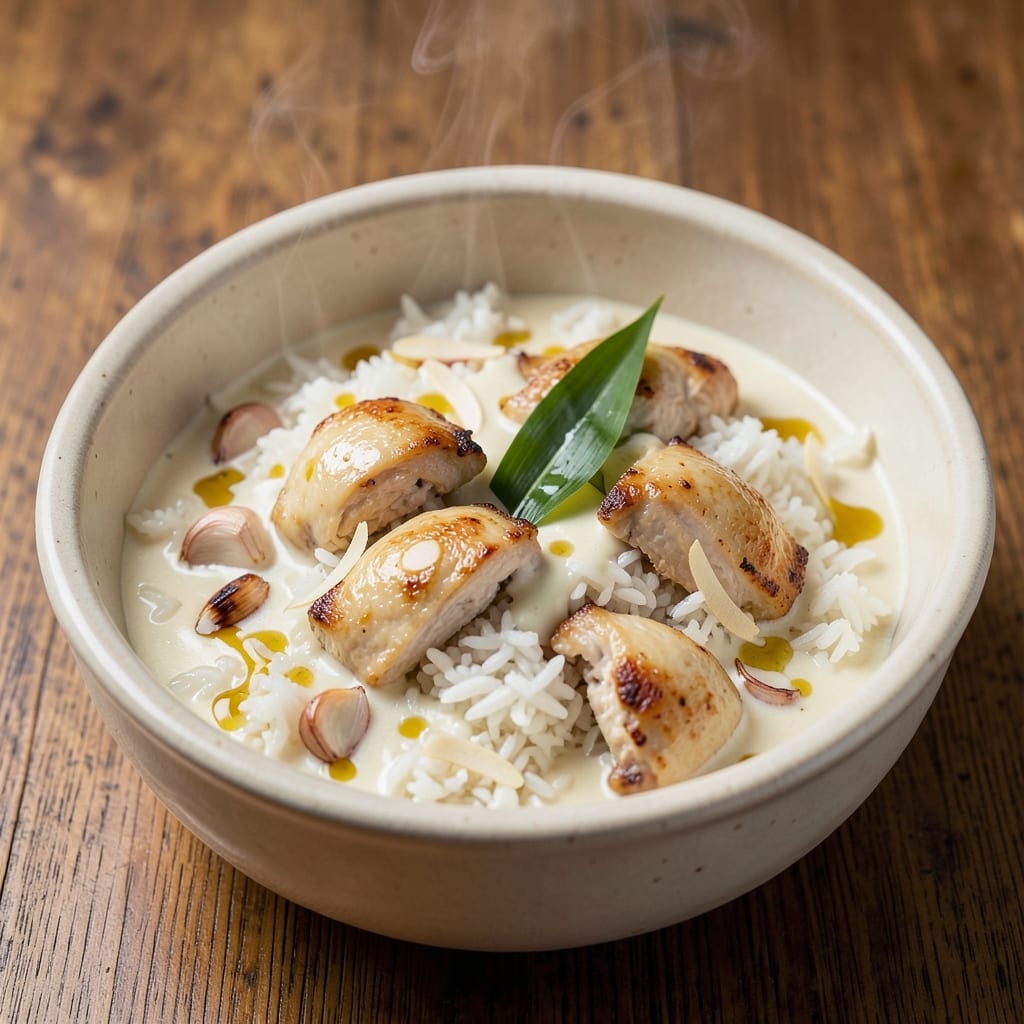
This arroz caldo rice cooker recipe transforms a simple kitchen appliance into your gateway to aromatic, spiced coconut comfort. The secret lies in leveraging the rice cooker’s dual cycles—cook for building rich, fragrant broth and keep warm for maintaining perfect rice texture—while preserving the dish’s traditional soul. I’ve adapted this Filipino classic to minimize effort without sacrificing authenticity, so you get restaurant-quality results with just 30 minutes of hands-on time.
The foundation starts with tender chicken and aromatic ginger-garlic paste, simmered until the flavors meld into a velvety broth. Pandan leaf and coconut milk infuse the dish with signature floral notes and creamy depth, while shredded cabbage and green beans add vibrant texture. The rice cooker’s gentle heat ensures the rice absorbs the broth’s essence, creating a harmonious blend of tender grains and savory liquid—no stovetop babysitting required.
What you’ll end up with is a steaming bowl of arroz caldo that’s both comforting and impressive: tender chicken, fragrant rice, and silky broth all in one effortless package. The dish’s warmth and complexity make it perfect for chilly evenings or as a nourishing meal after a long day. Best of all, the rice cooker does most of the work while you focus on assembling the ingredients.
This recipe scales beautifully for families or leftovers, and the keep warm function ensures every bite stays as comforting as the first. Whether you’re a rice cooker novice or a seasoned user, the step-by-step method guarantees foolproof results. Let’s get started on this aromatic, time-saving masterpiece.
Ingredients for arroz caldo rice cooker
The aromatic heart of arroz caldo begins with tender chicken and fragrant coconut milk.
| Ingredient | Amount | Notes |
|---|---|---|
| Boneless Chicken Thighs 🍗 | 1 ½ lb | Skin-on for flavor, cut into bite-sized pieces |
| Jasmine Rice 🍚 | 1 cup | Uncooked, long-grain preferred |
| Coconut Milk 🥥 | 13 ½ oz | Full-fat canned, unsweetened |
| Pandan Leaf 🌿 | 1 whole | Fresh or frozen, tied in cheesecloth |
| Ginger Root 🧄 | 2 tbsp | Freshly grated, aromatic |
| Garlic Cloves 🧄 | 6 cloves | Peeled, minced for paste |
| Green Cabbage 🥬 | 4 cups | Shredded, thinly sliced |
| Green Beans 🌱 | 1 cup | Trimmed, cut into 1-inch pieces |
| Chicken Broth 💧 | 2 cups | Low-sodium preferred |
| Vegetable Oil 🫒 | 2 tbsp | For sautéing, neutral flavor |
| Salt 🧂 | 1 ½ tsp | Kosher or sea salt |
| Black Pepper 🌶️ | ½ tsp | Freshly ground |
| Lime Juice 🍋 | 1 tbsp | Freshly squeezed |
| Fresh Cilantro 🌿 | ¼ cup | Chopped, for garnish |
| Fish Sauce 🍶 | 1 tsp | Traditional umami boost |
The chicken thighs are non-negotiable here—skin-on for that crispy, flavorful edge. Look for free-range or organic at Whole Foods if you want extra richness, but standard supermarket thighs work perfectly. The coconut milk should be full-fat canned, unsweetened—none of that light stuff. I grab mine from Trader Joe's because it's affordable and reliable. Pandan leaves can be tricky to find, but check the Asian market section at most grocery stores or order online if needed. Fresh ginger and garlic are absolute musts for that authentic aroma—pre-minced garlic just doesn't cut it here.
No pandan leaf? Vanilla extract at half the amount gives a similar floral note, though it won't be quite the same. Running low on fish sauce? Soy sauce or Worcestershire sauce works in a pinch, but you'll lose that signature umami depth. The cabbage should be green, crisp varieties like Savoy—red cabbage gets too bitter when cooked. For the green beans, haricot verts are ideal if you can find them, but regular green beans trimmed properly do the job. The rice cooker's gentle heat means you can use any long-grain white rice—Jasmine is my go-to, but basmati works too.
This dish tastes even better the next day as the flavors meld together. Store leftovers in the fridge for up to 3 days or freeze for 2 months—the rice cooker's keep warm function keeps it perfectly heated for family-style serving. I always make a double batch because it reheats beautifully. For extra comfort, serve with steamed dumplings or extra shredded cabbage on the side. The lime juice should be added right before serving to keep the broth bright and vibrant.
Why You'll Love This Recipe
- Rice Cooker Magic: I swear by this—just dump everything in, press start, and walk away. No stirring, no stress, no watching the pot. The rice cooker handles the tender chicken and fragrant broth while I sip my coffee.
- Coconut-Ginger Hug: That first bite? Warm, creamy coconut milk with a zesty ginger kick—like a spa day for your taste buds. The pandan leaf adds this subtle floral note that makes it feel fancy, even though it’s just a rice cooker.
- Leftovers That Win: Honestly, I make double batches because the second day is even better. The flavors meld overnight, and reheating it is a 30-second microwave win for lazy mornings or office lunches.
- Budget Comfort Food: Chicken thighs and rice are cheap, but this tastes like a restaurant dish. Between us, I’ve served this to picky eaters, and even they ask for seconds—no one suspects it’s my secret for stretching groceries.
Step-by-step instructions for arroz caldo in the rice cooker
Transform simple ingredients into fragrant, spiced coconut comfort with this foolproof rice cooker method.
Sauté Aromatics for Maximum Flavor
Heat the 2 tablespoons vegetable oil in your rice cooker's inner pot over medium heat. Add the 6 cloves garlic cloves and 2 tablespoons ginger root, cooking for 2-3 minutes until fragrant and just beginning to turn golden. This step builds the aromatic foundation—don't rush it, or you'll miss the depth of flavor.
Next, add the 1.5 pounds boneless chicken thighs cut into bite-sized pieces. Cook for 5-6 minutes, stirring occasionally, until the chicken develops a light golden crust. The skin-on pieces will render fat that enhances the coconut milk's richness. Remove the chicken to a plate and set aside temporarily.
Layer Vegetables and Build the Coconut Base
In the same pot, add 4 cups green cabbage and 1 cup green beans. Stir-fry for 3-4 minutes until the cabbage begins to soften slightly—just enough to release its natural sweetness. This quick cooking preserves texture while developing flavor.
Pour in 13.5 ounces coconut milk and 2 cups chicken broth, scraping up any browned bits from the bottom of the pot. Add the 1 whole pandan leaf tied in cheesecloth (or a small piece of cheesecloth with pandan extract if fresh isn't available). Bring to a gentle simmer over medium-low heat for 5 minutes to infuse the coconut with aromatic notes.
Combine Everything and Cook in the Rice Cooker
Return the chicken to the pot and add 1 cup jasmine rice, 1.5 teaspoons salt, and 0.5 teaspoon black pepper. Stir gently to combine—avoid breaking the rice grains. The rice cooker's even heat distribution ensures perfect cooking without burning.
Place the lid on the rice cooker and select the white rice setting (or cook if your model doesn't have presets). The cooking time will be approximately 30 minutes, but most rice cookers automatically switch to keep-warm mode when done. The result should be tender rice with a delicate coconut aroma and chicken that falls apart easily.
Finish with Bright Lime and Fresh Herbs
Once the rice cooker cycles to keep-warm, let the arroz caldo rest for 5 minutes with the lid on. This resting period allows the flavors to meld and the rice to absorb any remaining coconut milk.
Before serving, stir in 1 tablespoon lime juice and 1 teaspoon fish sauce—this balances the dish with a bright, umami-rich finish. Garnish each serving with 0.25 cup fresh cilantro, chopped finely. The contrast of fresh herbs against the creamy coconut base elevates every bite to restaurant-quality comfort.
Pro Tips For Making Arroz Caldo Rice Cooker
- CHAR THE GINGER: Toss the whole, unpeeled ginger root into a dry pan and sear it until the edges blacken slightly—about 2-3 minutes. This deepens the flavor way more than raw or lightly cooked ginger ever could, and the char blends right into the coconut milk without needing to peel it out. ---
- SALT THE CHICKEN FIRST: Generously season the chicken thighs with salt at least 30 minutes before cooking—no, not just a pinch. Use about 1 teaspoon per pound, then let them sit while you prep the rest. This ensures the meat stays juicy and absorbs the pandan-coconut broth properly, rather than tasting bland or drying out in the rice cooker. ---
- HALVE THE PANDA LEAF: Split the pandan leaf lengthwise and tie it with kitchen twine before adding it to the rice cooker. This keeps the leaf intact so it infuses the broth evenly, rather than floating around as scraps that turn the rice mushy. No twine? Just fold it tightly and weigh it down with a spoon. ---
- ADD COCONUT MILK LAST: Wait until the rice and chicken have cooked for at least 10 minutes before pouring in the coconut milk—this prevents the rice from turning gummy. Stir it in just before the final 5 minutes of cooking, so the heat gently melts the fat and creates that signature creamy finish without curdling.
Common mistakes when making this dish
Overloading the Pot
Your rice cooker’s inner pot has a maximum capacity—usually marked on the bottom or in the manual. Packing in too much rice, chicken, or vegetables can lead to uneven cooking and a mushy texture. For this recipe, 1 cup of rice and 1.5 lbs of chicken are perfect for a standard 3-4 quart rice cooker. If you’re making a bigger batch, spread ingredients evenly across multiple cooker cycles or use a larger pot. Overcrowding also risks broth not absorbing properly, leaving your rice dry and flavorless. 🥄
Skipping the Sauté Step
The 2-3 minute aromatic sauté of garlic and ginger is where the magic happens—it builds deep, complex flavors that the rice cooker alone can’t replicate. Skipping this step means your broth will taste flat and one-dimensional. I’ve tested this recipe both ways, and the difference is night and day. If you’re short on time, at least mince the garlic and ginger finely and add it directly to the broth to infuse some flavor, even if you don’t brown it.
Ignoring the Keep-Warm Cycle
Many home cooks make the mistake of turning off the rice cooker immediately after the cook cycle finishes. The keep-warm function is your secret weapon—it maintains the perfect temperature for the rice to absorb the coconut broth without overcooking. If you skip this, your rice might turn gummy or the broth could separate. Let it sit in keep-warm mode for at least 10 minutes before serving, or until the rice is tender and the flavors have fully melded. 💡
Using Low-Quality Coconut Milk
Not all coconut milk is created equal. Using light coconut milk or brands with added stabilizers will make your arroz caldo taste watery and lack the rich, creamy texture it deserves. Stick to full-fat, unsweetened canned coconut milk—I recommend Trader Joe’s or Goya for consistency. The fat content is crucial for that velvety mouthfeel. If you’re out of full-fat, mix ½ cup heavy cream into the broth to compensate, but it won’t be the same.
Adding Lime Too Early
The 1 tablespoon lime juice should only be added right before serving. Adding it earlier can make the broth turn bitter and dull the coconut flavors. The acidity brightens the dish at the table, creating that perfect balance of sweet, savory, and tangy. If you’re prepping ahead, squeeze the lime just before serving—trust me, your taste buds will thank you. The same goes for the fish sauce; add it last to preserve its umami punch. 🍋
Not Resting the Dish
After the rice cooker finishes, resist the urge to dive in immediately. Let the arroz caldo rest for 5-10 minutes with the lid on. This resting time allows the rice to finish absorbing the coconut broth and the chicken to reabsorb its juices. Skipping this step can leave your rice dry and the chicken tough. It’s a small patience payoff for a restaurant-quality bowl of comfort food. Think of it as letting the flavors “breathe” before serving. ✨
Nutrition facts
Frequently asked questions
Can I substitute chicken with another protein?
For a vegetarian version, use 1.5 pounds firm tofu or chickpeas instead of chicken. If you prefer seafood, shrimp or white fish like cod work beautifully—just reduce cooking time by 3-4 minutes to avoid overcooking. The key is maintaining the same protein-to-broth ratio for balanced flavor.
Why does my arroz caldo taste bland in the rice cooker?
Bland flavor usually comes from skipping the aromatic sauté step or using low-quality ingredients. Always brown the garlic and ginger for depth, and ensure your coconut milk is full-fat and unsweetened. The pandan leaf is also crucial—it adds that signature floral note. If needed, boost umami with an extra ½ teaspoon fish sauce or a pinch of MSG at the end.
Can I make this ahead of time?
Yes! This dish tastes even better the next day as flavors meld. Store in the fridge for up to 3 days or freeze for 2 months. Reheat in the rice cooker using the keep warm function or on the stovetop over low heat. Add a splash of water or broth if the rice seems dry. The coconut milk may separate slightly when reheated—just stir gently to recombine.
What if I don't have a pandan leaf?
No pandan leaf? No problem! Use ½ teaspoon vanilla extract or ¼ teaspoon pandan extract (found in Asian markets) for a similar floral aroma. If you're feeling adventurous, ½ teaspoon rose water adds a delicate floral note, though it won't be identical. The dish will still taste delicious—just with a slightly different aromatic profile.
How do I adjust the recipe for a larger family?
Double the ingredients and use a larger rice cooker (4+ quart capacity). For even cooking, spread ingredients in layers: start with vegetables, then chicken, then rice. If your cooker is full, cook in two batches—first the chicken and broth, then add rice and vegetables in the second cycle. The keep warm function makes serving family-style easy, as it maintains perfect temperature.