
Main Courses
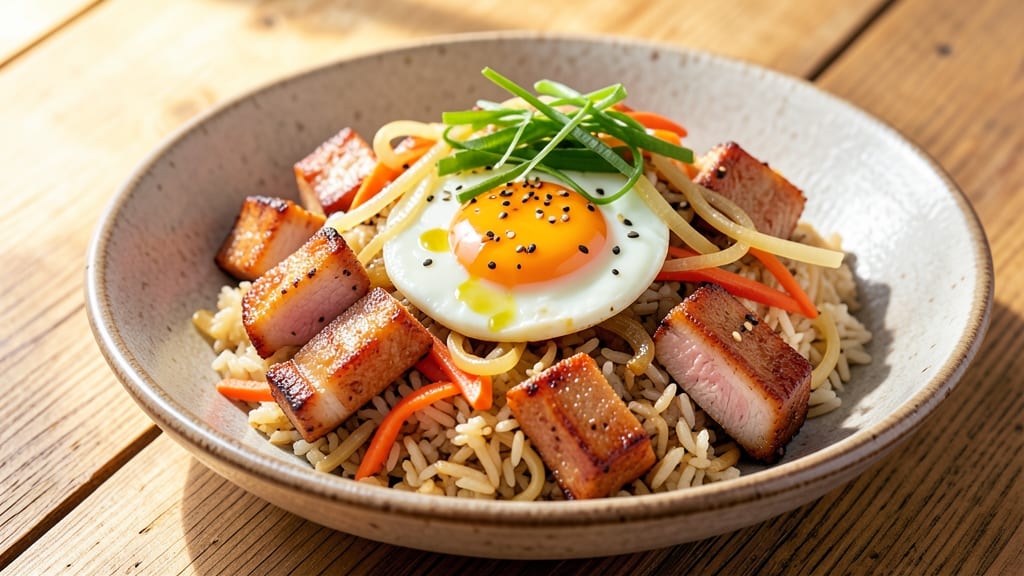
This Buldak fried rice recipe delivers the perfect balance of crispy pork, silky egg ribbons, and perfectly seasoned rice—just like your favorite Korean restaurant. The secret lies in properly cooking the pork belly until tender yet crispy, then combining it with day-old rice, aromatic vegetables, and a savory-sweet sauce.
Korean flavors shine through with gochujang, sesame oil, and a touch of garlic that transforms ordinary rice into a restaurant-worthy dish.
What sets this recipe apart is the technique: first searing the pork belly until caramelized, then stir-frying everything together in one pan for maximum flavor infusion. The egg ribbons add a delicate texture that contrasts beautifully with the crunchy pork and tender rice.
With just 30 minutes of active cooking time, you'll have a dish that's rich, satisfying, and packed with authentic Korean taste—no shortcuts needed.
Ingredients for buldak fried rice
Four cups of day-old rice and crispy pork belly form the heart of this restaurant-style Buldak fried rice.
| Ingredient | Amount | Notes |
|---|---|---|
| Day-Old Cooked White Rice 🍚 | 4 cups | Cold, preferably jasmine or short-grain |
| Pork Belly 🥓 | 8 oz | Skin-on, cut into 1-inch cubes |
| Large Eggs 🥚 | 4 whole | Fresh, room temperature |
| Yellow Onion 🧅 | 1 whole | Thinly sliced, about 1 cup |
| Carrot 🥕 | 1 whole | Julienned into thin matchsticks |
| Green Onion 🌱 | 3 whole | White and green parts separated |
| Garlic Cloves 🧄 | 4 cloves | Minced, for aromatic base |
| Sesame Oil 🫒 | 1 tbsp | Toasted, for nutty aroma |
| Gochujang 🌶️ | 1 ½ tbsp | Korean red pepper paste |
| Soy Sauce 🍶 | 2 tbsp | Korean or Japanese preferred |
| Vegetable Oil 🫒 | 3 tbsp | High smoke point for frying |
| Sesame Seeds 🌾 | 1 tbsp | Toasted, for garnish |
| Salt 🧂 | ½ tsp | Kosher or sea salt |
| Black Pepper 🌶️ | ¼ tsp | Freshly ground |
| Rice Vinegar 🍶 | 1 tsp | For brightness |
The pork belly is non-negotiable for authentic texture—look for thick-cut slices with visible fat marbling at Korean markets or well-stocked Asian grocery stores like H Mart. If using supermarket pork belly, trim excess fat to about 1/4-inch thickness for even cooking. The day-old rice should be completely cooled and slightly dry; microwave it for 30 seconds if clumpy. For the gochujang, brands like Maesil or Dongwon deliver the most balanced sweet-spicy profile, though any quality Korean red pepper paste will work. Garlic should be fresh and minced just before cooking to preserve its aromatic oils.
No sesame oil? Toasted peanut oil works in a pinch, though the flavor will differ slightly. Substitute sriracha for gochujang if unavailable, but reduce to 1 tbsp and add 1/2 tsp sugar to balance heat. For the egg ribbons, separate yolks and whites—whites should be whipped to soft peaks before gently folding in yolks. The green onions can be swapped for scallions, but the white parts add crucial flavor. If your rice is too moist, spread it on a tray and let it air-dry for 10 minutes before cooking. Vegetable oil is ideal, but avocado oil has a higher smoke point for extra safety.
Store leftovers in an airtight container for up to 3 days in the fridge, though the texture softens after day one. For freezing, portion into single servings and reheat in a skillet with a splash of water to restore crispiness. The pork belly can be pre-cooked and stored separately for 2 days, while the egg mixture should be made fresh or kept refrigerated for 1 day. Garnish with extra sesame seeds and a drizzle of sesame oil before serving—this step elevates the dish dramatically and takes 30 seconds.
Why You'll Love This Recipe
- Pork Belly Magic: I’ll be real—crispy pork belly bits melt in your mouth while the rest stays tender. That salty, fatty richness cuts through the rice’s slight dryness, making every bite feel like a little celebration.
- One-Pan, Zero Stress: Between us, this is the kind of dish where you can toss in whatever’s left in the fridge. Day-old rice? Perfect. Onion and carrot scraps? Chopped and thrown in. The wok gets one wipe-down, and honestly, that’s all the cleanup I’ll do after a long day.
- Leftover Goldmine: This fried rice begs to be made ahead. The flavors deepen overnight, and reheating it just adds to the crispy texture. I pack it for lunches—my coworkers think I’m a hero, and my wallet thanks me for the cheap protein.
- Weeknight Workhorse: No fancy plating, no last-minute grocery runs. Use whatever pork you have (belly, shoulder, even ham hock), swap in frozen veggies if needed, and boom—dinner’s done. My kids don’t even ask what’s for dinner anymore because they know this is coming.
Step-by-step instructions for Korean-style Buldak fried rice
Master the art of crispy pork belly and silky egg ribbons in this authentic preparation.
Prepare the Pork Belly for Maximum Crispiness
Cut the 8 oz pork belly into 1-inch cubes, ensuring each piece maintains its skin attachment. This skin will create the signature crunch in your fried rice. Pat the cubes dry with paper towels—removing all moisture is critical for achieving that golden, crackling exterior.
In a small bowl, combine 1.5 tbsp gochujang, 2 tbsp soy sauce, 1 tsp rice vinegar, 0.5 tsp salt, and 0.25 tsp black pepper. This marinade should coat the pork belly evenly. Let the cubes marinate for at least 20 minutes at room temperature—this ensures the flavors penetrate deeply and the pork develops a perfect sear.
Render the Pork Belly Until Golden and Crispy
Heat 3 tbsp vegetable oil in a large, heavy skillet over medium-high heat until shimmering. Add the marinated pork belly in a single layer, leaving space between each piece to prevent steaming. Cook undisturbed for 4-5 minutes until the bottoms develop a deep golden-brown crust.
Flip the pork belly and continue cooking for another 4-5 minutes until all sides are crispy and the internal temperature reaches 145°F. The rendered fat should pool in the pan—this is your flavor base. Transfer the pork belly to a paper towel-lined plate to drain excess fat, but reserve 2 tbsp of the rendered pork fat in the skillet for frying.
Fry the Eggs for Silky Ribbons
Wipe out the skillet with a clean paper towel to remove any excess pork fat, leaving just enough to coat the bottom lightly. Crack the 4 large eggs into a separate bowl and whisk vigorously until the yolks and whites are fully combined. The eggs should be at room temperature for even cooking.
Add the whisked eggs to the skillet over medium-low heat. Let them sit undisturbed for 10-12 seconds until the edges begin to set, then gently push the eggs into thin, even ribbons using a silicone spatula. Cook for 15-20 seconds until just set but still slightly runny in the center—this creates the signature silky texture. Remove the eggs and set aside.
Build the Fried Rice Base with Aromatics
In the same skillet, add 1 tbsp vegetable oil and heat over medium heat. Add 4 cloves minced garlic and 1 cup thinly sliced yellow onion, cooking for 2-3 minutes until softened and fragrant. Add 1 whole julienned carrot and cook for another 2 minutes until slightly tender but still vibrant.
Stir in the 4 cups day-old cooked white rice, breaking up any clumps with your spatula. The rice should sizzle and begin to crisp slightly at the edges. Sprinkle 1 tbsp toasted sesame oil over the rice and toss gently to distribute evenly. Cook for 2-3 minutes until the rice is heated through and the edges are lightly toasted.
Combine All Elements for Perfect Buldak Fried Rice
Return the crispy pork belly and silky egg ribbons to the skillet. Add the white parts of 3 whole green onions (chopped) and toss everything together for 1-2 minutes until well combined. The pork belly should re-crisp slightly from the residual heat, and the eggs should warm through without breaking apart.
Remove from heat and stir in the green parts of 3 whole green onions and 1 tbsp toasted sesame seeds. Taste and adjust seasoning if needed—you may need a touch more soy sauce or rice vinegar for brightness. Serve immediately, garnished with an extra sprinkle of sesame seeds for texture contrast. The dish should balance crispy pork, tender rice, and delicate egg ribbons in every bite.
Pro Tips For Making Buldak Fried Rice
- CRISP THE PORK BELLY FIRST: I used to toss in the pork belly raw, thinking it’d cook while stirring—big mistake. Instead, sear it until the edges turn golden and the fat renders into a sizzling pool. That rich, caramelized flavor is what makes buldak fried rice sing, and skipping this step leaves it tasting bland. Use a high heat wok or skillet, and don’t crowd the pan.
- BREAK EGGS INTO COLD RICE: Crack those eggs directly into the cold, dry rice before stirring everything together. The eggs will poach slightly in the rice’s moisture, creating soft, custardy pockets instead of scrambled chunks. Trust me, this isn’t some gimmick—it’s how the texture stays luxurious. (Yes, even if you’re impatient like me.)
- DICE CARROTS SMALLER THAN YOU THINK: Buldak fried rice needs those carrots to melt into the rice, not sit as chewy chunks. Aim for ¼-inch dice or smaller—think rice grain-sized. If you’re lazy and chop them bigger, they’ll turn mushy or stay undercooked. A sharp knife and a quick chop make all the difference here.
- STIR FAST AND FEROCIOUSLY: This isn’t a lazy stir-fry. Work the rice, pork, and veggies aggressively for 2–3 minutes straight—high heat, constant motion, no breaks. The goal is to build heat and create that signature smoky, slightly charred flavor at the edges. If you slow down, you’ll end up with soggy rice and uneven cooking. (Your future self will thank you.)
Best sauces and condiments for these flavors
Gochujang Base
This Korean red pepper paste is the soul of Buldak fried rice, delivering that signature sweet-spicy depth. I recommend Maesil or Dongwon brands—they balance heat and umami perfectly. For extra richness, mix 1.5 tbsp gochujang with 1 tbsp soy sauce and 1 tsp rice vinegar before adding to the rice.
This pre-mix ensures even flavor distribution. 🌶️
No gochujang? Substitute 1 tbsp sriracha plus ½ tsp sugar to mimic the sweetness. For a smokier profile, add ¼ tsp smoked paprika to the marinade. The key is balancing heat with acidity—always taste before adding more.
Sesame Oil Infusion
Toasted sesame oil adds nutty warmth that elevates every bite. Use 1 tbsp in the rice and reserve ½ tbsp for drizzling at the end. Heat the oil in the pan until fragrant (30 seconds on medium heat) before adding aromatics—this prevents bitterness.
For a deeper flavor, toast 1 tbsp sesame seeds in the same oil until golden, then sprinkle over finished rice.
Substitute with toasted peanut oil if needed, but reduce to ½ tbsp—it lacks sesame’s complexity. Never use untoasted oil; the raw flavor overpowers the dish. A drizzle of sesame oil right before serving adds that restaurant-quality finish.
Egg Ribbon Sauce
The secret to silky egg ribbons lies in a light sauce: whisk 4 eggs with 1 tbsp soy sauce and ½ tsp black pepper before cooking. This keeps the eggs moist and infuses them with umami.
For extra richness, add 1 tsp sesame oil to the egg mixture. Cook on medium-low heat to prevent curdling—high heat makes eggs rubbery.
No soy sauce? Use 1 tbsp fish sauce for depth, but reduce to ½ tbsp if sensitive to strong flavors. The sauce should coat the back of a spoon lightly—too much makes eggs soggy. A splash of rice vinegar brightens the eggs without overpowering.
Garnish Finishes
Freshly toasted sesame seeds are non-negotiable—they add crunch and visual appeal. Toast 1 tbsp seeds in a dry pan for 1-2 minutes until golden, then sprinkle over the dish.
For extra brightness, add green onion tops and a final drizzle of sesame oil. These garnishes transform fried rice from homemade to restaurant-worthy in seconds.
Want heat? Top with Korean chili flakes or a fried egg yolk. For creaminess, dollop with crumbled kimchi or a spoonful of sour cream. The garnish should complement, not overpower—the dish’s balance is its magic.
Nutrition facts
Frequently asked questions
Why is day-old rice better for Buldak fried rice?
Day-old rice is drier and less sticky, which prevents clumping and helps create that perfect crispy texture when stir-fried. Freshly cooked rice releases too much moisture, making it difficult to achieve the signature toasted edges. If you only have freshly cooked rice, spread it on a tray and let it sit uncovered for 10 minutes to dry out slightly before using.
Can I use chicken or shrimp instead of pork belly?
While pork belly is traditional, you can absolutely substitute with chicken or shrimp! For chicken, use 8 oz boneless thighs cut into bite-sized pieces and marinate in the same sauce for 15 minutes. Shrimp should be peeled, deveined, and cooked separately for 1-2 minutes until just pink before adding to the rice. The texture will differ slightly, but the flavors remain authentic.
How do I get the egg ribbons to look like restaurant-style?
The secret is whisking the eggs thoroughly and cooking them on medium-low heat without stirring. Let them set for 10-12 seconds before gently pushing them into ribbons with a spatula. For extra silkiness, add 1 tsp sesame oil to the egg mixture before cooking. If the eggs break easily, your heat might be too high—reduce it slightly for better control.
What if my pork belly isn't crispy enough?
Crispy pork belly is key! If yours isn't crispy, try patting it even drier before cooking and increasing the oil temperature to medium-high heat. Cook in batches if needed, and resist flipping too soon—let each side develop color for 4-5 minutes. For extra crispiness, broil for 1-2 minutes at the end, watching closely to avoid burning.
Can I make this dish ahead of time?
While best served fresh, you can prep components ahead: cook and crisp the pork belly, fry the egg ribbons, and even pre-mix the sauce. Store separately in the fridge for up to 2 days. When ready to serve, reheat the pork belly in a dry pan to restore crispiness, warm the rice with a splash of water, and re-fry the eggs briefly. The flavors meld better when combined fresh, though.