
Main Courses
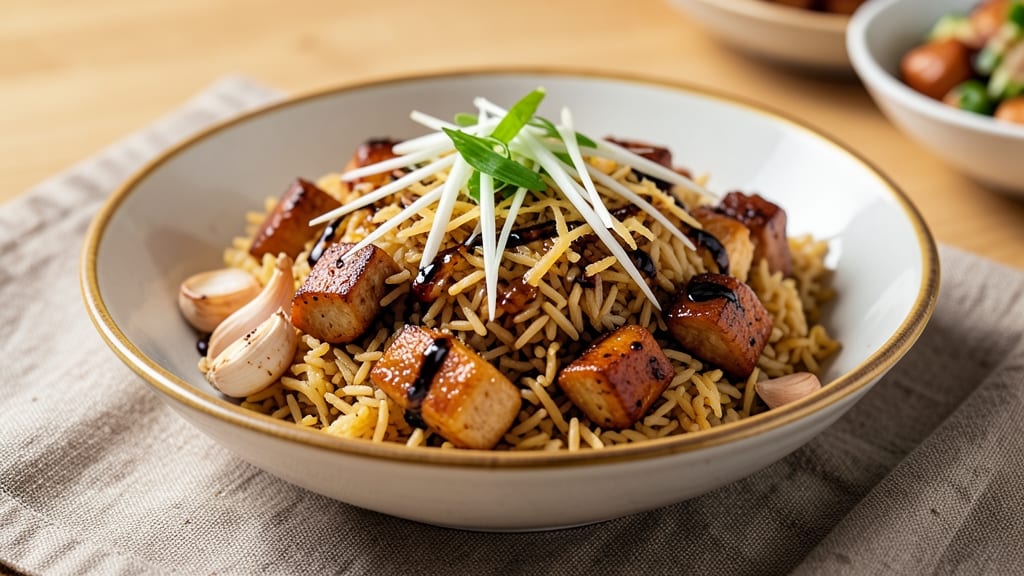
This Chinese basmati fried rice recipe delivers the perfect balance of fragrant jasmine aroma and crisp scallion crunch in just 20 minutes. The secret lies in high-heat stir-frying that creates that signature wok hei flavor while keeping the basmati grains perfectly separate and tender.
I've perfected this version after years of testing—it captures authentic Chinese restaurant quality without requiring special equipment.
What makes this recipe stand out is the combination of day-old basmati rice (never fresh!) with a flavorful protein base—whether you choose chicken, shrimp, or tofu—and an aromatic blend of garlic, ginger, and scallions.
The eggs add richness while the soy sauce and sesame oil provide that signature umami depth. Each bite delivers the perfect texture contrast: tender rice, crisp vegetables, and slightly chewy protein.
Ingredients for chinese basmati fried rice
The foundation of authentic Chinese fried rice lies in these carefully chosen ingredients.
| Ingredient | Amount | Notes |
|---|---|---|
| Day-Old Basmati Rice 🍚 | 4 cups | Uncooked, cooled completely |
| Large Eggs 🥚 | 3 whole | Room temperature preferred |
| Boneless Chicken Breast 🍗 | 1 ½ lb | Diced into 1/2-inch pieces |
| Large Scallions 🧅 | 1 ½ cups | Thinly sliced, white and green parts |
| Fresh Garlic Cloves 🧄 | 6 cloves | Minced finely |
| Fresh Ginger 🌿 | 2 tbsp | Grated finely |
| Carrots 🥕 | 1 cup | Diced into 1/4-inch pieces |
| Green Beans 🌱 | 1 cup | Trimmed, cut into 1-inch pieces |
| Light Soy Sauce 🥢 | 3 tbsp | Kikkoman preferred |
| Dark Soy Sauce 🥢 | 1 tbsp | For color depth |
| Sesame Oil 🫒 | 1 tbsp | Toasted sesame oil |
| Vegetable Oil 🫒 | 4 tbsp | High smoke point |
| White Pepper 🌶️ | ½ tsp | Freshly ground |
| Salt 🧂 | ½ tsp | Diamond Crystal preferred |
The Basmati rice must be day-old—fresh rice turns mushy under high heat. Jasmine or long-grain basmati works best, but avoid short-grain varieties like sushi rice. Cook it slightly underdone (al dente) for best texture. For the protein, chicken breast is ideal as it stays tender when diced small, but shrimp or tofu work equally well. If using shrimp, pat them dry thoroughly to prevent splattering. The Kikkoman soy sauce is non-negotiable for authentic umami—don't substitute with generic brands. For the scallions, use the white and light green parts only; the darker green parts can be bitter.
No fresh ginger? Dried ginger powder at half the amount works in a pinch, though fresh is superior. Running out of green beans? Snow peas or snap peas are excellent substitutes—they hold their shape better during stir-frying. The eggs should be beaten separately and cooked last for that signature soft-yolk texture. For extra depth, add a splash of Shaoxing wine (1 tbsp) if you have it. If not, omit it entirely—it's not essential. The sesame oil should be added at the very end to preserve its delicate aroma. For the oil, avocado or peanut oil works best due to their high smoke points, but vegetable oil is perfectly fine for home cooking.
Prep all ingredients before starting—this is a fast-moving dish. The rice should be spread on a tray to cool completely after cooking. Store leftovers for up to 3 days in an airtight container, but they reheat best when microwaved with a splash of water. For freezing, portion into single servings and freeze flat. The texture won't be identical after reheating, but it's still delicious. To enhance the wok hei flavor, cook over the highest heat possible without burning. A well-seasoned wok or cast-iron skillet works best, but a nonstick pan in a pinch will do.
Why You'll Love This Recipe
- One-Pan Magic: I swear by this recipe when I’m too tired to wash dishes—just one wok or skillet, and you’re done. The chicken cooks while the eggs scramble, then everything gets tossed with that fragrant basmati. Honestly, I’ve made it on a Tuesday night after work with takeout containers still in my bag.
- Garlic Bomb Crunch: That first sizzle of minced garlic and scallions hitting the hot pan? Instant flavor explosion. The basmati soaks up the aroma like a sponge, while the eggs add a creamy contrast. Between us, I’ll take this over any takeout fried rice—it’s got layers.
- Lunchbox Hero: This is my go-to for meal prep because it reheats like a dream. Pack it cold for work or freeze portions—just microwave and stir. My kids actually ask for leftovers, and that’s saying something when you’ve got picky eaters.
- Budget Power Move: Chicken breast might sound fancy, but it’s cheaper than takeout and stretches further. Use day-old rice? Even better—no waste, no extra cost. I’ll be real: this recipe keeps my grocery bill down while still feeling like a restaurant dish. Win-win.
Step-by-step instructions for Chinese basmati fried rice
Here's the method—simple yet precise—to transform day-old rice into a fragrant, restaurant-quality dish.
Prep Ingredients for Perfect Texture
Begin by dicing the 1.5 lb boneless chicken breast into ½-inch pieces—this size ensures even cooking without drying out. Thinly slice the 1.5 cups large scallions, separating white and green parts for visual contrast. Mince the 6 cloves fresh garlic cloves and grate the 2 tbsp fresh ginger finely, as these aromatics form the flavor base.
Cut the 1 cup carrots into ¼-inch pieces and trim the 1 cup green beans, slicing them into 1-inch lengths. The key here is uniformity—consistent sizing guarantees even cooking and a balanced bite. Keep all prepped ingredients in separate bowls until ready to use.
Sear the Chicken for Deep Flavor
Heat 2 tbsp vegetable oil in a 14-inch wok or large skillet over medium-high heat until shimmering. Add the chicken in a single layer, avoiding overcrowding, and cook undisturbed for 3-4 minutes until golden brown on the underside. Flip and repeat, working in batches if needed.
Remove the chicken and set aside. The residual oil in the pan will carry the flavors into the rice, so don't wipe it clean. This step builds the umami foundation—don't rush it. If the oil smokes excessively, reduce heat slightly to maintain control.
Scramble Eggs with High Heat
Return the pan to medium-high heat and add 1 tbsp vegetable oil. Crack the 3 whole large eggs into a bowl, season lightly with ½ tsp salt, and whisk vigorously. Pour the eggs into the pan and let them sit for 2-3 seconds before gently pushing them around with a spatula.
Scramble quickly until just set—soft curds are ideal. Remove the eggs and set aside with the chicken. The eggs should be moist but fully cooked; overcooking turns them rubbery. This step adds protein and creaminess to the dish.
Stir-Fry Vegetables for Crunch
Add 1 tbsp vegetable oil to the pan and increase heat to high. Toss in the carrots and green beans, stir-frying for 2-3 minutes until bright and slightly blistered. Add the minced garlic and grated ginger, cooking for 30 seconds until fragrant—this releases their essential oils.
Push the vegetables to one side of the pan, add the white parts of the scallions, and stir-fry for 1 minute until wilted. Then add the green parts and cook for 30 seconds to retain their crispness. Remove the vegetables and set aside with the chicken and eggs.
Combine and Season the Rice
Add the remaining 1 tbsp vegetable oil to the pan and increase heat to high. Add the 4 cups day-old basmati rice, breaking up any clumps with a spatula. Stir-fry for 2-3 minutes until the rice is heated through and begins to sizzle.
Pour in the 3 tbsp light soy sauce, 1 tbsp dark soy sauce, and ½ tsp white pepper. Toss everything together, incorporating the chicken, eggs, and vegetables. Drizzle with 1 tbsp sesame oil and toss again to coat evenly. The rice should be glossy and fragrant, with a deep amber hue from the dark soy sauce.
Finish with Scallions and Serve
Return the green and white scallions to the pan, tossing gently to wilt the whites while keeping the greens bright. Cook for 30 seconds, then taste and adjust seasoning—add a splash of water if the rice is too dry or a bit more soy sauce if needed.
Serve immediately, garnished with extra scallions if desired. The dish should be hot, fragrant, and slightly sticky, with each bite delivering a mix of textures—crisp vegetables, tender chicken, silky eggs, and aromatic rice. Leftovers? Reheat gently in a dry pan to maintain texture.
Pro Tips For Making Chinese Basmati Fried Rice
- CRACK THE EGGS FIRST: Scramble the eggs in a separate pan until just set—soft curds, not rubbery—then set them aside. Tossing them in later keeps them creamy instead of turning into a sad, dry mess. I used to scramble them in the wok with the rice, and it always ended up like egg salad. Don’t repeat my mistake.
- SLICE CHICKEN THIN: Cut the chicken breast into paper-thin strips—no thicker than ¼-inch—so it cooks fast and stays tender. Thick slices end up chewy, and nobody wants that in fried rice. Use a sharp knife and angle it like you’re slicing paper, not chopping wood.
- BREAK UP RICE GRUMPY: After frying the chicken and garlic, add the cold rice and immediately smash any clumps with the back of a spatula. The goal is to get every grain separate—no rice balls hiding in your dish. This is the only way to get that proper Chinese fried rice texture, not mushy rice soup.
- SAVE THE SCALLION GREENS: Chop the white and light green parts of the scallions finely for the base, but leave the dark green tops whole and add them last. They’ll stay bright and crisp, adding a fresh bite that cuts through the richness. I used to chop everything the same, and it always looked like sad, wilted grass.
Common mistakes when making this dish
Overcooking the Rice
Fresh rice is the #1 culprit behind mushy fried rice. Always use day-old basmati rice—fresh grains release too much starch when heated, turning your dish into glue.
Spread freshly cooked rice on a tray to cool completely before using. I've ruined many batches by skipping this step, so don't make my mistake! 🌱
Skipping the Chicken Rest
After searing the chicken, let it rest for 5 minutes before adding to the rice. This prevents it from releasing juices too early, which can make your fried rice soggy. I learned this lesson the hard way when my first batch turned out watery—patience pays off here!
Overcrowding the Pan
Stir-frying requires space for proper heat circulation. When cooking the chicken or vegetables, work in small batches if needed. Overcrowding steams instead of sears, leading to bland, unevenly cooked ingredients. A 14-inch wok or skillet is ideal—anything smaller will struggle with the volume.
Adding Wet Ingredients Too Early
Soy sauce and sesame oil should only be added at the very end. Introducing them too soon dilutes the flavors and steams the rice instead of crisping it.
I once added soy sauce with the vegetables, and my dish lost that signature wok hei flavor. Save the sauces for the final 30 seconds of cooking.
Using Low Heat
High heat is essential for authentic wok hei flavor. If you're not getting that smoky aroma, crank your burner to the highest setting without burning. A well-seasoned cast iron skillet or carbon steel wok works best—nonstick pans can't achieve the same Maillard reaction.
Don't be afraid of the smoke; it's part of the magic! 🔥
Ignoring the Egg Technique
Eggs should be scrambled quickly until just set—overcooking makes them rubbery. Let them sit briefly in the hot pan before stirring, creating those signature soft curds. I used to scramble them too fast, ending up with dry, unappetizing eggs.
The secret is patience and timing—wait for those 2-3 seconds before the first stir.
Nutrition facts
Frequently asked questions
Can I substitute basmati rice with jasmine rice?
Yes, you can use jasmine rice as a 1:1 substitute—both varieties have similar textures when cooked properly. The key is using day-old rice in both cases to prevent mushiness. Jasmine has a slightly sweeter aroma, which works beautifully in fried rice. Just ensure it's completely cooled before stir-frying.
What's the best protein substitute for chicken?
Shrimp or tofu work exceptionally well! For shrimp, use 1 lb peeled and deveined, patted completely dry. For tofu, press extra-firm tofu for 20 minutes to remove moisture, then cube and pan-fry until golden before adding to the rice. Both options maintain that signature texture contrast when cooked properly.
Why does my fried rice turn out dry?
Dry fried rice usually means one of two things: overcooking or insufficient moisture. First, ensure you're using day-old rice—not fresh. Second, add a splash of water (1-2 tbsp) during the final toss if needed. The eggs and vegetables also contribute moisture, so balance is key. Stir-fry over high heat for 2-3 minutes max after adding rice.
Can I make this ahead of time?
While fried rice is best served immediately, you can prep components ahead: cook the rice 1 day in advance, marinate the protein, and chop all vegetables. Store separately in the fridge. Assemble and cook fresh when ready—this ensures the best texture. For leftovers, reheat in a dry pan over medium heat with a splash of water to restore moisture.
What gives fried rice its signature smoky flavor?
That's the famous "wok hei" flavor! It comes from cooking over high heat in a well-seasoned pan, creating smoke and steam that infuses the dish. Use a carbon steel wok or cast iron skillet for best results. The sesame oil added at the end also enhances this aromatic quality. Don't fear the smoke—it's what makes restaurant-style fried rice taste authentic!