
Main Courses
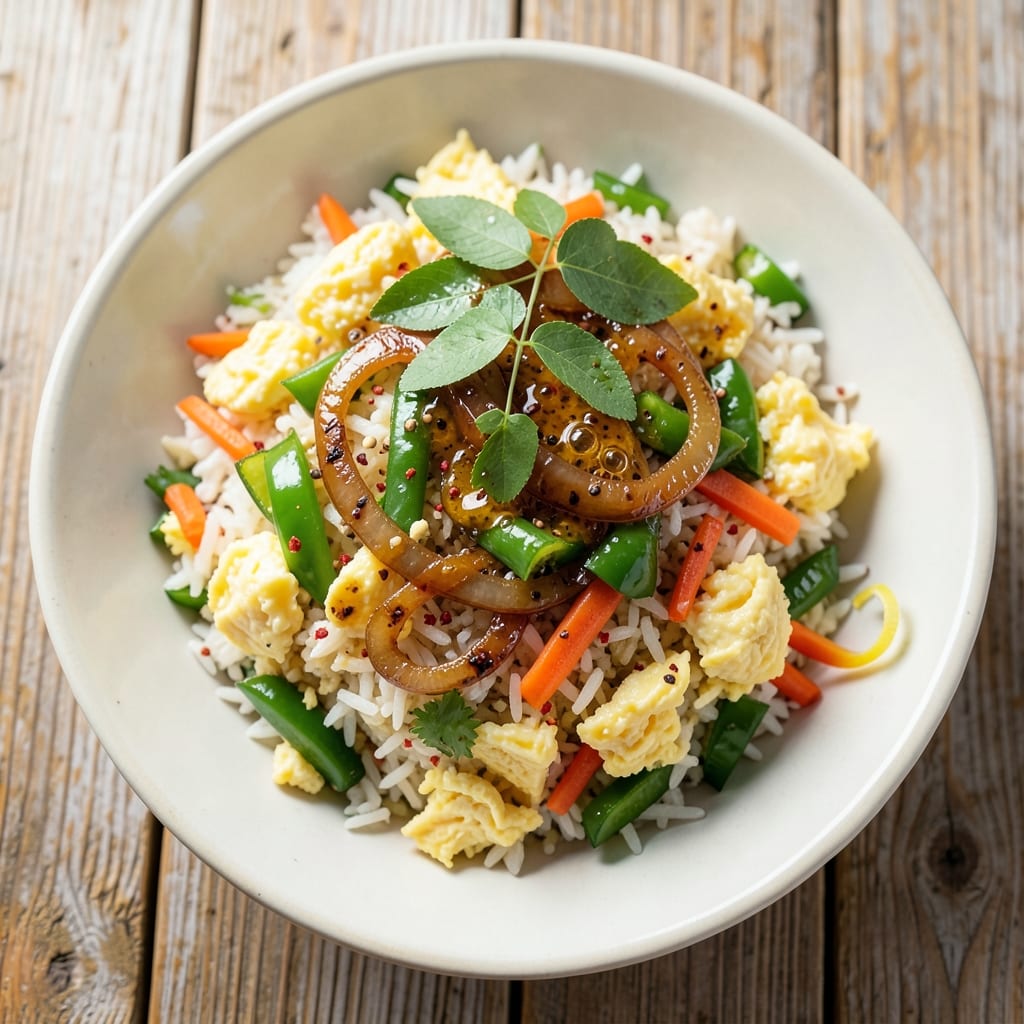
This Andhra egg fried rice delivers the bold, tangy-spicy flavors of South India with every bite—where tamarind's sharp tang meets curry leaves' earthy aroma. The secret lies in perfectly tempered spices that transform simple ingredients into a restaurant-quality dish. I've refined this recipe over countless weeknight dinners, ensuring the rice stays separate while absorbing just enough spice to make your taste buds dance.
The foundation begins with long-grain rice cooked to absolute perfection—neither mushy nor dry—and scrambled eggs that stay tender yet firm enough to hold their shape. What sets this apart is the spice tempering: mustard seeds sizzle until they pop, releasing their nutty aroma before being joined by curry leaves that infuse the oil with their signature fragrance. Tamarind paste adds that signature Andhra tang that cuts through the richness.
By the time you plate this dish, you'll have vibrant yellow rice speckled with golden eggs, crisp vegetables, and a glaze of spiced oil that makes every bite irresistible. The balance of textures—crisp rice, tender eggs, and slightly charred spices—creates a harmony that's both comforting and exciting. This is the kind of dish that transforms a simple lunch into a memorable meal.
The best part? It comes together in under 30 minutes without sacrificing authenticity. Whether you're feeding a family or treating yourself to an Andhra-inspired feast, this recipe delivers the bold flavors of the region with modern convenience. Let's get cooking—your taste buds are in for a treat.
Ingredients for andhra egg fried rice
Bold spices and simple ingredients transform ordinary rice into Andhra's fiery, tangy masterpiece.
| Ingredient | Amount | Notes |
|---|---|---|
| Long-Grain White Rice 🍚 | 1 ½ cups | Uncooked, rinsed thoroughly |
| Large Eggs 🥚 | 4 whole | Fresh, room temperature |
| Yellow Onion 🧅 | 1 medium | Diced finely (about 1 cup) |
| Carrot 🥕 | 1 medium | Diced small (about 0.5 cup) |
| Green Bell Pepper 🌶️ | 1 medium | Diced finely (about 0.5 cup) |
| Curry Leaves 🌿 | ¼ cup | Fresh, lightly crushed |
| Mustard Seeds 🌶️ | 1 tbsp | Whole, yellow variety |
| Tamarind Paste 🍈 | 1 tbsp | Unsweetened, smooth |
| Vegetable Oil 🫒 | 3 tbsp | High smoke point |
| Salt 🧂 | 1 ½ tsp | Diamond Crystal preferred |
| Black Peppercorns 🌶️ | ½ tsp | Freshly cracked |
| Red Chili Powder 🔥 | ½ tsp | Adjust for heat preference |
| Asafoetida Powder 🌿 | ¼ tsp | Optional, for depth |
| Lemon Juice 🍋 | 1 tbsp | Freshly squeezed |
The curry leaves are non-negotiable—they're what gives this dish its signature aroma. Indian grocery stores carry them fresh, but if you can't find them, Trader Joe's sometimes stocks them. Look for bright green, fragrant leaves that smell like citrus and earth. Mustard seeds should be yellow and plump—avoid the black variety. Tamarind paste is the secret weapon here; Indian brands like Annapurna make the best, but any unsweetened paste works. For the rice, jasmine or basmati is ideal, but long-grain white rice will work too—just don't skimp on rinsing to remove excess starch.
No curry leaves? Dried thyme at half the amount gives a similar earthy note, though it won't be authentic. Short on tamarind? Lime juice with a pinch of sugar mimics the tang. The vegetables can be swapped—green beans or snap peas work beautifully—but keep the total volume consistent. For extra heat, add a pinch of cayenne to the chili powder. The eggs should be scrambled just until set; overcooking makes them rubbery. If you're vegetarian, this dish is already compliant—just ensure no hidden meat stock was used in any store-bought ingredients like tamarind paste.
Rice reheats beautifully—just add a splash of water and steam it. The spiced oil keeps for 1 week in the fridge, so make extra for future meals. Store the cooked rice in an airtight container with a paper towel to absorb moisture. This dish tastes even better the next day as the flavors meld. For meal prep, portion into containers with a little oil to keep it from drying out. The spices lose potency after 3 months, so buy small quantities if you won't use them all.
Why You'll Love This Recipe
- One-Pan Magic: I swear by this recipe when I’m too tired to wash extra dishes. The onions caramelize in the same pan where the rice gets crispy—no fancy equipment, just a good wok or heavy skillet. Even my non-cooking partner can handle it.
- Crispy-Creamy Eggs: That first bite of perfectly fried eggs—still runny inside, golden outside—makes it worth every second. The Andhra touch of mustard seeds and curry leaves turns it from ordinary fried rice to something ridiculously flavorful.
- Lunchbox Hero: Between us, this is my go-to for packed lunches. The veggies stay bright, the rice doesn’t get soggy, and the eggs add protein that keeps me full. Honestly, I’ve reheated this from the fridge three times this week already.
- Budget Meal Master: Rice, eggs, and basic veggies? This feeds four for under $5. I’ll be real—I’ve made it with whatever was in the fridge (even leftover potatoes), and it’s still solid. No wasted ingredients, just good food.
Step-by-step instructions for Andhra egg fried rice
Here's how to create this bold, tangy dish with perfect texture and balanced flavors.
Prepare the Tamarind Base
In a small bowl, combine the 1 tablespoon tamarind paste, 1.5 teaspoons salt, and 1 tablespoon lemon juice. Add ½ cup hot water and whisk until smooth and fully dissolved. This tangy foundation balances the dish's heat and richness. Taste and adjust seasoning—you want it bright and acidic, not overly sweet.
Set this mixture aside while you prepare the other components. The tamarind's natural sourness will cut through the fried rice's richness, creating that signature Andhra contrast. For extra depth, I like to add a pinch of the asafoetida powder to this mixture—it adds an umami complexity that elevates the entire dish.
Cook the Rice Perfectly
Rinse the 1.5 cups long-grain white rice thoroughly under cold water until the water runs clear. This removes excess starch that would make your fried rice gummy. Cook the rice in a 1:1.5 rice-to-water ratio (about 2¼ cups water) using the absorption method—bring to a boil, then reduce to a simmer, cover, and cook for 15 minutes off heat.
Fluff the rice gently with a fork and spread it on a tray to cool completely. Warm rice fries better and absorbs flavors more evenly. The goal is to have perfectly separate grains that hold their shape when tossed. If your rice is still moist, spread it out and let it dry slightly—this is crucial for achieving that signature Andhra fried rice texture.
Build the Spiced Oil Base
Heat 2 tablespoons vegetable oil in a wok or large skillet over medium-high heat until shimmering. Add the 1 tablespoon mustard seeds and let them pop for 30 seconds—this should be your first aromatic cue. Immediately add the 0.25 cup curry leaves and 0.5 teaspoon red chili powder, stirring constantly for 20 seconds until the curry leaves darken slightly and the oil turns vibrant red.
Here's where the magic happens: Add the 0.25 teaspoon asafoetida powder and the 0.5 teaspoon freshly cracked black peppercorns. The asafoetida will release its distinctive, savory aroma instantly. Keep the heat medium-high—if it gets too hot, the spices will burn before they release their full flavor. This aromatic base forms the flavor foundation for your entire dish.
Sauté the Vegetables and Eggs
Push the spiced oil to one side of the wok and add the remaining 1 tablespoon vegetable oil. When hot, add the 1 medium yellow onion, 1 medium carrot, and 1 medium green bell pepper, all diced to the specified sizes. Stir-fry for 4-5 minutes until the vegetables soften but maintain a slight crunch—this ensures they don't turn mushy when combined with the rice.
Push the vegetables to one side, add another ½ tablespoon vegetable oil, and scramble the 4 whole large eggs until just set but still slightly runny in the center. This creates that signature Andhra egg texture—soft yet firm enough to hold its shape. Remove the eggs and set aside, then combine them with the vegetables in the wok.
Combine and Finish
Add the cooked rice to the wok and toss vigorously for 2-3 minutes until every grain is evenly coated and heated through. Pour the tamarind mixture over the rice and toss again, letting the tangy liquid absorb completely. The rice should be hot and slightly sticky from the tamarind, but still distinct grains.
Taste and adjust seasoning—you might need a splash of hot water to loosen the rice if it's too dry. The final dish should have a perfect balance of spicy, tangy, and savory flavors with each bite. Serve immediately while hot, garnished with additional curry leaves if desired. This dish tastes best straight from the wok when the rice is still warm and the spices are aromatic.
Pro Tips For Making Andhra Egg Fried Rice
- Cook Rice to Al Dente: Use day-old, cold rice—not freshly cooked. I learned this the hard way when my first batch turned mushy despite high heat. Spread freshly cooked rice on a tray, refrigerate for 2+ hours, then break it up with your hands before frying. The starch dries out just enough to prevent gummy rice, and the texture stays firm. ---
- Scramble Eggs Separately: Fry the eggs first in a separate pan on medium-low heat until just set—no need for crispy edges. After removing them, use the same pan for the rice; the residual egg fat adds richness without extra oil. My grandmother swore by this, and she was right: the eggs stay tender, and the rice gets that signature Andhra-style stickiness. ---
- Slice Veggies Uniformly: Cut onions into thin, even half-moons (about 1/8-inch thick) and dice carrots and bell peppers into matchsticks—no larger than 1/4-inch. I used to eyeball it, but uneven pieces burn at different rates, leaving some raw while others turn bitter. A sharp knife and steady hand make all the difference. ---
- Add Rice in Two Batches: Split the rice into two portions and fry the first half until most of the moisture evaporates (about 3-4 minutes). Push it to one side, add the second batch, and mix—this prevents steaming and ensures every grain gets crispy. Yes, it’s an extra step, but it’s the thing that matters most for that perfect Andhra texture.
Essential equipment for great andhra egg fried rice
Wok Essentials
A carbon steel wok is my go-to for this recipe—it heats evenly and develops a natural non-stick patina over time. I recommend the Made In wok from Williams Sonoma, which has a sturdy handle and excellent heat distribution. If you're on a budget, a 14-inch cast iron wok from Lodge works beautifully too. The key is a wok with sloped sides—this helps create the signature stir-fry motion that keeps the rice separate and crisp. 🔥
Spice Grinder
Freshly cracked black peppercorns make all the difference in this dish. I use a hand-crank pepper grinder like the Pepperson—it's affordable and gives you precise control. For mustard seeds, a small mortar and pestle works if you want to crush them slightly before toasting. Avoid pre-ground spices here; their potency fades quickly, and you won't get that same aromatic punch. A mini spice grinder (like the OXO Good Grips) handles both peppercorns and mustard seeds efficiently.
High-Quality Oil
Use refined coconut oil or vegetable oil with a high smoke point—Avocado oil is another great option. I avoid olive oil because its low smoke point can cause the spices to burn before they release their full flavor. For the tamarind mixture, a small whisk or hand mixer ensures smooth incorporation. If you're making this frequently, consider a dedicated small saucepan for the tamarind base—it keeps your main cooking area cleaner and more organized. 🫒
Rice Cooker Upgrade
A multi-function rice cooker like the Zojirushi is a game-changer for perfect rice every time. Set it to the white rice setting and use the 1:1.5 rice-to-water ratio specified in the recipe. For even better results, I press the "keep warm" button for 10 minutes after cooking—this steams the rice slightly, making it easier to separate grains later. If you don't have a rice cooker, a heavy-bottomed pot with a tight-fitting lid works just fine, but monitor the heat carefully to avoid burning.
Tempering Tools
For the tempering stage (mustard seeds, curry leaves, etc.), I use a small metal ladle to toss the spices quickly and evenly. A tongs with a fine mesh helps lift the curry leaves without breaking them. Keep a small bowl of water nearby—if any spices start to smoke excessively, immediately lower the heat and add a splash of water to cool them down. This prevents bitterness and preserves the delicate flavors. A timer (even your phone) is crucial here—30 seconds for mustard seeds is critical; over-toasting turns them bitter. ⏱️
Nutrition facts
Frequently asked questions
Can I substitute tamarind paste in this recipe?
Yes! If you don't have tamarind paste, mix 1 tablespoon lemon juice with ½ teaspoon sugar to mimic the tangy-sweet balance. For extra depth, add a pinch of asafoetida powder to the tamarind substitute. The key is maintaining that signature Andhra tanginess—just avoid pure vinegar, as it can overpower the dish.
How do I prevent my rice from turning mushy?
Rinse the rice thoroughly until the water runs clear to remove excess starch, then cook it in a 1:1.5 rice-to-water ratio. Spread the cooked rice on a tray to cool completely before frying—this prevents steam from making it soggy. Use a wok or large skillet with high heat and stir constantly for 2-3 minutes to maintain crisp grains.
What's the best way to make this dish less spicy?
Reduce the red chili powder to ¼ teaspoon and omit the asafoetida powder, which adds subtle heat. For extra mildness, add 1 tablespoon yogurt to the tamarind mixture before tossing with the rice. Always taste as you go—you can adjust heat at the end with a pinch of sugar or more lemon juice.
Can I make this ahead of time?
Yes! Cook the rice and prepare the tamarind mixture up to 1 day ahead, storing them separately in airtight containers. Reheat the rice with a splash of water, then fry it fresh for 2-3 minutes with the eggs and vegetables. The flavors actually improve overnight as the spices meld. For best texture, avoid reheating the final dish—make it fresh when ready to eat.
What sides pair well with Andhra egg fried rice?
This dish works beautifully with cooling accompaniments like raita (yogurt dip), cucumber salad, or papadums. For a complete meal, serve with mango pickle or boondi raita to balance the heat. A simple green chutney made with cilantro and mint also complements the spicy flavors perfectly.